A QR code is a two-dimensional barcode, a square pattern of black and white modules that stores data such as a web address and can be read by a camera or scanner from any direction. The letters QR stand for quick response, reflecting the goal of fast reading when the code was announced in 1994.
History of QR codes
The QR code was developed at Denso Wave, then a division of the Japanese company Denso Corporation. According to Denso Wave, barcode users in Japan found that ordinary barcodes had a hard limit: they could hold only about 20 alphanumeric characters. Users asked for a code that could also hold kanji and kana characters.
A team led by Masahiro Hara, with just one other member, built the new code. Hara’s key idea was a position detection pattern that tells a reader where a code is. The team studied printed material to find the black-and-white ratio least likely to appear by accident, settled on 1:1:3:1:1, and used it so a code can be found at any angle of scanning.
After about a year and a half, the team produced a code able to hold about 7,000 numerals plus kanji, and one that Denso Wave says could be read more than ten times faster than other codes. Denso Wave announced it in 1994. It was first adopted in the auto industry for tracking parts, and then in food, pharmaceutical and other industries that needed traceability.
Denso Wave kept its patent rights but chose not to exercise them for standardized QR codes, and it made the specification public. Use among the general public in Japan took off in 2002 once mobile phones with a built-in QR reader reached the market.
The code was approved as an AIM International standard in October 1997 and as a Japanese Industrial Standard in January 1999. It became international standard ISO/IEC 18004 in June 2000, and GS1 approved it in December 2011 as a standard for mobile phones.
How QR codes work
A QR code is a grid of dark and light squares called modules. Researchers at Ohio University’s Automatic Identification and Data Capture Lab list its main parts: position detector patterns, alignment patterns and timing patterns, all of which help a scanner quickly find and decode the symbol.
The symbol also embeds its version, which sets the size of the grid, and format information, which records the error correction level and the masking pattern. If this information is destroyed, the symbol cannot be decoded. Scanners can read a code from any of 360 degrees because of the position detection patterns, and Denso Wave says a quiet margin of at least four modules is needed around the symbol.
Error correction lets a damaged code recover its data. Denso Wave defines four levels: L restores about 7 percent of codewords, M about 15 percent, Q about 25 percent and H about 30 percent. The correcting codewords sit alongside the data codewords in the symbol, which means a stain or tear can be tolerated up to the chosen limit.
Data capacity depends on the version and on the kind of data. The largest symbol holds up to 7,089 numeric characters, 4,296 alphanumeric characters, 2,953 bytes of binary data or 1,817 kanji characters.
Types of QR codes
Denso Wave lists several variants. Model 1 is the original, with a largest version of 14, which is 73 by 73 modules and holds up to 1,167 numerals. Model 2 improved on it, and its largest version, 40, measures 177 by 177 modules. Model 2 is what people usually mean today by the term QR code.
Micro QR code needs only one orientation pattern and can be printed in a smaller space, with a largest version of 17 by 17 modules holding up to 35 numerals. Rectangular Micro QR code, or rMQR, targets narrow printing areas. SQRC adds a reading restriction for private information and looks like an ordinary code, while Frame QR includes a canvas area for letters or images.
Applications of QR codes
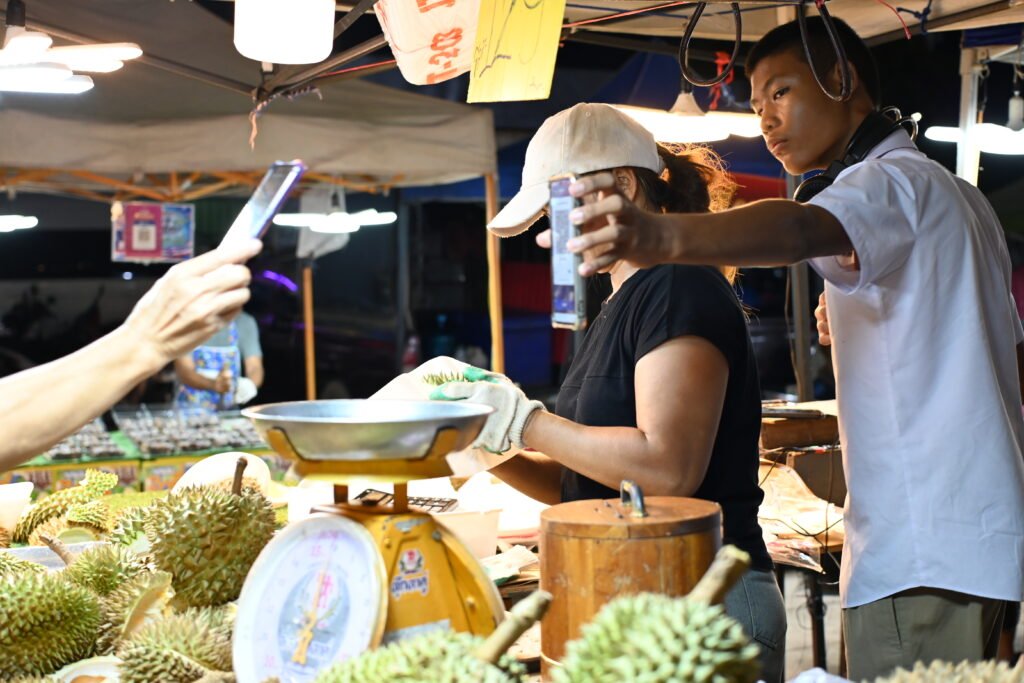
QR codes now serve in many settings. Denso Wave names business cards, electronic tickets and airline ticketing, in addition to factory tracking. Many are scanned with a phone to open a website or obtain a coupon, a use that spread once phones gained built-in readers.
In supply chains they sit beside RFID tags and Bluetooth as ways to tie physical objects to data, and they often serve the Internet of Things as a low-cost label.
The Ohio University lab studied designer QR codes, which are altered with color changes, inserted graphics or distorted cells. These alterations use part of the built-in error correction, and the lab warned that not every design scans equally well because damage to key components can make a symbol unreadable.
Advantages and disadvantages of QR codes
Advantages follow from the design: high data capacity compared with a one-dimensional barcode, small printed size, tolerance of dirt and damage, and reading from any direction. The open specification also means anyone can generate or read a code at no licensing cost.
One limit is that a person cannot read a code by eye. The destination is hidden until the code is scanned, so users should check where a link leads before acting on it. A code also needs enough contrast, size and margin to scan, and heavy decoration can push it past its error correction limit.
QR code vs. barcode
A traditional barcode stores data along one dimension only, so it holds roughly 20 alphanumeric characters. A QR code stores data in two directions, across and up and down, which raises capacity and lets it include kanji and other characters.
A QR code can be read at any angle, including by a phone camera, and it can correct errors. Barcodes remain widely used for simple product identification, since a short number is often all a retail system needs.
More in Networks & Telecommunications
Key facts
- The QR code was announced in 1994 by Denso Wave, then a division of Denso Corporation.1
- QR stands for quick response, reflecting the focus on high-speed reading.1
- A one-dimensional barcode holds only about 20 alphanumeric characters, while the largest QR code version holds up to 7,089 numeric characters.12
- QR Code became international standard ISO/IEC 18004 in June 2000.2
- The four error correction levels L, M, Q and H restore about 7, 15, 25 and 30 percent of codewords.2
Related concepts
Quick checkWhat does QR stand for?Show answer
Quick response. Denso Wave chose the name because the code was designed to be read at high speed.
Sources
- DENSO WAVE, History of QR Code, https://www.qrcode.com/en/history/
- DENSO WAVE, QR Code Standardization, https://www.qrcode.com/en/about/standards.html
- DENSO WAVE, Types of QR Code, https://www.qrcode.com/en/codes/
- Kevin Berisso, Designer QR Codes: Ensuring the beep, white paper, Ohio University Automatic Identification and Data Capture Lab, 2013, https://www.memphis.edu/autoid/publications/qrcode.pdf
Editorially reviewed by Specialty Digest Editorial TeamLast reviewed November 4, 2026Researched and drafted with AI assistanceReport an issue