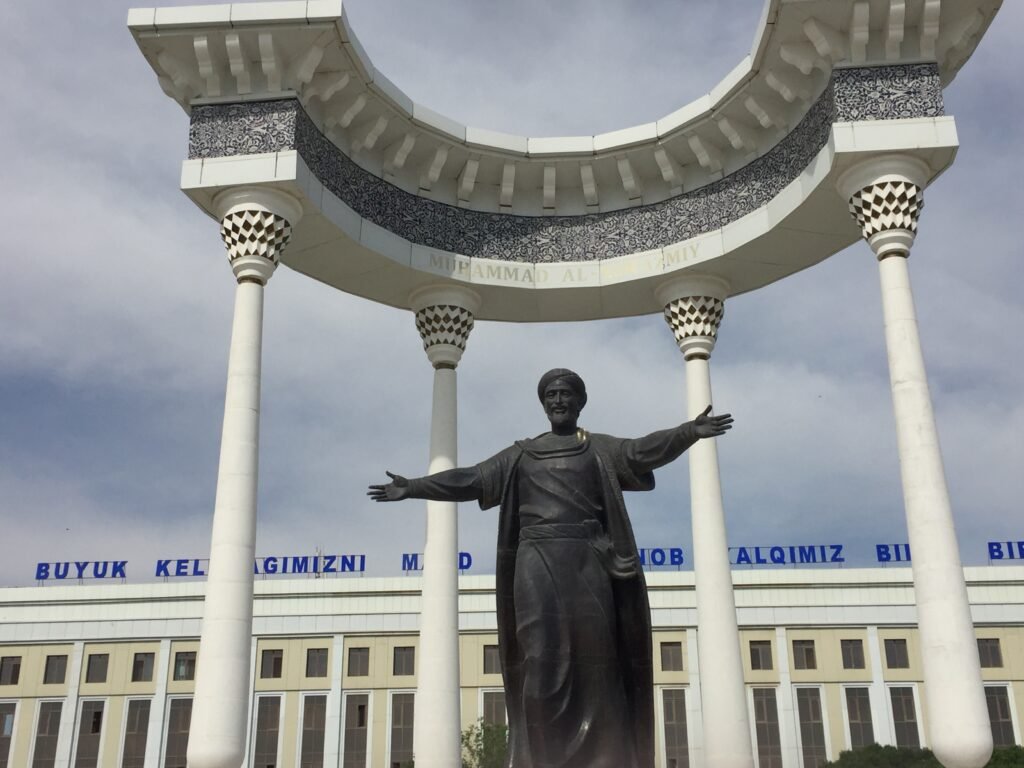
Al-Khwarizmi (about 780 to about 850) was a mathematician and astronomer who worked in Baghdad under the Abbasid caliph al-Ma’mun. His book on solving equations gave the world the word algebra, and the Latin form of his name gave it the word algorithm. Early life of al-Khwarizmi Very little is known for certain about his
Al-Khwarizmi Read More »
Al-Khwarizmi was a Baghdad mathematician whose book on equations gave algebra its name and whose Latinized name gave us the word algorithm.
Algebra is the branch of mathematics that uses letters and symbols to represent unknown or general quantities, and rules for manipulating those symbols to solve equations and describe relationships between quantities. Where arithmetic works with specific numbers, algebra generalizes those operations so that a single equation can describe infinitely many situations at once, which is
Algebra Read More »
The branch of mathematics that uses symbols to represent quantities and rules for manipulating them to solve equations.
Archimedes was a Greek mathematician, physicist and engineer from Syracuse in Sicily who lived from about 287 BCE until 212 BCE. He worked out the mathematics of the lever, floating bodies, the sphere and the circle, and he is credited with devices such as the Archimedes screw. He was killed when Roman forces captured Syracuse
Archimedes Read More »
Greek mathematician and engineer from Syracuse (about 287 to 212 BCE) who bounded pi, founded hydrostatics and devised the Archimedes screw.
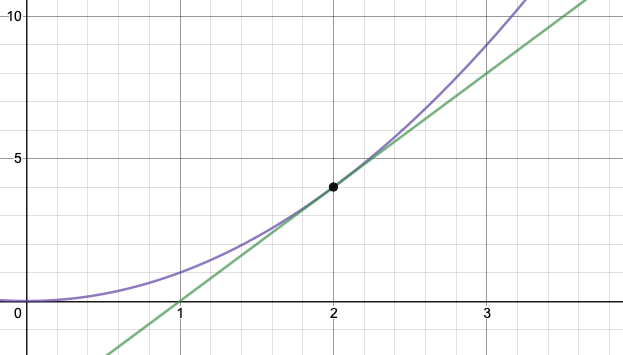
Calculus is the branch of mathematics that studies continuous change, built around two complementary operations called differentiation and integration. Differentiation measures how quickly a quantity changes at a given instant, producing what is called a derivative, while integration accumulates quantities over an interval to find totals such as area, volume, or distance traveled. Developed independently
Calculus Read More »
The branch of mathematics that studies continuous change through differentiation and integration.
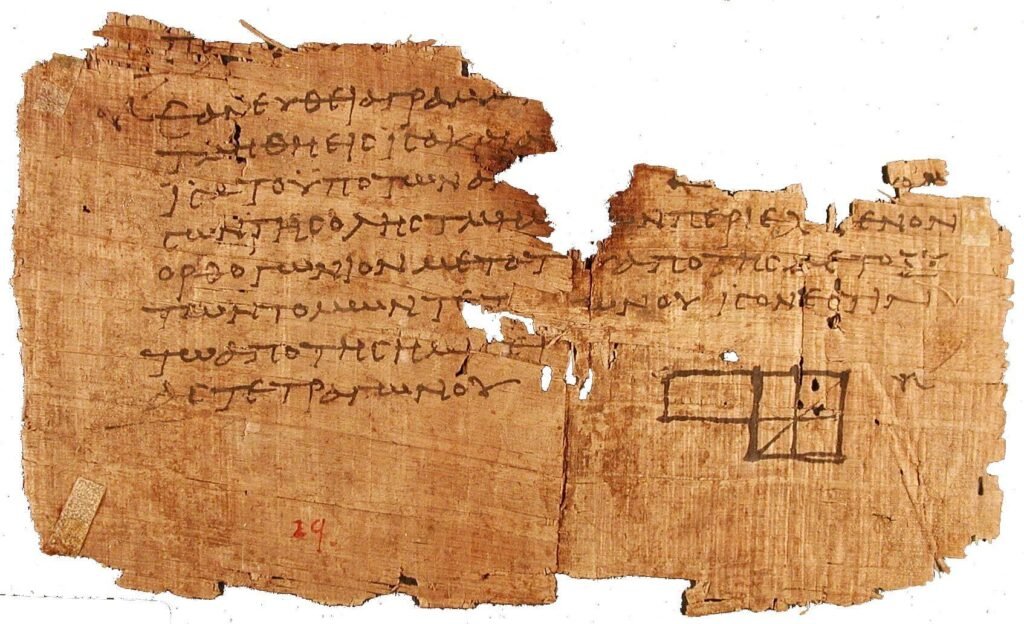
Euclid was a Greek mathematician who taught in Alexandria, Egypt, around 300 BCE and wrote the Elements, often described as one of the most influential textbooks ever written. Almost nothing is known about his life, and scholars give only approximate dates. The Elements presents geometry and number theory as a chain of logical proofs built
Euclid Read More »
Greek mathematician of Alexandria (about 300 BCE) who wrote the Elements, the foundational treatise on geometry and number theory.
Geometry is the branch of mathematics concerned with the properties and relationships of points, lines, angles, surfaces, and solids in space. It is one of the oldest fields of mathematics, with roots in the practical problems of measuring land, constructing buildings, and tracking the motion of celestial bodies, and it remains central to fields ranging
Geometry Read More »
The branch of mathematics concerned with the properties of points, lines, shapes, and space.
In simple terms A percentage point is the unit for the gap between two percentages. You find it by simple subtraction: a rate that moves from 10% to 12% has risen by 2 percentage points. The term exists to prevent a common mix-up. That same move from 10% to 12% is also a 20% increase,
Percentage point Read More »
A percentage point is the simple difference between two percentages: a rate rising from 10% to 12% has risen by 2 percentage points.
In simple terms A prime number is a whole number greater than 1 that can be divided evenly only by 1 and by itself. Seven is prime, because no other whole number divides it without a remainder. Six is not, because 6 = 2 × 3. Whole numbers above 1 that are not prime are
Prime number Read More »
A prime number is a whole number greater than 1 whose only positive divisors are 1 and itself, such as 2, 3, 5 and 7.
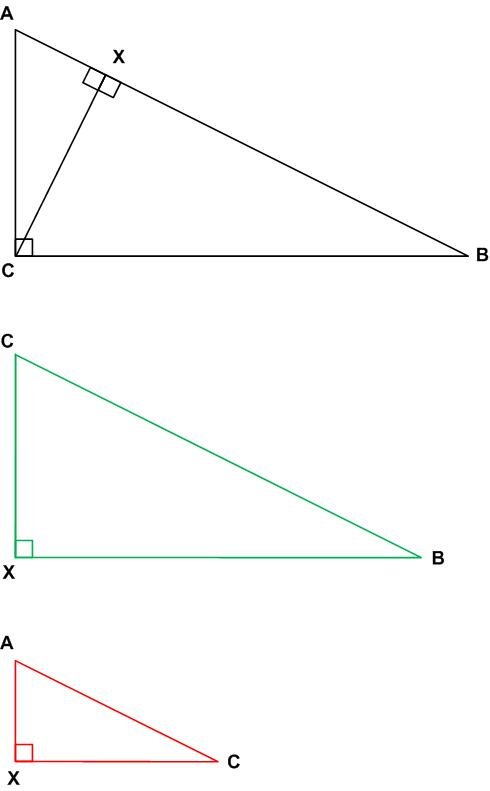
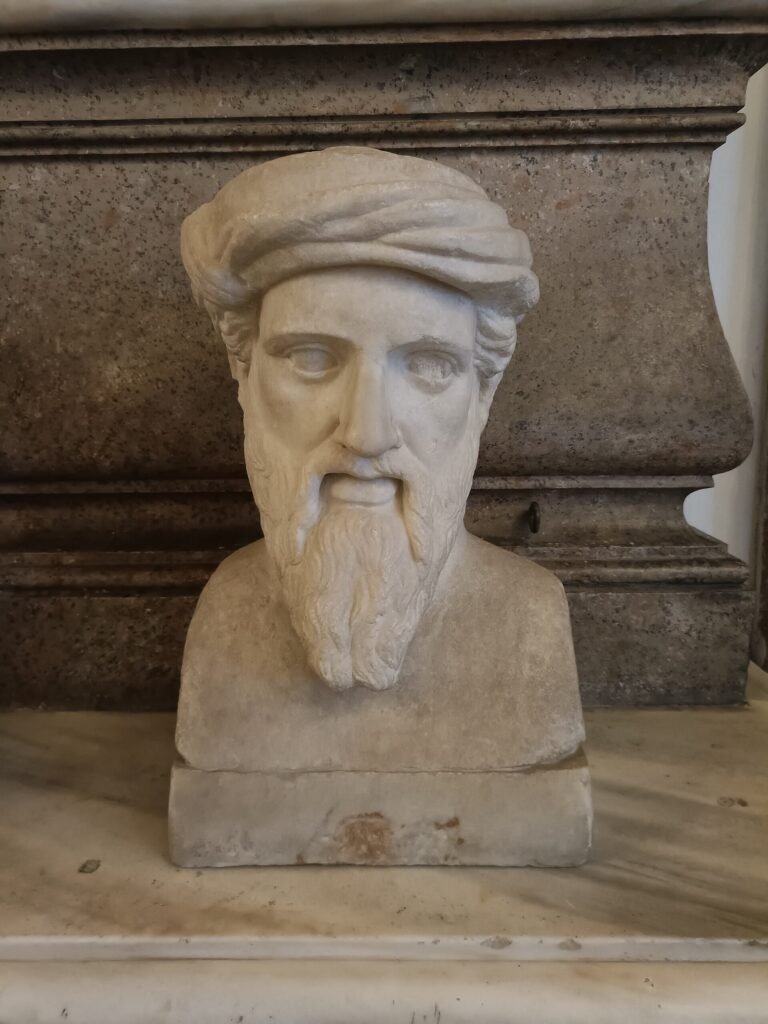
Pythagoras was a Greek philosopher from the island of Samos who lived from about 570 BCE to about 490 BCE and founded a religious and philosophical community at Croton in southern Italy. He wrote nothing himself, and nearly everything said about him was recorded long after his death. He is remembered for the theorem that
Pythagoras Read More »
Greek philosopher from Samos (about 570 to 490 BCE) who led a community at Croton and is linked to music ratios and a famous theorem.
Srinivasa Ramanujan (1887 to 1920) was an Indian mathematician who made major contributions to the analytic theory of numbers, elliptic functions, continued fractions and infinite series. He had little formal training in advanced mathematics, yet he left behind about 4,000 original results. His collaboration with the English mathematician G. H. Hardy at Cambridge brought his
Srinivasa Ramanujan Read More »
Srinivasa Ramanujan was an Indian mathematician who, with little formal training, made major contributions to number theory, infinite series and continued fractions.