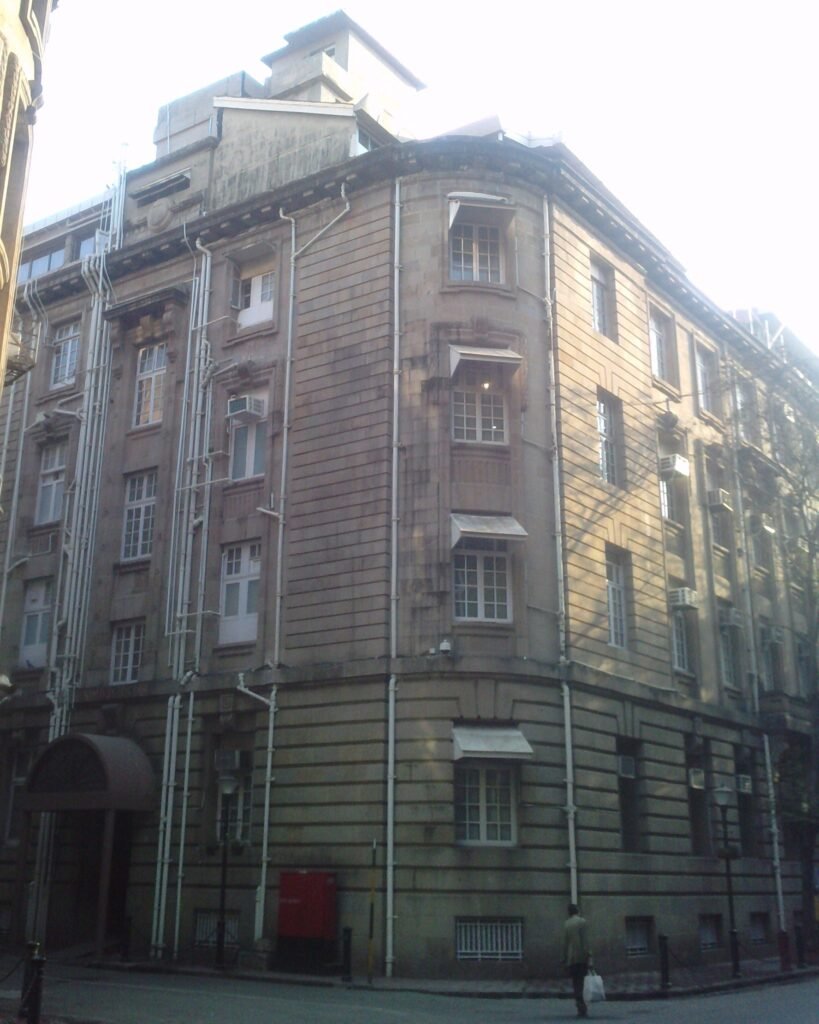
The Tata Group is an Indian multinational conglomerate, headquartered at Bombay House in Mumbai, whose companies work in sectors from steel and automobiles to software, hotels and consumer goods. It traces its origins to 1868, when Jamsetji Tata started a trading company. The group says its companies earned more than $180 billion in revenues in 2024-25 and employ more than one million people.
History of the Tata Group
According to the group’s own timeline, Jamsetji Nusserwanji Tata started a trading company in 1868 at the age of 29, with capital of 21,000 rupees. In 1874 he set up a textile mill in Nagpur rather than in Bombay, which was then India’s textile center. The Taj Mahal Hotel opened in Bombay on December 16, 1903. Jamsetji died in Germany in 1904, and his older son, Sir Dorabji Tata, became chairman.
Dorabji carried out much of his father’s plan. In 1907 he established the Tata Iron and Steel Company, now Tata Steel, in the remote village of Sakchi, and the same year the group opened Tata Limited in London as its first overseas office. The Indian Institute of Science was established in 1909, five years after Jamsetji’s death, and the first hydroelectric plant in western India, which became Tata Power, followed in 1910. The planned industrial town at Sakchi was renamed Jamshedpur in 1919 to honor the founder.
The mid-twentieth century brought aviation and manufacturing. In 1932 J.R.D. Tata piloted a flight from Karachi to Bombay that the group counts as the start of Tata Airlines, later Air India. He became chairman of the group in 1938 at the age of 34. Tata Chemicals was incorporated in 1939, and the Tata Engineering and Locomotive Company, later renamed Tata Motors, was established in 1945. Tata Consultancy Services, described by the group as India’s first software services company, began in 1968.
J.R.D. Tata stepped down in 1991 after 53 years as chairman and named Ratan N. Tata as his successor. The group says that under Ratan Tata it grew into a $100 billion enterprise. In 2017 N. Chandrasekaran, who had led Tata Consultancy Services since 2009, was appointed chairman of Tata Sons by its board.
Businesses and brands of the Tata Group
The group now describes itself as present in ten business verticals: technology, steel, automotive, consumer and retail, infrastructure, financial services, aerospace and defence, tourism and travel, telecom and media, and trading and investments. Its brands range from industrial names to household ones, such as Tata Tea, Titan watches, Tanishq jewelry and the Taj hotels.
Several milestones show how the portfolio widened. Tata Salt became India’s first iodized branded salt in 1983, and Titan was founded in 1984 as a joint venture with the Tamil Nadu Industrial Development Corporation. Tata Motors launched the Tata Indica, which the group calls India’s first indigenously designed and manufactured car, and the Tata Safari, India’s first sport utility vehicle, in 1998. In 2020 it introduced the Nexon EV, an electric vehicle that the group presented as part of a push into electric mobility.
Acquisitions abroad extended the group’s reach. Tata Tea bought the British company Tetley in 2000. Tata Steel acquired Corus, now Tata Steel Europe, in 2007, and the group also acquired Jaguar Land Rover around 2008. Tata Consultancy Services became the first Indian software company to cross $1 billion in revenue in 2003, and it listed in 2004 in what the group calls the largest initial public offering in India, raising nearly $1.2 billion.
Corporate structure and operations
The group is organized around Tata Sons Private Limited, which the group describes as its principal investment holding company and the promoter of Tata companies. Each Tata company operates independently under the supervision of its own board of directors. Companies that use the Tata name sign a Brand Equity and Business Promotion agreement, which gives them the right to use the brand in return for a commitment to run their businesses ethically.
That agreement also requires them to adopt the Tata Code of Conduct and the Tata Business Excellence Model. The code states five values: integrity, responsibility, excellence, pioneering and unity. All full-time employees of the group are expected to follow it.
Ownership is unusual. According to the group, 66 percent of the equity share capital of Tata Sons is held by philanthropic trusts that support education, health, livelihood generation, and art and culture. This arrangement ties much of the group’s ownership to charitable work, though each trust and each operating company makes its own decisions.
The headquarters is in Mumbai, and Bombay House received a gold rating from the Indian Green Building Council in 2014 and a platinum rating two years later. The group’s core remains firmly in India.
Impact of the Tata Group
The Tata Group was an early builder of institutions that India later relied on. The timeline credits Jamsetji with founding a fund for Indian students to study abroad in 1892, and it lists the Indian Institute of Science, the Tata Institute of Social Sciences in 1936, the Tata Memorial Hospital in 1941 and the Tata Institute of Fundamental Research in 1945. Tata Memorial Hospital, according to the group, pioneered cancer treatment in the country.
The group also reports being an early adopter of worker welfare. The timeline says that the Empress Mills introduced employee welfare initiatives in 1886, long before they were required by law. These descriptions come from the group’s own history, so they reflect its own account of its role.
More recently, the group expanded in consumer and digital businesses. In 2019 Tata Global Beverages and Tata Chemicals combined their consumer brands to form Tata Consumer Products. In 2021 Tata Digital acquired majority stakes in the online grocer BigBasket and the healthcare marketplace 1mg. In 2022 the airline Air India returned to the group after about 68 years of government operation. Tata’s tea business began as Tata Finlay in 1962, and the entry on tea processing explains how leaf becomes the product sold in such brands.
Leadership and governance
The group has had a small number of chairmen over its long history, among them Dorabji Tata, Nowroji Saklatvala, J.R.D. Tata, Ratan Tata and N. Chandrasekaran. In 1973 J.R.D. Tata described the group’s philosophy as managing companies not only in the interest of owners but equally of employees, consumers, local communities and the country as a whole. That statement is quoted on the Tata Sons page as the basis of its governance philosophy.
Readers who need current financial figures should consult the Tata group website and the annual reports of individual listed companies.
Key facts
- Array
Related concepts
Quick checkWhat is Tata Sons?Show answer
Tata Sons Private Limited is the principal investment holding company and promoter of Tata companies, and each Tata company operates independently under its own board of directors.
Sources
- Array
Editorially reviewed by Specialty Digest Editorial TeamLast reviewed November 4, 2026Researched and drafted with AI assistanceReport an issue