Buddhism is a religion and philosophical tradition founded by Siddhartha Gautama, known as the Buddha, or “the awakened one,” in the region of ancient India around the fifth or sixth century BCE. It centers on understanding and ending suffering through ethical conduct, mental discipline, and the cultivation of wisdom, offering a path toward liberation that
Buddhism Read More »
A religion and philosophical tradition founded by the Buddha, centered on ending suffering through ethical conduct and wisdom.
In simple terms Software sets aside small blocks of memory, called buffers, to hold the data it is working on. A buffer overflow happens when more data arrives than the block can take. The extra data does not vanish. It spills into neighboring memory and overwrites whatever was already there. How it works CISA describes
Buffer overflow Read More »
A buffer overflow happens when a program writes more data into a block of memory than that block was built to hold.
A building automation system is a centralized, computer-based control system that monitors and manages a building mechanical, electrical, lighting, and security equipment, coordinating the operation of heating, ventilation, air conditioning, lighting, and other systems to maintain desired conditions while minimizing energy use and simplifying facility management. Rather than operating each piece of equipment independently through
Building Automation System Read More »
A centralized computer-based control system that monitors and manages building mechanical, electrical, and lighting equipment.
A building code is a legally enforceable set of technical standards governing the design, construction, and ongoing maintenance of buildings, intended primarily to protect public health, safety, and welfare by establishing minimum requirements for structural strength, fire safety, accessibility, and basic habitability. Building codes are adopted and enforced by government jurisdictions, typically at the state,
Building Code Read More »
A legally enforceable set of technical standards governing building design, construction, and maintenance for public safety.
Building commissioning is a systematic quality assurance process that verifies a building systems, including mechanical, electrical, plumbing, and life safety systems, are designed, installed, tested, and operating according to the owner project requirements before and after a building is occupied. Unlike a simple final inspection, commissioning begins early in design and continues through construction, initial
Building Commissioning Read More »
A systematic quality assurance process verifying that building systems are designed, installed, and operating as intended.
A building envelope is the complete physical boundary separating a building’s conditioned interior from the outdoor environment, including its foundation, exterior walls, roof, windows, and doors. It functions as the building’s skin, controlling the flow of heat, air, moisture, light, and sound between inside and outside, and its performance is widely regarded by engineers and
Building Envelope Read More »
The complete physical boundary, including walls, roof, foundation, and windows, that separates a building's interior from the outdoor environment.
Building Information Modeling, almost always shortened to BIM, is a process for creating and managing a digital representation of a building that carries far more information than a traditional drawing. Rather than a flat set of 2D plans, a BIM model is a three-dimensional, data-rich object in which a wall is not just a line
Building Information Modeling Read More »
A process for creating and managing a data-rich 3D digital model of a building shared across design, construction, and operations.
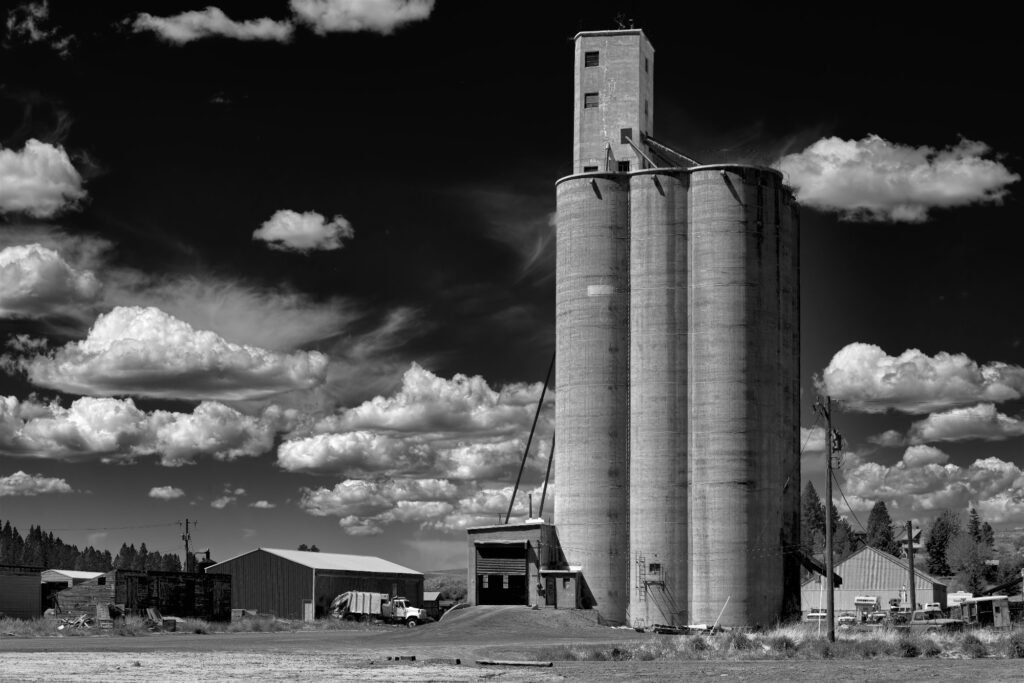
What Bulk Cargo Is Bulk cargo refers to freight shipped in large, unpackaged quantities rather than in individual boxes, pallets, or containers. Dry bulk commodities such as grain, coal, iron ore, and cement are loaded loose into a ship’s hold or a rail hopper car. Liquid bulk commodities such as crude oil, refined fuels, and
Bulk Cargo Read More »
Bulk cargo is freight transported in large, unpackaged quantities, such as grain, coal, ore, or liquid chemicals, typically carried loose in a ship's hold or a dedicated tank rather than in individual packages.
Bureaucracy is a system of organization in which trained, non-elected officials carry out the laws and policies set by elected leaders or an institution’s governing body, following fixed rules, a clear chain of command, and a defined division of labor. The term originally described government administration, but it now applies just as readily to large
Bureaucracy Read More »
A system of organization run by trained, non-elected officials following fixed rules and a defined hierarchy.
In simple terms Burnout is what the World Health Organization calls a syndrome resulting from chronic workplace stress that has not been successfully managed. It is tied to work. The WHO says the term refers specifically to the occupational context and should not be used to describe experiences in other areas of life. How it
Burnout Read More »
Burnout is a syndrome the WHO describes as resulting from chronic workplace stress that has not been successfully managed.