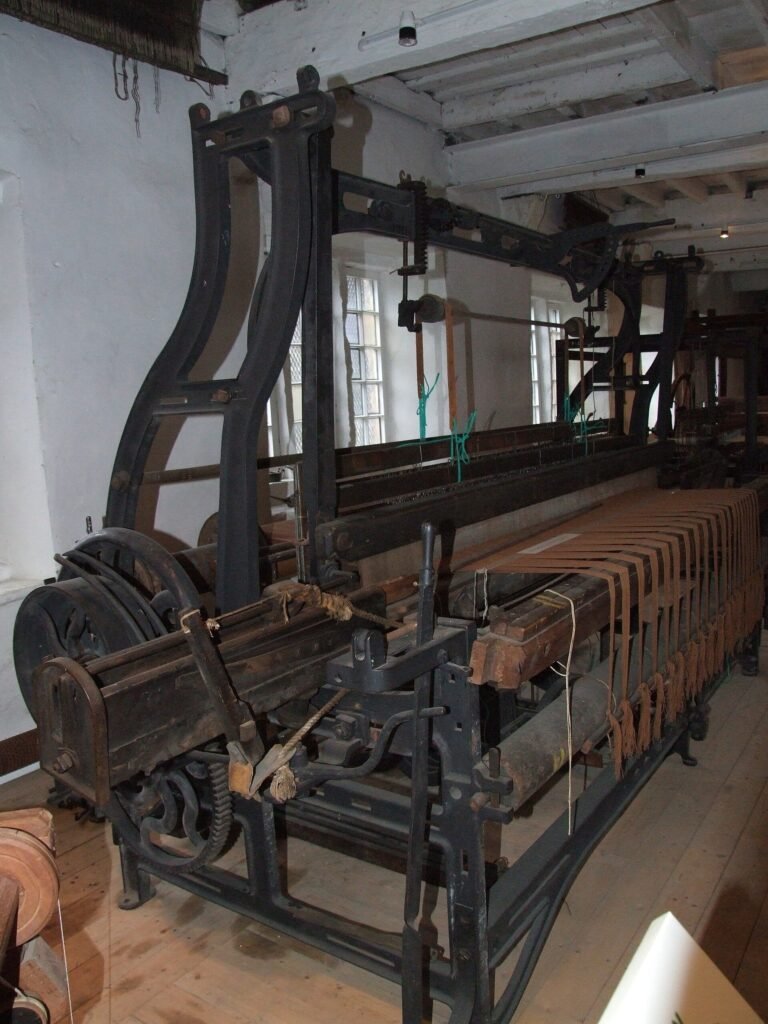
A power loom is a weaving machine driven by mechanical power, such as water or steam, instead of by the weaver’s muscles. The English clergyman Edmund Cartwright patented the first one in 1785, and later looms made large-scale cloth production possible. History of the power loom People have woven cloth for thousands of years. A
Power loom Read More »
A weaving machine driven by water, steam or other mechanical power, first patented by Edmund Cartwright in 1785.
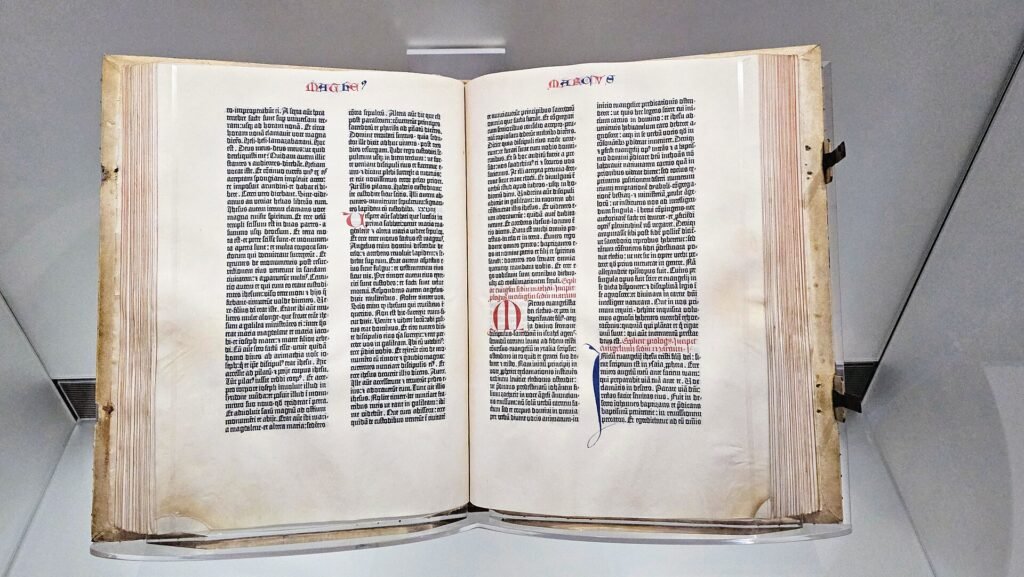
The printing press is a machine that presses inked, movable type against paper to make many identical copies of a text. The German goldsmith Johannes Gutenberg built the first press of this kind in Europe, in the city of Mainz, in the middle of the fifteenth century. Movable type had appeared earlier in East Asia,
Printing press Read More »
The printing press is a machine that presses inked movable type onto paper, and Gutenberg's mid-fifteenth-century version made books cheap and fast to copy.
Radio is the use of electromagnetic waves to send information through space without a connecting wire. It began as wireless telegraphy in the 1890s, grew into voice and music broadcasting in the early 1900s, and now carries everything from AM and FM stations to emergency and weather communications. No single person invented radio, and the
Radio Read More »
A technology that sends sound and data through space as electromagnetic waves, developed by many inventors from the 1890s onward.
A refrigerator is an appliance that keeps food and other goods cold by moving heat out of an insulated cabinet. It developed gradually in the nineteenth and early twentieth centuries from commercial cooling machines, and the sources reviewed for this entry do not credit any single person with inventing it. Household refrigerators became common only
Refrigerator Read More »
An appliance that keeps food cold by moving heat out of an insulated cabinet, developed gradually from commercial cooling machines.
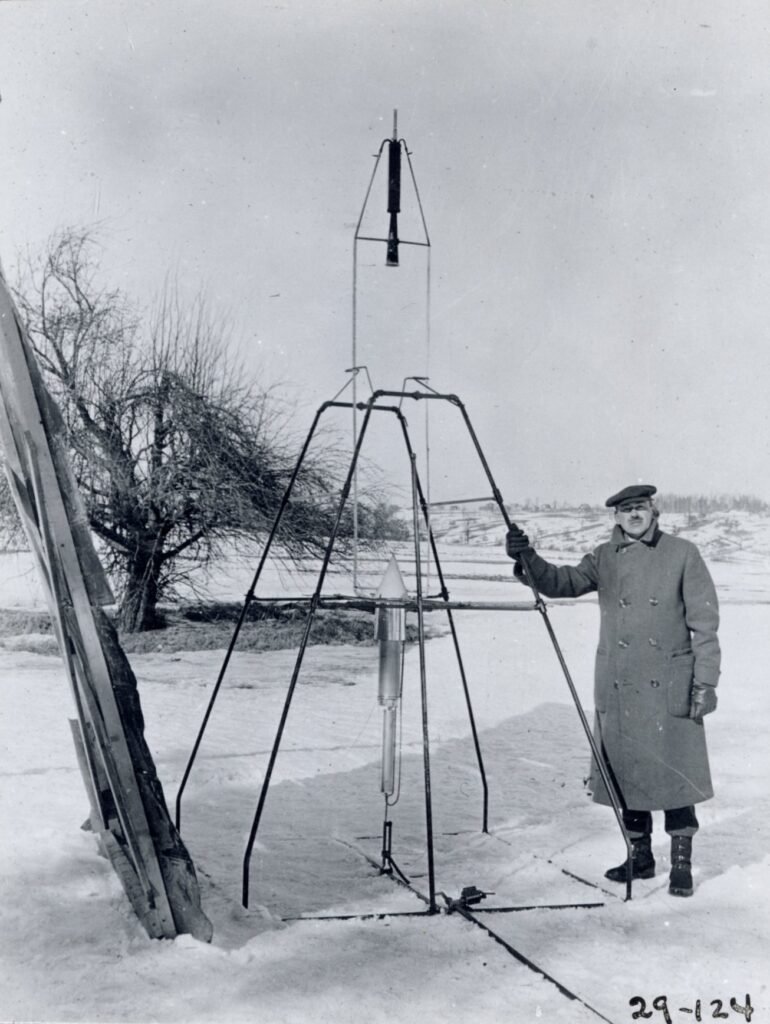
A rocket is a vehicle that moves by throwing a stream of hot gas out of its rear, and it carries its own propellant, so it can work where there is no air. Rockets power fireworks and weapons, lift satellites into orbit and send spacecraft to the Moon and planets. History of the rocket People
Rocket Read More »
A vehicle that moves by expelling gas from its rear and carries its own propellant, so it can fly in the vacuum of space.
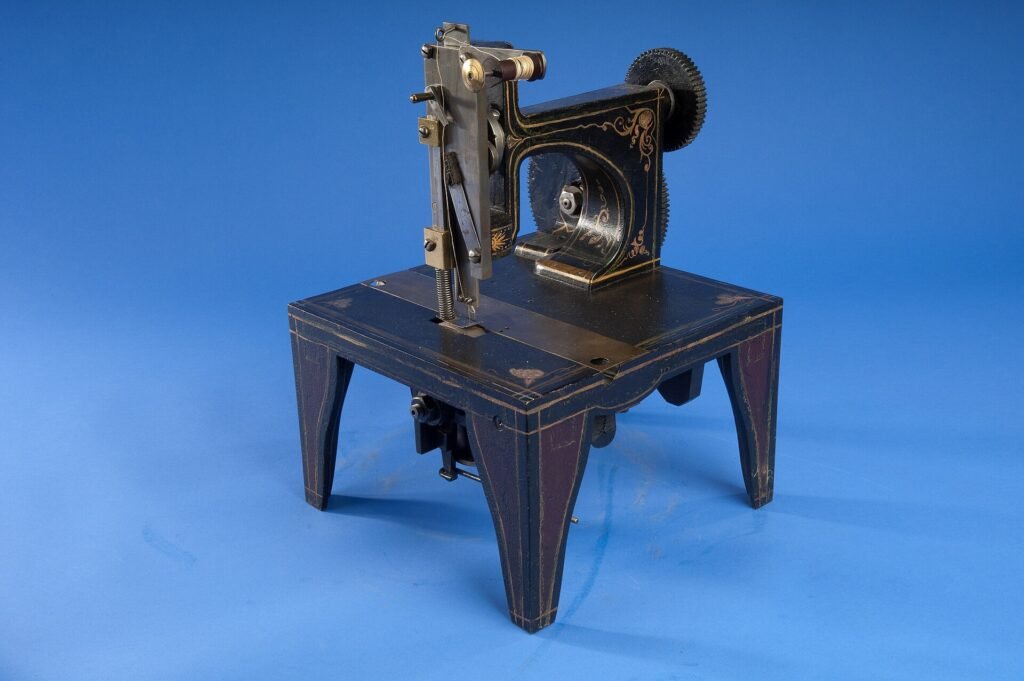
A sewing machine is a machine that stitches fabric with a needle and thread, replacing slow hand sewing. No single person invented it. Many inventors contributed over roughly half a century, and the first practical machines appeared in the 1840s and 1850s, with Elias Howe’s patent of 1846 and Isaac Singer’s patent of 1851 among
Sewing machine Read More »
A machine that stitches cloth with needle and thread, made practical in the 1840s and 1850s by many inventors, including Howe and Singer.
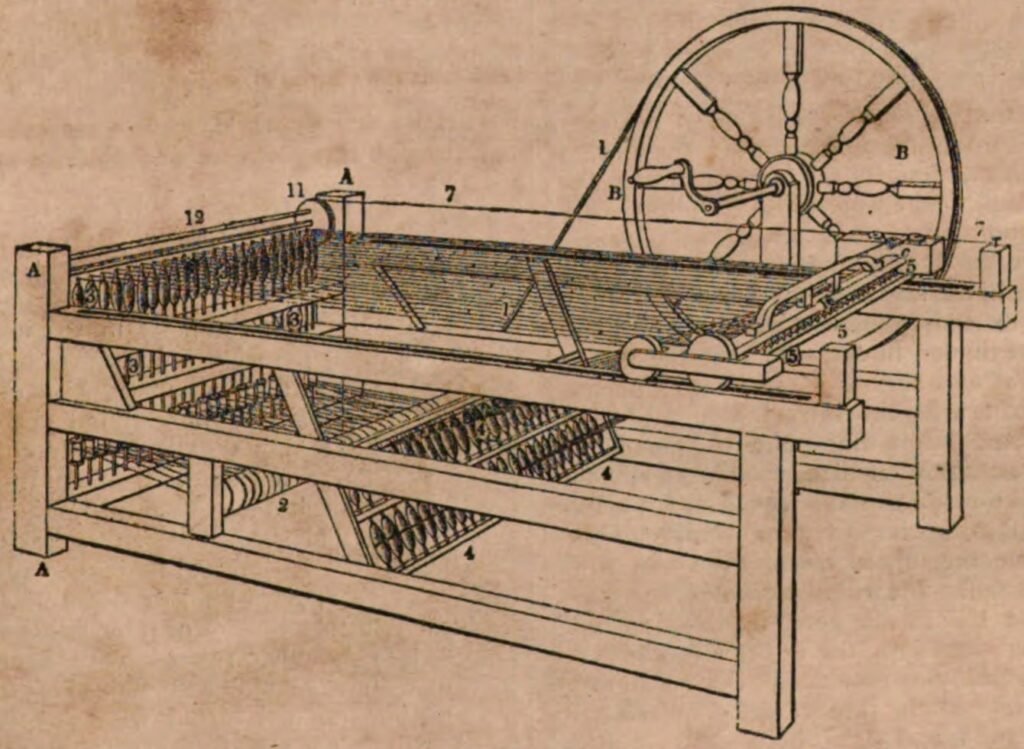
The spinning jenny was a hand-operated spinning machine that spun many threads at once instead of one. James Hargreaves of Lancashire patented it in 1770, and it marked one of the first steps in the development of cotton-spinning machinery. History of the spinning jenny Before the jenny, a spinner using a spinning wheel could make
Spinning jenny Read More »
A hand-operated machine that spun several threads at once, invented by James Hargreaves in 1764 and patented in 1770.
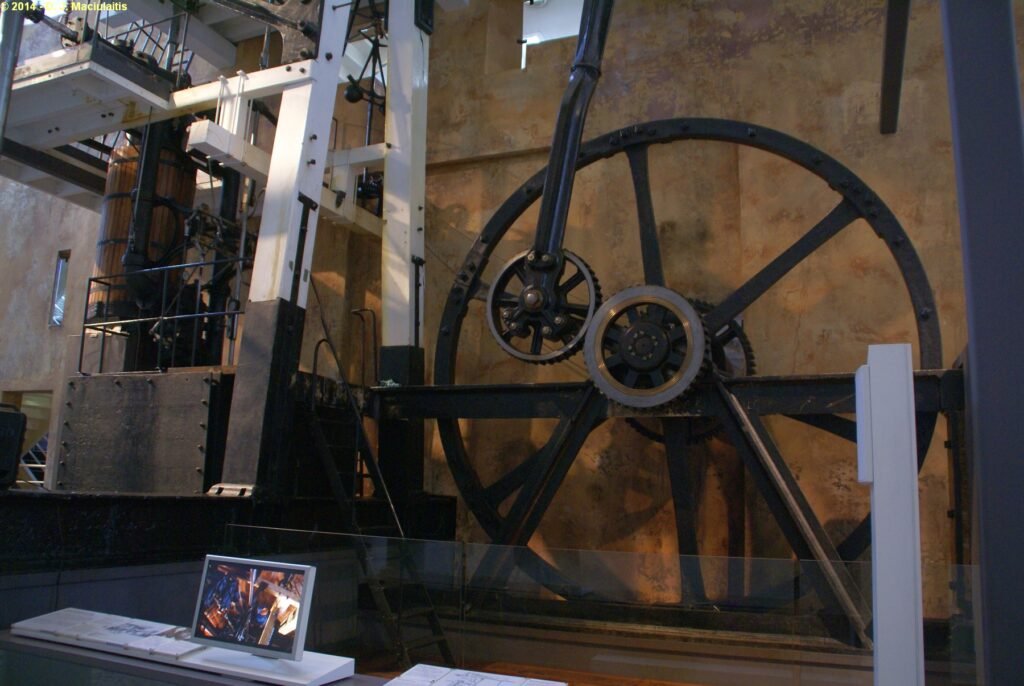
A steam engine is a heat engine that turns the energy in steam into mechanical motion, usually by pushing a piston inside a cylinder. The first practical machine of this kind was built by Thomas Newcomen in 1712 to pump water out of mines, and James Watt’s separate condenser later made steam power efficient enough
Steam engine Read More »
A heat engine that turns steam into mechanical motion; Newcomen built the first practical one in 1712 and Watt made it efficient.
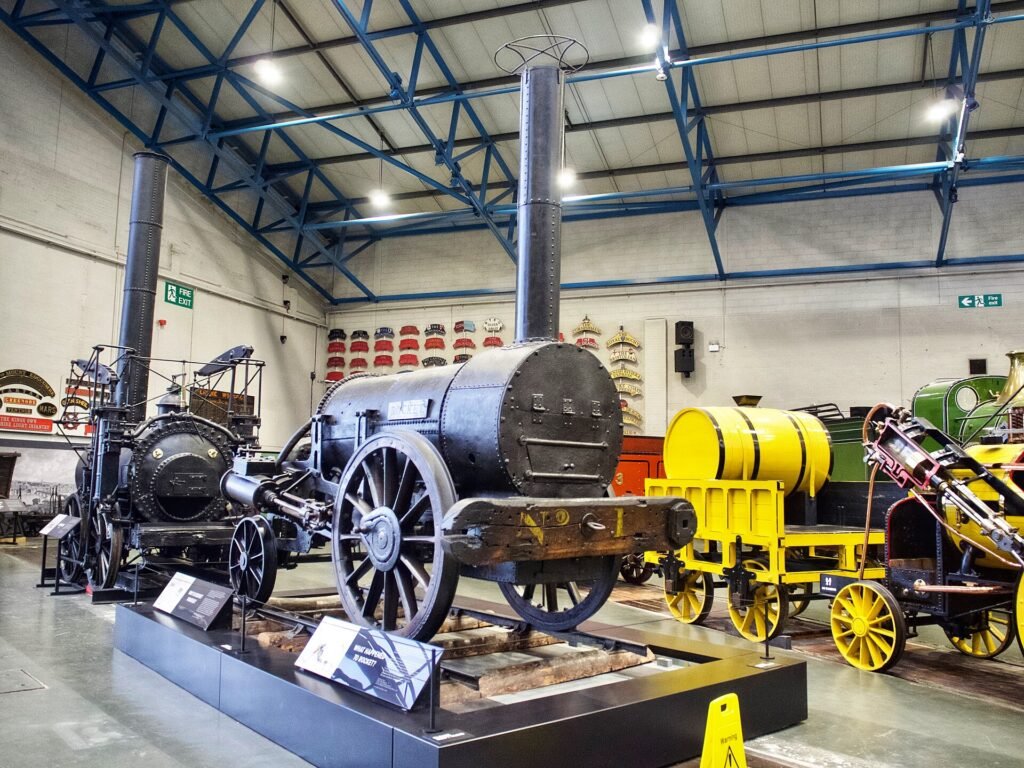
A steam locomotive is a railway engine that makes its own power by burning fuel to boil water and using the steam to move pistons that turn the wheels. Richard Trevithick’s Penydarren locomotive made the first recorded railway trip on February 21, 1804, and Robert Stephenson’s Rocket won the Rainhill trials of 1829. History of
Steam locomotive Read More »
A railway engine powered by steam from a coal-fired boiler, first run by Richard Trevithick in 1804 and perfected by Robert Stephenson's Rocket in 1829.
The stethoscope is a medical instrument that carries sounds from inside the body, mainly from the heart and lungs, to the ears of a clinician. The French physician René Laënnec invented the first one in 1816 in Paris, and the device has since become the best-known symbol of medicine. History of the stethoscope Before 1816,
Stethoscope Read More »
A medical instrument that carries sounds from the heart, lungs and other organs to the clinician's ears, invented by René Laënnec in 1816.