In simple terms A percentage point is the unit for the gap between two percentages. You find it by simple subtraction: a rate that moves from 10% to 12% has risen by 2 percentage points. The term exists to prevent a common mix-up. That same move from 10% to 12% is also a 20% increase,
Percentage point Read More »
A percentage point is the simple difference between two percentages: a rate rising from 10% to 12% has risen by 2 percentage points.
Overview Performance analysis in sport involves the systematic collection, processing, and interpretation of data describing athlete and team performance, used to inform coaching decisions, tactical planning, and individualized training design. The discipline draws on methods ranging from traditional notational analysis, in which observers manually record events such as passes or shots, to sophisticated computer vision
Performance Analysis Read More »
The systematic collection and interpretation of data on athlete and team performance, used to inform coaching decisions, tactics, and training design.
Periodization is the systematic planning of athletic or exercise training over weeks, months, or years, involving deliberate variation in training volume, intensity, and focus to maximize performance gains while managing fatigue and reducing injury risk. Rather than training at a constant level of effort indefinitely, periodized programs cycle through distinct phases, each with a different
Periodization Read More »
The systematic planning of training over time through deliberate variation in volume, intensity, and focus.
Permaculture is a design approach for creating sustainable, self-sufficient human settlements and food systems by observing and mimicking patterns found in natural ecosystems, rather than imposing the simplified, input-intensive structure of conventional agriculture onto the land. The word blends “permanent” and “agriculture” (or, in some framings, “permanent culture”), reflecting its goal of designing systems that
Permaculture Read More »
A design approach for sustainable settlements and food systems that mimics natural ecosystem patterns, founded by Mollison and Holmgren in the 1970s.
A permissible exposure limit, commonly abbreviated PEL, is the maximum concentration of a hazardous substance that a worker may legally be exposed to in workplace air over a specified period of time, set and enforced by the Occupational Safety and Health Administration for a wide range of industrial chemicals and dusts. Most permissible exposure limits
Permissible Exposure Limit Read More »
A permissible exposure limit is the maximum concentration of a hazardous substance that a worker may legally be exposed to in workplace air over a specified period of time.
A persistent identifier is a long-lasting reference assigned to a digital resource, such as a journal article, dataset, or archival record, so that the resource can continue to be located and cited reliably even if its underlying web address or hosting location changes over time. Conventional web addresses are tied to a specific server and
Persistent Identifier Read More »
A persistent identifier is a long-lasting reference assigned to a digital resource so that it can continue to be located and cited reliably even after its web address or hosting location changes.
Origins and Core Philosophy Person-centered planning emerged significantly from the developmental disability services field, developing as an alternative to traditional institutional and program-driven planning models that often organized support around existing program slots and professional assessments of need rather than around what an individual actually wanted for their own life. The approach positions the individual
Person-Centered Planning Read More »
Person-centered planning is a process used in social work and disability services that organizes support and services around an individual own goals, preferences, and vision for their life.
Perspective, in the visual arts, is a set of techniques for representing three-dimensional space and depth on a flat, two-dimensional surface, so that objects appear to recede into the distance the way they do to the human eye. The most influential version, linear perspective, uses converging lines and a vanishing point to create a convincing
Perspective (art) Read More »
Techniques for representing three-dimensional depth on a flat surface, systematized by Brunelleschi in Florence around 1420.
Foundations of Learning Theory Pet behavior and training draws its scientific foundation from operant and classical conditioning principles first described by behavioral psychologists. Operant conditioning explains how consequences shape future behavior: actions followed by favorable outcomes tend to repeat, while actions followed by unfavorable outcomes tend to diminish. Classical conditioning explains how animals form associations
Pet Behavior and Training Read More »
The study and modification of companion animal behavior through learning-based methods to build desirable habits and resolve problem behaviors.
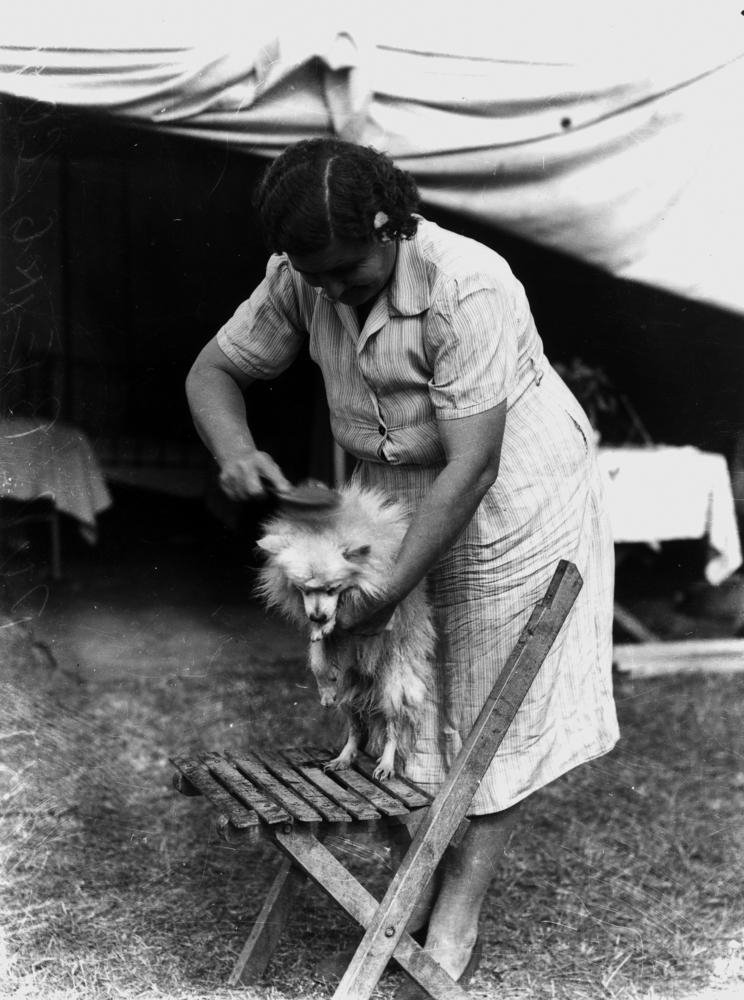
Coat Types and Grooming Needs Grooming requirements vary considerably across coat types. Short, smooth coats generally need minimal maintenance beyond periodic brushing and bathing. Double coats, found in breeds adapted to variable climates, consist of a dense insulating undercoat beneath a longer protective outer coat and require regular deshedding brushing, particularly during seasonal shedding periods,
Pet Grooming Read More »
The professional and home-based practice of maintaining companion animal coat, skin, nail, and hygiene health through bathing, clipping, and related care.