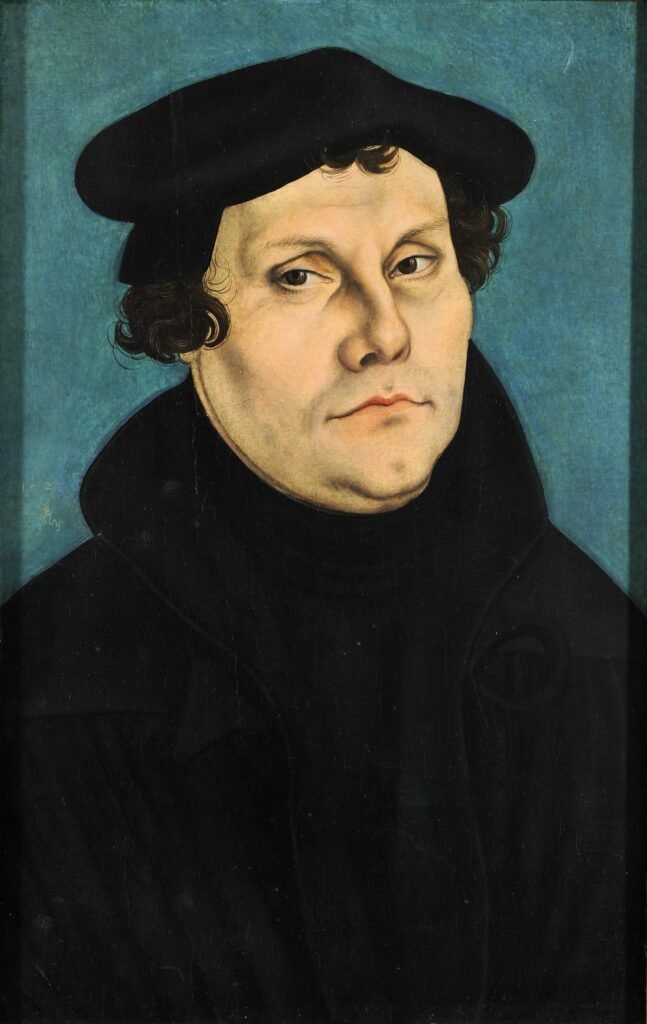
Overview
The Protestant Reformation was a transformative sixteenth century religious movement that challenged the authority and certain doctrines of the Roman Catholic Church, ultimately producing lasting institutional divisions within Western Christianity that persist to the present day. It is conventionally dated from the actions of Martin Luther in 1517.
Luther Challenge
Martin Luther, an Augustinian friar and theology professor, publicly challenged the sale of indulgences and other Catholic practices, arguing for salvation through faith alone rather than through church-mediated sacramental works. His theses, widely circulated thanks to the recently invented printing press, sparked rapid and widespread theological debate across German-speaking lands and beyond.
Spread and Diversification
The reforming impulse quickly diversified beyond Luther own teaching, with figures such as John Calvin developing distinct Reformed theological traditions in Switzerland and beyond, and separate reform movements emerging in England, leading eventually to the establishment of the Church of England as a distinct institution from Rome.
Theological Core Issues
Central theological disputes concerned the basis of salvation, the authority of scripture relative to church tradition, the nature of the sacraments, and the proper structure of church governance, with reformers generally emphasizing scripture as the primary authority and rejecting several practices they viewed as unsupported by biblical teaching.
Political and Social Consequences
The Reformation produced profound political consequences, including prolonged and often violent conflict between Catholic and Protestant territories across Europe, significant shifts in the relationship between church and state, and lasting religious diversity across regions that had previously maintained uniform Catholic allegiance for many centuries.
Role Today
The Reformation legacy continues to shape the denominational landscape of Western Christianity, with Lutheran, Reformed, Anglican, and numerous subsequent Protestant traditions all tracing their theological and institutional roots to this pivotal sixteenth century period of religious upheaval and reform.
Printing and Spread
The recently developed printing press played a crucial role in spreading reforming ideas rapidly across wide geographic areas, allowing Luther writings and translated scripture to reach far larger audiences than earlier reform movements could achieve, fundamentally changing the pace and scale at which religious debate could unfold.
Vernacular translation of the Bible, a priority for many reformers who emphasized direct scriptural access for ordinary believers, further accelerated this process, contributing to rising literacy rates and a broader culture of lay engagement with theological questions previously left largely to trained clergy.
Radical Reformation
Beyond the major Lutheran and Reformed traditions, more radical reform movements emerged as well, including Anabaptist groups advocating adult baptism and more thoroughgoing separation from state authority, illustrating the considerable internal diversity present within the broader reforming movement from its earliest years.
English Reformation
The English Reformation followed a somewhat distinct path, initially driven significantly by King Henry the Eighth political and personal motivations regarding his marriage and the succession, before developing its own more fully articulated Protestant theological identity under subsequent monarchs and church leaders across the following decades.
The resulting Church of England developed a distinctive middle path between Catholic and continental Protestant traditions, a position sometimes described as a compromise that continues to shape Anglican theological identity and worship practice within the broader Protestant world today.
Social and Economic Effects
Reformation era changes extended into social and economic life as well, including the dissolution of many monasteries in Protestant territories, significant redistribution of church property and wealth, and shifting attitudes toward work, charity, and social obligation shaped by emerging Protestant theological emphases.
Legacy for Denominational Diversity
The Reformation decisive break with the principle of a single unified Western church opened the door to the extensive denominational diversity characteristic of modern Protestantism, as subsequent centuries produced numerous further divisions and new movements building upon or reacting against the original reforming traditions established during the sixteenth century.
This pattern of ongoing division and renewal, sometimes described by historians as a defining feature of Protestant religious culture, contrasts with the comparatively more centralized institutional structure retained within Roman Catholicism, even as Catholicism itself experienced its own significant internal reform movements during the same broad historical period.
Closing Note
Few events in Western history have produced consequences as far-reaching as the Protestant Reformation, whose theological, political, and cultural effects continue to shape the religious landscape of much of the world well beyond the European context in which it originally unfolded.
Historians continue to study its causes and consequences from multiple angles, reflecting the sheer scale of the transformation it set in motion.
Final Thought
What began as a dispute over indulgences grew into one of the most consequential transformations in the history of Western religion, politics, and culture, with effects still visible across the religious landscape today.
Its reach extends across continents and centuries, well past its original European setting.
Each anniversary of its key events prompts renewed public and scholarly reflection on its lasting significance.
Few events have reshaped so much of the Western world in so short a span of years.
Its echo persists across many churches even now.
Historians, theologians, and ordinary believers alike continue to study its patterns closely.
That scrutiny shows no sign of ending soon, given the sheer scale of what it set in motion.
New studies of its documents keep appearing regularly, deepening the historical record considerably further still.
Interest shows no sign of fading anytime soon among historians of early modern Europe.
It remains a cornerstone topic for historians of European religious and political change.
It endures as a defining chapter of European and world religious history.
It will likely remain so for a long time yet to come.
More in History of Religion
Key facts
- Conventionally dated from Martin Luther 1517 theses
- Produced major new traditions including Lutheran and Reformed churches
- Challenged papal authority and certain Catholic doctrines and practices
- Prompted the Catholic Counter-Reformation in response
Related concepts
Quick checkWhat event is conventionally treated as the starting point of the Protestant Reformation?Show answer
Martin Luther posting his Ninety-Five Theses in 1517, which challenged Catholic practices including the sale of indulgences, is conventionally treated as the starting point.
Sources
- MacCulloch, D. (2003). Reformation: Europe Divided House. Allen Lane.
- Ozment, S. (1980). The Age of Reform, 1250-1550. Yale University Press.
Editorially reviewed by Specialty Digest Editorial TeamLast reviewed November 4, 2026Researched and drafted with AI assistanceReport an issue