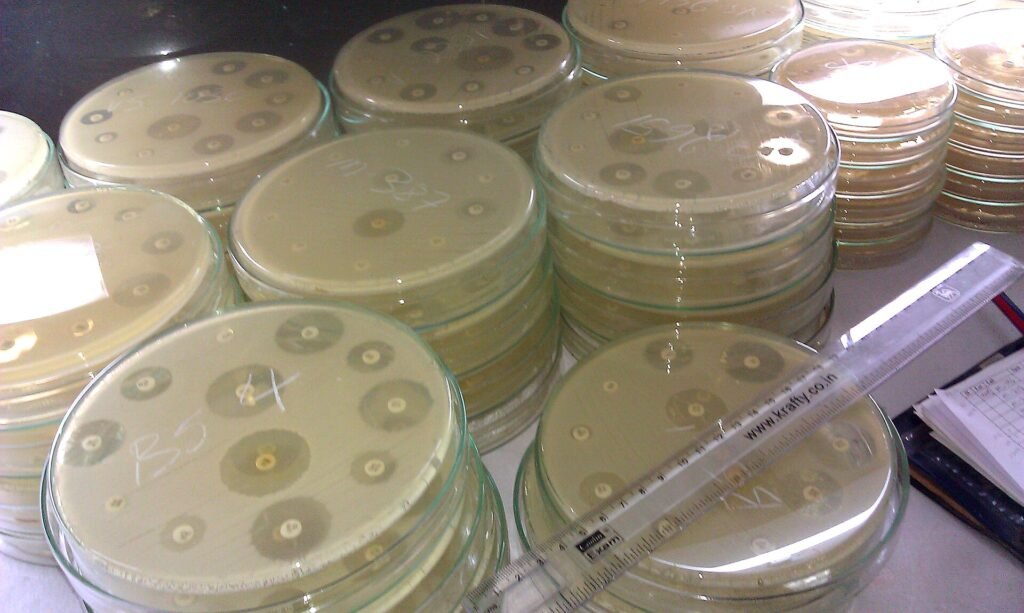
The World Health Organization (WHO) reports that one in six laboratory-confirmed bacterial infections worldwide in 2023 was resistant to antibiotic treatment. The finding comes from the Global Antibiotic Resistance Surveillance Report 2025, which draws on data from more than 100 countries. This article summarizes the report as described in WHO’s announcement, reposted by the Pan American Health Organization (PAHO), and explains how to read the numbers.
What did WHO find?
WHO says one in six bacterial infections confirmed in laboratories in 2023 resisted antibiotic treatment. Between 2018 and 2023, resistance rose in more than 40% of the monitored antibiotics, with an average annual increase of 5 to 15%. Resistance estimates are presented for 22 antibiotics for the first time, covering urinary, gastrointestinal and bloodstream infections and gonorrhea. WHO Director-General Tedros Adhanom Ghebreyesus said antimicrobial resistance is outpacing advances in modern medicine and threatening the health of families worldwide. Our entry on antibiotic resistance explains the underlying idea.
How does resistance vary by region?
WHO reports these regional levels:
- South-East Asia and Eastern Mediterranean: one in three infections resistant
- Africa: one in five
- The Americas: one in seven, slightly better than the global average
WHO says resistance is higher and worsening where health systems cannot diagnose or treat bacterial pathogens. By our own arithmetic, one in three is about 33%, one in five is 20%, one in six about 17% and one in seven about 14%.
Which bacteria are involved?
The report covers eight pathogens: Acinetobacter species, E. coli, K. pneumoniae, N. gonorrhoeae, non-typhoidal Salmonella, Shigella, S. aureus and S. pneumoniae. WHO says E. coli and K. pneumoniae are the leading drug-resistant Gram-negative bloodstream pathogens. Over 40% of E. coli and over 55% of K. pneumoniae are resistant to third-generation cephalosporins, a class of antibiotics, and WHO reports that resistance in the African Region exceeds 70%. It adds that the effectiveness of carbapenems and fluoroquinolones, two other antibiotic classes, is declining against several pathogens.
How good is the data?
Participation in the surveillance system, called GLASS, rose from 25 countries in 2016 to 104 countries in 2023. WHO also notes that 48% of countries did not report in 2023 and that about half of reporting countries still lacked systems to generate reliable data. The global figure therefore rests on the countries that reported, and WHO’s wording points to gaps. Our entry on epidemiology explains how disease patterns are measured in populations.
What does WHO recommend?
WHO’s recommendations are aimed at governments and health systems and include these points:
- Report high-quality resistance and antimicrobial use data to GLASS by 2030
- Strengthen laboratory systems and surveillance, especially in underserved areas
- Align treatment guidelines and essential medicines lists with local resistance patterns
- Invest in next-generation antibiotics and rapid point-of-care molecular tests
- Follow the One Health approach set out in the 2024 UN political declaration on antimicrobial resistance
The One Health idea links human, animal and environmental health, and our entry on zoonotic disease touches on that link. This article reports public health policy and does not offer medical advice. A person with an infection should follow the guidance of a clinician.
Why do the first-time estimates matter?
WHO says this edition presents resistance estimates for 22 antibiotics for the first time, covering urinary, gastrointestinal and bloodstream infections and gonorrhea. Estimates by drug and infection site give health systems a clearer view of which treatments are losing effect where. The announcement does not list the 22 drugs or the results for each, so we do not report them. It does say that carbapenem and fluoroquinolone effectiveness is declining against several pathogens, which is the kind of detail the new estimates are meant to support.
How to read the numbers
A figure of one in six refers to laboratory-confirmed infections tested for resistance, which may differ from all infections in a country, since many cases are never tested. Regional averages hide differences between countries. The yearly increase of 5 to 15% is the average across antibiotic and pathogen combinations that rose, as WHO describes it, so it is not a rate for every drug. Because the data are for 2023, the picture could differ now. These reading points are general and are not statements from WHO.
Why does resistance matter?
When an antibiotic stops working against a bacterium, infections become harder to treat and options narrow. WHO calls out the importance of access to medicines, quality diagnostics and vaccines, and of responsible use of antibiotics. Our entry on the vaccine explains one tool that reduces infections in the first place. Public health reporting on this topic often involves large regional differences, which is why WHO stresses local data.
Related reading: World Health Statistics 2026: WHO Says Progress Is Slowing and the World Is Off Track for 2030.
Related reading: The Gut Microbiome: What the Human Microbiome Project Found.
Glossary
- Antimicrobial resistance: the ability of microbes to survive drugs that once killed them or stopped their growth
- Surveillance: systematic collection of health data over time
- Gram-negative bacteria: a group of bacteria defined by their cell wall structure
- Cephalosporin: a class of antibiotics
- GLASS: WHO’s Global Antimicrobial Resistance and Use Surveillance System
The definitions of antimicrobial resistance, surveillance, Gram-negative and cephalosporin are general and are not quoted from WHO.
What is not covered here?
The PAHO page does not give the number of infections tested, country-level results outside the examples above or trends after 2023. We have left them out. Readers who need the full tables should consult WHO’s report.
Key facts at a glance
- One in six laboratory-confirmed bacterial infections resistant in 2023
- Resistance rose in over 40% of monitored antibiotics from 2018 to 2023
- 104 countries reported in 2023, up from 25 in 2016
- Eight pathogens and 22 antibiotics covered
- Regional range: one in seven in the Americas to one in three in South-East Asia and Eastern Mediterranean
Frequently asked questions
What does one in six mean?
About 17% of laboratory-confirmed bacterial infections in 2023 were resistant to antibiotic treatment.
Where is resistance highest?
WHO reports one in three in the South-East Asian and Eastern Mediterranean regions.
Is the situation getting worse?
WHO says resistance rose in over 40% of monitored antibiotics from 2018 to 2023.
Is this medical advice?
No. It summarizes a public health report.
More in Health
- Tuberculosis in 2024: WHO Estimates 10.7 Million Cases and 1.23 Million Deaths
- Childhood Immunization in 2025: UNICEF and WHO Report 85% DTP3 Coverage and 13.5 Million Zero-Dose Children
- Global Hunger in 2025: FAO Estimates 645 Million People Faced Hunger and 2.7 Billion Cannot Afford a Healthy Diet
- World Health Statistics 2026: WHO Says Progress Is Slowing and the World Is Off Track for 2030