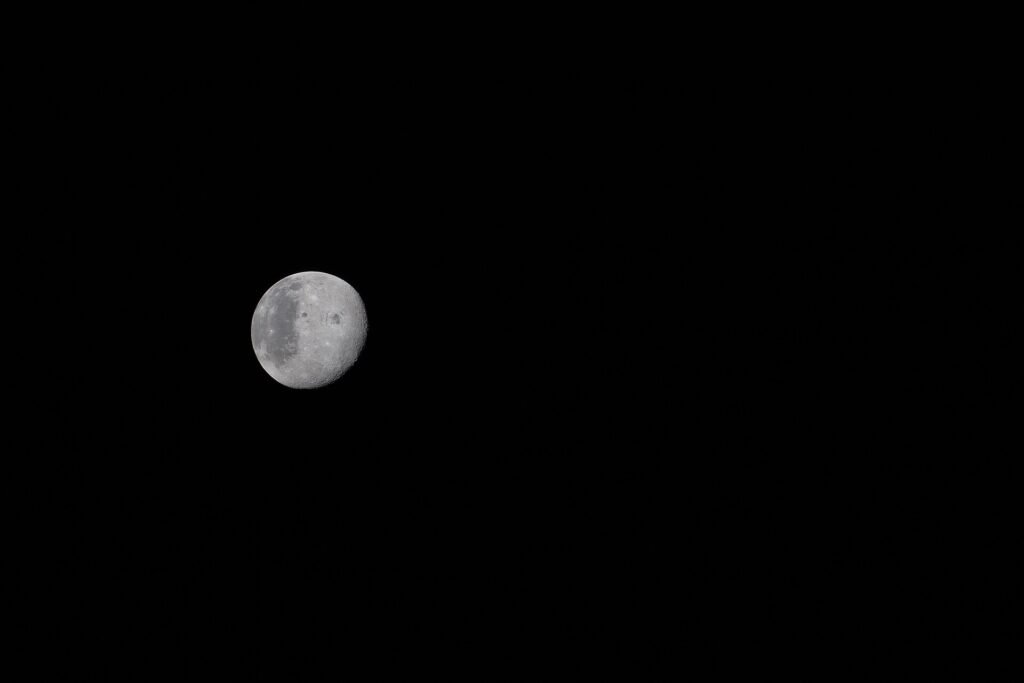
On October 7, 2026, NASA released the lunar science data from the Artemis II mission: more than 800 gigabytes uploaded to the Planetary Data System, including more than 11,000 full-resolution images and video of the Moon and 8.5 hours of crew audio. This article summarizes NASA’s announcement, explains what is in the release and notes what the agency has not yet said about scientific findings.
What did NASA release?
NASA says it uploaded more than 800 GB of Artemis II lunar science data, some of it previously unreleased, to its Planetary Data System. The release includes more than 11,000 full-resolution images and video of the Moon, captured with the crew’s handheld cameras and Orion’s cameras. It also includes 8.5 hours of audio in which the crew describe their scientific observations of the lunar surface, and crew-annotated images. NASA describes the set as the first planetary science dataset captured primarily by humans in more than half a century.
Who collected it?
The Artemis II crew were NASA astronauts Reid Wiseman, Victor Glover and Christina Koch and Canadian Space Agency astronaut Jeremy Hansen. NASA says Flight Day 6 was the lunar flyby day, April 6, 2026. Our earlier article on Artemis II covers what NASA reported from the first crewed Moon flyby in more than 50 years, and this release adds the underlying science material.
What are the impact flashes?
One part of the release describes impact flashes. Crew members marked flashes on an annotated image from April 6, 2026. Wiseman wrote in blue, Glover in green and Hansen in red. NASA says the annotations suggest several circled observations were likely the same impact events seen at different times. In other words, different crew members may have noticed the same flash. NASA does not say how many distinct impacts occurred, so we do not give a number.
What documents come with the data?
NASA released three accompanying publications:
- The Preliminary Lunar Science Report
- The Lunar Science Operations Report
- The Lunar Science Data User Guide
The data is hosted through the Planetary Data System geosciences node, and NASA points readers to go.nasa.gov/Artemis2LunarScience for more information. The agency’s announcement does not summarize the findings in the reports, so we do not either.
How to read the numbers
By our own arithmetic, 8.5 hours of audio equals 510 minutes. The 800 GB figure covers more than the images, so dividing it by 11,000 would not give a file size, and we do not attempt that. The phrase more than half a century refers to the gap since the Apollo era, which our entry on the Apollo 11 moon landing helps place. NASA’s description of the dataset as primarily captured by humans is its own characterization, and we report it as NASA’s claim.
Why does human observation matter?
Robotic spacecraft collect large amounts of lunar data, but a trained observer can notice context, describe color and texture and mark features in real time. That is a general point and is not a quotation from NASA. The release suggests why the agency stresses the crew audio and annotations alongside the images, since they tie observations to specific locations and moments.
Why release data openly?
Open release lets scientists outside the mission team test ideas and check the crew’s observations. NASA’s announcement frames the Planetary Data System as the home for the material and pairs it with a user guide so that others can work with it. A general benefit of open archives is that analyses can be repeated by different groups, which tends to catch mistakes. That is a general point and is not stated in NASA’s release.
How should readers treat early reports?
The first of the three documents is called a preliminary report. Preliminary results are early readings that later analysis can refine, so readers should expect details to change. Our summary contains no scientific conclusions for that reason. It reports what NASA released, who collected it and where it can be found, and it leaves the interpretation to the reports and to researchers who study the data over the coming months and years.
What makes crew audio useful?
Spoken descriptions give context that a photograph cannot, such as what an observer thought was worth noting at the moment. Matching the 8.5 hours of recordings to the annotated images lets researchers see which features the crew found notable. NASA does not list the topics covered in the audio, so we do not guess at them.
What can the public do with it?
The Planetary Data System is a public archive, so researchers and curious readers can in principle download the files. We have not tested the archive, and the size of the dataset means access may take time and storage. The User Guide is the place NASA directs readers who want to understand the file organization.
What comes next for the program?
NASA’s plans for later missions are described in our article on Artemis III, which covers a 2027 Earth-orbit test of lunar landers ahead of a planned 2028 landing near the Moon’s South Pole. Scientific data from Artemis II may inform how those later crews work, though NASA’s release does not say so directly, so that link is our inference. Our guide to Europa Clipper shows another way NASA pairs spacecraft with careful data release.
Related reading: Artemis II Preliminary Lunar Science Report: Impact Flashes, Colors and an Eclipse.
Glossary
- Planetary Data System: NASA’s public archive for planetary mission data
- Lunar flyby: a close pass of the Moon without landing or entering lunar orbit
- Impact flash: a brief burst of light made when a small object strikes a surface
- Annotated image: an image marked up with notes or labels
- Full-resolution image: an image at the camera’s native size without reduction
These definitions are general explanations and are not quoted from NASA.
What is not covered here?
NASA’s announcement does not give distances, instrument specifications beyond the cameras, the number of distinct impact flashes or the conclusions of the preliminary science report. We have not added them. Readers should read the three reports and the data guide for those details.
Key facts at a glance
- Release date: October 7, 2026
- Data volume: more than 800 GB
- Images and video: more than 11,000 of the Moon
- Crew audio: 8.5 hours
- Flyby day: April 6, 2026
Frequently asked questions
Where is the data hosted?
In NASA’s Planetary Data System, through the geosciences node.
Who took the pictures?
The crew with handheld cameras, along with Orion’s cameras.
Did the crew see impacts?
They marked impact flashes, and NASA says several marks were likely the same events.
More in Science
- Roman Space Telescope Enters Science Commissioning: What NASA Reports
- Hubble Gravitational Lens Image Prepares Astronomers for Roman Telescope Science
- CHAPEA Mission 2: NASA's Simulated Mars Crew Marks One Year in a Houston Habitat
- Perseverance Measures Martian Dust Down to 100 Nanometers: What NASA Says About Protecting Crews