The International Union for Conservation of Nature announced on April 9, 2026 in its IUCN Red List update that the emperor penguin and the Antarctic fur seal are now classified as Endangered, and that the southern elephant seal is now Vulnerable. The IUCN links the changes to climate change and, for the elephant seal, to avian influenza. This article summarizes the IUCN’s press release, the numbers it gives and the points where its own summary and body text differ.
What changed for the emperor penguin?
The IUCN moved the emperor penguin, Aptenodytes forsteri, from Near Threatened to Endangered. Projections show the population halving by the 2080s. The IUCN says satellite imagery indicates a loss of about 10% of the population between 2009 and 2018, more than 20,000 adults. The main driver is early sea-ice breakup, which has hit record lows since 2016. Chicks and molting adults depend on fast ice, meaning sea ice attached to the coast. The assessment was carried out by the IUCN SSC Penguin Specialist Group with BirdLife International.
What changed for the Antarctic fur seal?
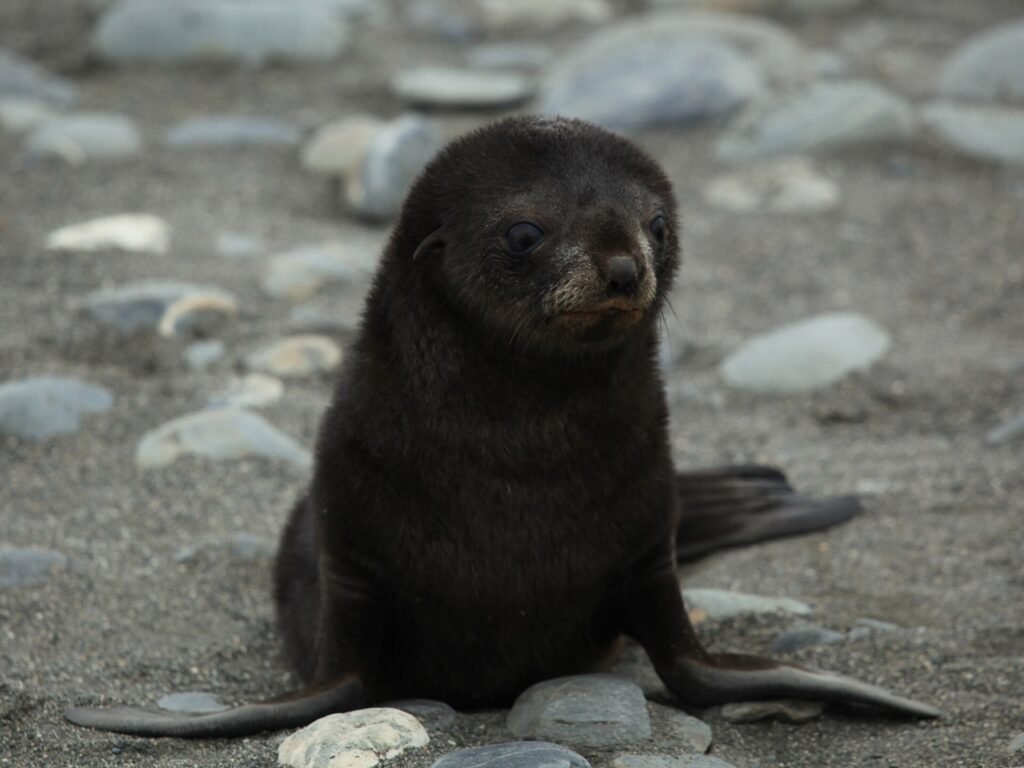
The Antarctic fur seal, Arctocephalus gazella, moved from Least Concern to Endangered. The IUCN says its population fell by more than 50%, from an estimated 2,187,000 mature seals in 1999 to 944,000 in 2025. The main driver is climate change pushing krill, the small shrimp-like animals the seals eat, to deeper, colder water, which reduces their food supply. Krill shortages at South Georgia have sharply cut first-year pup survival, which has left an aging breeding population. Other possible pressures include predation by killer whales and leopard seals and competition with recovering baleen whales.
What changed for the southern elephant seal?
The southern elephant seal, Mirounga leonina, moved from Least Concern to Vulnerable. The cause is highly pathogenic avian influenza, which has spread to mammals since 2020. The IUCN says the disease has affected four of five major subpopulations and killed over 90% of newborn pups in some colonies. This is a statement about wildlife populations, and it does not describe risks to people.
Where do the IUCN’s own pages disagree?
The press release summary describes the elephant seal as at risk of extinction, but the body text lists it as Vulnerable, so we use Vulnerable. The summary also gives the fur seal decline as since 2000, while the body says 1999. We follow the body text, which gives the specific figures.
How to read the numbers
By our own arithmetic, the fur seal fall from 2,187,000 to 944,000 is a drop of about 57%, since 944,000 divided by 2,187,000 is about 0.43. The period from 1999 to 2025 is 26 years. For the emperor penguin, if 20,000 adults are about 10% of the population, the starting population would be about 200,000 adults or somewhat more, because the release says more than 20,000. These calculations are ours and are not IUCN statements.
What does Endangered mean?
On the IUCN Red List, Endangered is a category for species facing a very high risk of extinction in the wild, one step above Vulnerable and below Critically Endangered. That is a general description of the scale and is not quoted from the press release. A listing is an assessment of risk, not a statement that a species will disappear. The IUCN notes that full assessments will appear on species profiles in a broader Red List update later in 2026.
How does it connect to satellite findings?
NASA’s Earth Observatory uses Landsat to track penguin colonies, and its account is summarized in our article on emperor penguins from space. Sea ice is the common thread. Our report on Antarctic sea ice in 2026 gives this year’s maximum, our summary of the glacier loss in 2025 covers ice lost on land, and the Global Tipping Points Report 2025 covers systems that may change abruptly.
Why do krill matter so much?
Krill sit near the base of the Southern Ocean food web, so a shift in where they live ripples upward to seals, penguins and whales. The IUCN’s explanation for the fur seal decline is that warming pushes krill to deeper, colder water, out of easy reach of young seals feeding near the surface. That mechanism is the IUCN’s statement. A general implication is that a species can decline even where its breeding beaches are protected, because the food it needs has moved. The release does not quantify the shift in krill.
Why are three different species in one update?
The three assessments cover animals that share the same region and depend on the same ocean and ice. That is why they appear together in one announcement. Their threats differ, with ice for the penguin, food for the fur seal and disease for the elephant seal, but each is tied to conditions that have changed in recent years. The press release presents them as a group for this reason.
What should readers watch for next?
The release says the Antarctic Treaty Consultative Meeting is in May, and that full assessments will appear in a broader Red List update later in 2026. Readers should look for the species profiles, which will give detailed evidence and the data behind each decision. The press release does not say what actions the listings might trigger, so we make no prediction.
Glossary
- Red List: the IUCN’s global inventory of species and their extinction risk
- Fast ice: sea ice attached to the coast
- Krill: small shrimp-like animals at the base of the Antarctic food web
- Subpopulation: a distinct group within a species
- Highly pathogenic avian influenza: a severe form of bird flu
These definitions are general explanations and are not quoted from the IUCN.
What is not covered here?
The press release does not give the current number of emperor penguins, the date of the next Red List update or details of the assessments beyond the headline figures. We have not added them.
Key facts at a glance
- Emperor penguin: Near Threatened to Endangered
- Antarctic fur seal: Least Concern to Endangered, with a fall from 2,187,000 to 944,000
- Southern elephant seal: Least Concern to Vulnerable
- Release date: April 9, 2026
- Drivers: sea ice loss, krill shifts and avian influenza
Frequently asked questions
Why are emperor penguins endangered?
The IUCN points to early sea-ice breakup, with the population projected to halve by the 2080s.
Why did the fur seal decline?
Climate change is pushing krill deeper, which cuts food and pup survival.
Is bird flu involved?
It is the cause of the elephant seal’s change to Vulnerable.
More in Nature
- Vega Island, the Antarctic Skull: Warm Winter 2026 Exposes Bare Ice
- Bismarck Sea Submarine Eruption: Satellites Track Plumes and Pumice in May 2026
- WMO Decadal Climate Update: 86 Percent Chance a Year Between 2026 and 2030 Breaks the Heat Record
- Rupert Bay: Why Rivers Turn James Bay Water the Color of Tea in Landsat 9 Imagery