Phosphorus is the chemical element with atomic number 15 and the symbol P. It is a nonmetal in group 15 of the periodic table that exists in several different forms, the best known being white, red and black phosphorus. All living things need phosphorus, and most of the element mined today goes into fertilizer.
History of phosphorus
Phosphorus was first made in 1669 by Hennig Brandt, a merchant and alchemist in Hamburg. He boiled down a large quantity of urine and heated the residue until it was red hot, which released a vapor that he collected by condensing it in water. Brandt hoped that he had found the philosopher’s stone, a legendary substance meant to turn base metals into gold, so he kept the method secret.
When he ran out of money, Brandt sold his knowledge to Daniel Kraft, who exhibited the glowing substance around Europe. In London, Robert Boyle became fascinated, worked out how it was made and studied it systematically. Boyle’s assistant Ambrose Godfrey later set up a business selling phosphorus.
The name comes from the Greek phosphoros, meaning bringer of light, because the element glows faintly in the dark. Supplies increased after chemists realized that bone is mostly calcium phosphate and could be used as a source. Demand from match manufacturers in the 1800s then created a steady market.
Properties of phosphorus
Phosphorus has a standard atomic weight of about 30.974 and an electron configuration of [Ne] 3s2 3p3. Its common oxidation states are +5, +3 and minus 3. PubChem lists an electronegativity of 2.19 and a first ionization energy of 10.487 electronvolts.
The two main forms behave very differently. White phosphorus is a waxy solid made of P4 molecules shaped like tiny pyramids. It melts at about 44 degrees Celsius and has a density of about 1.82 grams per cubic centimeter. It is poisonous, it can burn skin on contact, it glows in the dark, and it catches fire spontaneously in air, so it is stored under water.
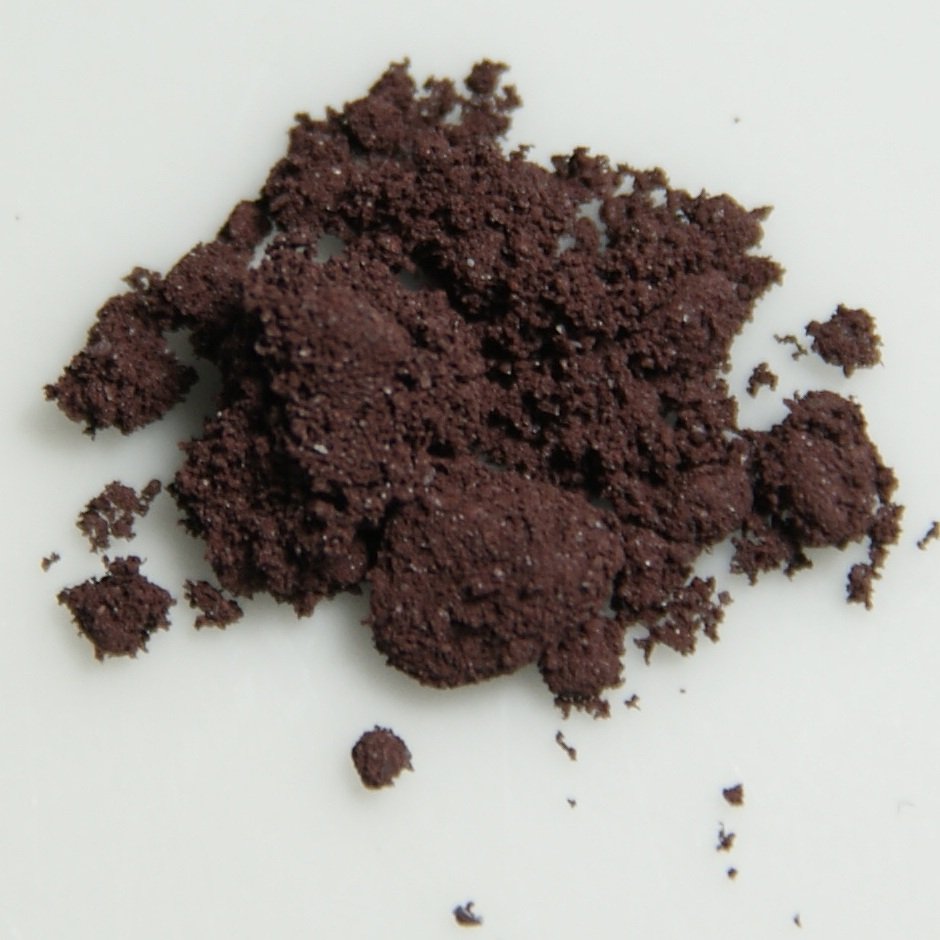
Red phosphorus is an amorphous solid, meaning it has no regular crystal structure. It is made by gently heating white phosphorus to about 250 degrees Celsius with air excluded. Red phosphorus is not toxic in the same way and is far more stable. A third form, black phosphorus, has a layered structure and has attracted interest in electronics research. The existence of several forms of one element is called allotropy.
Occurrence and production of phosphorus
Phosphorus is never found uncombined in nature. It occurs widely in minerals, and the main commercial source is phosphate rock, which contains the apatite minerals. Large deposits are found in the United States and elsewhere in the world.
White phosphorus is made industrially by heating phosphate rock in a furnace with carbon and silica. The phosphorus leaves as a vapor, which is collected under water. Most phosphate rock never becomes the element at all. Instead it is treated with acid to make phosphoric acid, which is then used in fertilizers and food additives.
Because phosphate rock is a finite resource, some scientists have raised concerns about a future peak in supply. The Royal Society of Chemistry reports fears that a peak could arrive around 2050, after which sources would dwindle. Recovering phosphorus from sewage and animal waste is one response.
Uses of phosphorus
By far the largest use of phosphorus compounds is in fertilizer. Phosphate ores are converted to phosphoric acid and then to ammonium phosphate, which supplies crops with a nutrient that soil often lacks. The other major nutrient in most fertilizers is nitrogen.
Red phosphorus is the material on the striking strip of a matchbox, against which safety matches are scraped to light them. White phosphorus has military uses in flares and incendiary devices, a practice that is limited by international law. Phosphorus is also important in steel production, and phosphates are used to make special glasses and fine china.
Phosphates were once common ingredients in detergents, but they are being phased out in some countries. When they reach rivers and lakes, they feed algae that grow rapidly. This process is known as eutrophication, and it can leave water without enough dissolved oxygen for fish.
Isotopes of phosphorus
Phosphorus has just one stable isotope, phosphorus-31, so the element is monoisotopic. Because its nucleus has a magnetic moment, phosphorus-31 is widely used in nuclear magnetic resonance studies of biological molecules.
Several radioactive isotopes are known. Phosphorus-32 has a half-life of about 14.3 days and emits beta particles. Biologists have used it as a tracer to follow phosphorus through cells, and it featured in classic experiments on DNA. An isotope is a version of an element with a particular number of neutrons, and the half-life is the time it takes half of a radioactive sample to decay.
Phosphorus in life and the environment
Phosphorus is essential to all living things. It forms the sugar-phosphate backbone of DNA and RNA, and it carries energy within cells as part of adenosine triphosphate, known as ATP. It is also found in many other biologically important molecules.
People take in about 1 gram of phosphate a day and store roughly 750 grams in the body. Most of that is in bones and teeth, which are made largely of calcium phosphate. Phosphate is also a key nutrient for plants.
White phosphorus is dangerous, and contact with skin can cause severe burns. Excess phosphates from fertilizers and detergents can pollute waterways, where the resulting algae block out light and use up dissolved oxygen. This entry is general background rather than safety or health advice.
Key facts
- Phosphorus has atomic number 15 and the symbol P, and sits in group 15 and period 3 of the periodic table.1
- Hennig Brandt first made phosphorus in Hamburg in 1669 by heating evaporated urine.1
- White phosphorus melts at about 44 degrees Celsius, is poisonous and ignites spontaneously in air.1
- Phosphorus has one stable isotope, phosphorus-31, and a standard atomic weight of about 30.974.2
- Phosphorus forms the sugar-phosphate backbone of DNA and RNA and is part of ATP.1
Related concepts
In the news
Quick checkWho discovered phosphorus?Show answer
The German alchemist Hennig Brandt first made phosphorus in Hamburg in 1669 by heating the residue of boiled-down urine.
Sources
- Royal Society of Chemistry, Periodic Table: Phosphorus, https://periodic-table.rsc.org/element/15/phosphorus
- National Center for Biotechnology Information, PubChem Periodic Table: Phosphorus (element 15, including IUPAC-sourced atomic weight and isotope data), https://pubchem.ncbi.nlm.nih.gov/element/15
Editorially reviewed by Specialty Digest Editorial TeamLast reviewed November 4, 2026Researched and drafted with AI assistanceReport an issue