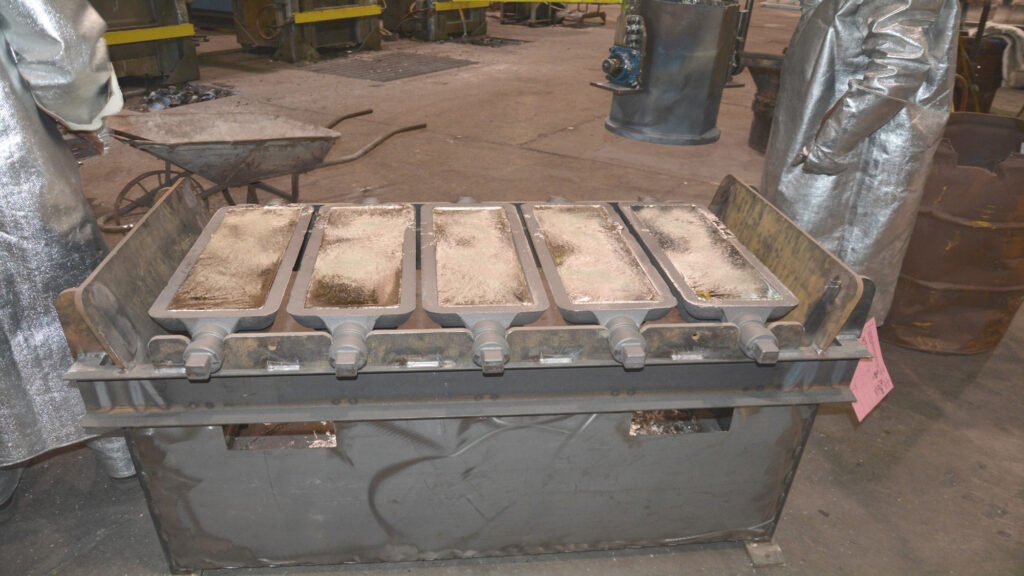
Tin is the chemical element with atomic number 50 and the symbol Sn. It is a soft, pliable post-transition metal in group 14 of the periodic table. Tin has been important since ancient times because, when alloyed with copper, it makes bronze, and today it coats steel food cans and forms the basis of many solders.
History of tin
Tin has no known discoverer, because people used it long before chemistry existed. It affected human history mainly through bronze, although it was also used in its own right. A tin ring and a pilgrim bottle have been found in an Egyptian tomb of the eighteenth dynasty, which dates to 1580 to 1350 BC. The Chinese were mining tin around 700 BC in the province of Yunnan, and pure tin has also been found at Machu Picchu, the mountain citadel of the Incas.
When copper is alloyed with around 5 percent tin, the result is bronze. Bronze melts at a lower temperature than copper, which makes it easier to work, and it is a much harder metal, which made it ideal for tools and weapons. The peoples of Egypt, Mesopotamia and the Indus valley began using bronze around 3000 BC. The Royal Society of Chemistry notes that how bronze was discovered is not known. The Bronze Age is now recognized as a stage in the development of civilization.
Properties of tin
NIST gives the standard atomic weight of tin as 118.710. The electron configuration is [Kr] 4d10 5s2 5p2, and PubChem lists plus 4 and plus 2 as the common oxidation states. Tin is a solid at 20 degrees Celsius. It melts at 231.928 degrees Celsius, which is low for a metal, and boils at 2586 degrees Celsius. Its density is 7.287 grams per cubic centimeter.
The configuration explains the two oxidation states. Giving up only the two outer 5p electrons produces the plus 2 state, and giving up the two 5s electrons as well produces the plus 4 state. Both are common in tin compounds, such as tin(II) chloride and tin(IV) oxide, which are discussed below.
Tin is a soft, pliable metal that takes a high polish. The Royal Society of Chemistry notes that below 13 degrees Celsius it slowly changes into a powder form. In other words, pure tin is stable as a metal only above that temperature, and the change in form is slow.
PubChem lists a Pauling electronegativity of 1.96, a first ionization energy of 7.344 electronvolts and an electron affinity of 1.2 electronvolts. The atomic radius is given as 217 picometers.
Occurrence and production of tin
Tin is found principally in the ore cassiterite, which is tin(IV) oxide. It is mainly found in what the Royal Society of Chemistry calls the tin belt, which stretches through China, Thailand and Indonesia, and it is also mined in Peru, Bolivia and Brazil. The formula of cassiterite is SnO2. Tin is obtained commercially by reducing the ore with coal in a furnace. Reduction means removing oxygen from the oxide, and the carbon in the coal takes the oxygen away and leaves the metal.
Uses of tin
Tin takes a high polish and is used to coat other metals to prevent corrosion. Tin cans, for example, are made of tin-coated steel, in which a thin layer of tin on the surface keeps air and moisture away from the steel. Alloys of tin are important, and they include soft solder, pewter, bronze and phosphor bronze. A niobium-tin alloy is used for superconducting magnets.
Most window glass is made by floating molten glass on molten tin to produce a flat surface, since the surface of a liquid metal is level and gives the glass a smooth finish. Tin salts sprayed onto glass are used to produce electrically conductive coatings. The most important tin salt is tin(II) chloride, which is used as a reducing agent and as a mordant for dyeing calico and silk. A mordant is a substance that helps a dye bind to fabric.
Tin(IV) oxide is used for ceramics and gas sensors. Zinc stannate, Zn2SnO4, is a fire retardant used in plastics. Some tin compounds have also been used in anti-fouling paint for ships and boats to prevent barnacles. However, even at low levels these compounds are deadly to marine life, especially oysters, and their use has been banned in most countries.
Isotopes of tin
Isotopes are atoms of the same element with different numbers of neutrons. NIST lists ten naturally occurring isotopes of tin. Their abundances are tin-112 at 0.97 percent, tin-114 at 0.66 percent, tin-115 at 0.34 percent, tin-116 at 14.54 percent, tin-117 at 7.68 percent, tin-118 at 24.22 percent, tin-119 at 8.59 percent, tin-120 at 32.58 percent, tin-122 at 4.63 percent and tin-124 at 5.79 percent.
NIST gives the abundance of tin-120 as 0.3258 with an uncertainty of 9 in the last digit. Tin-120 is the most abundant isotope, and the Royal Society of Chemistry lists it as the key isotope. Having ten isotopes means that the natural mixture is spread across many mass numbers, and the atomic weight of 118.710 reflects an average across all of them.
Health and environmental effects of tin
The Royal Society of Chemistry reports that tin has no known biological role in humans, although it may be essential to some species. The metal itself is non-toxic, but organotin compounds, in which tin is bonded to carbon-based groups, can be poisonous and must be handled with care. Plants absorb tin easily.
The anti-fouling paints are the clearest environmental example. Organotin compounds in those paints are deadly to marine life even at low levels, and for that reason they are now banned in most countries. This overview is general background and not advice.
Key facts
- Tin has atomic number 50, symbol Sn, and sits in group 14 and period 5 of the periodic table.1
- Tin melts at 231.928 degrees Celsius, boils at 2586 degrees Celsius and has a density of 7.287 grams per cubic centimeter.1
- Bronze, an alloy of copper with around 5 percent tin, came into use around 3000 BC in Egypt, Mesopotamia and the Indus valley.1
- Tin has ten naturally occurring isotopes, and tin-120 is the most abundant at 32.58 percent.2
- Tin is found principally in the ore cassiterite, which is tin(IV) oxide.1
Related concepts
Quick checkWhy was tin important in ancient history?Show answer
Alloying copper with around 5 percent tin gave bronze, which melts at a lower temperature than copper and is much harder, making it ideal for tools and weapons.
Sources
- Royal Society of Chemistry, Periodic Table: Tin, https://periodic-table.rsc.org/element/50/tin
- National Institute of Standards and Technology, Atomic Weights and Isotopic Compositions for Tin, https://physics.nist.gov/cgi-bin/Compositions/stand_alone.pl?ele=Sn&ascii=html&isotype=some
- National Center for Biotechnology Information, PubChem Periodic Table: Tin (element 50), https://pubchem.ncbi.nlm.nih.gov/element/50
Editorially reviewed by Specialty Digest Editorial TeamLast reviewed November 4, 2026Researched and drafted with AI assistanceReport an issue