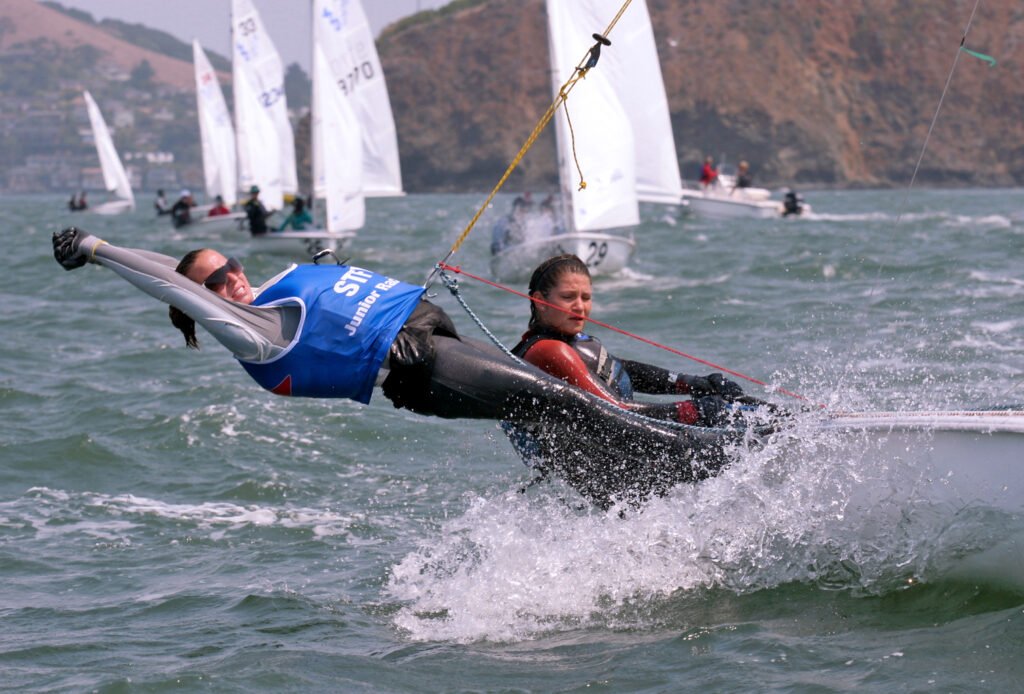
Sailing is the sport of racing boats that are driven by the wind, and it is governed worldwide by World Sailing. Races are sailed around marked courses, and at the Olympic Games the winner is decided by a points system that rewards consistency across many races. Sailing first appeared at the Olympics in Paris in 1900, when it was called yachting.
History of sailing as a sport
Organized international sailing began in the early twentieth century with the need for common rules. An international conference on yacht measurement was held in London in January and June 1906, where the Metre Rule was developed. The international governing body, the International Yacht Racing Union, was created in France, in Paris, in October 1907, and Olympedia gives the date as 14 October. World Sailing’s own history page also says the attendees of the 1906 London conference formed the union, so the exact founding date depends on the source.
The organization has had three names. It became the International Sailing Federation on 5 August 1996, and it was renamed World Sailing in 2015. With the 1996 change, the Olympic program’s name for the sport also changed from yachting to sailing. A universal code of racing rules was agreed and put into effect in 1960.
The original members of the union in 1906 were Austria-Hungary, Denmark, Finland, France, Germany, Great Britain, Holland and Belgium, Italy, Norway, Spain, Sweden and Switzerland. Its first president, Sir Ralph Gore, served from 1946 to 1955.
Rules and how sailing is played
Sailing competitions are fleet races in which many boats start together and sail around buoys, and the boat that crosses the finish line first takes the best score in that race. The course is typically one to four laps, and the race committee sets the number of laps before each start based on wind and course length. Upwind legs require boats to zigzag, so the fleet tends to spread out.
At the Olympics, each event has two phases: an opening series of fleet races, followed by a medal series or medal race. The opening series is 20 races for windsurfing, 16 for kite, 12 for multihull and skiff, and 10 for dinghy.
Scoring is low-point. The winner of a race receives one point, second place two, and so on. A boat that does not finish or is disqualified receives one more point than the number of boats in the race, and each sailor’s worst result is discarded, although points from disqualifications or certain races cannot be thrown out.
In dinghy, skiff and multihull events the top 10 boats advance to a medal race. Points in the medal race are doubled, added to the series score, and cannot be discarded. Windsurfing uses quarter-finals, semi-finals and a final, while kite uses a semi-final and a final in which the first boat to three wins advances.
Equipment and venues
The range of boats in sailing is wide. World Sailing recognizes more than 100 classes, from the small Optimist dinghy to monohulls of 60 feet. Each class has its own class association, which organizes its major championships, and a class must be recognized by World Sailing before it can hold an official world championship.
Olympic sailing has used a changing set of classes. At Paris 2024 there were ten events: men’s and women’s windsurfing, men’s and women’s skiff, men’s and women’s dinghy, a mixed multihull, and newly added events for mixed dinghy and for men’s and women’s kite.
Each country may enter one boat per event at the Olympics, but sailors can compete in more than one event. Racing areas are marked with buoys, and the number of laps in each race is set by the race committee on the day.
Governing bodies and major competitions
World Sailing is recognized by the International Olympic Committee as the governing authority for sailing worldwide, and it manages sailing at the Olympic Games. It is based in London in the United Kingdom and had 150 affiliated national federations as of January 2026, a number reported as 145 member nations on its own history page. Its president since 2020 is Li Quanhai of China.
Beyond the Olympics, World Sailing runs the Sailing World Championships, the Youth Sailing World Championship, the Nations Cup, and match and team racing world championships. The first Sailing World Championships were held in 2003 in Cádiz, Spain, and included all the events on the Summer Olympic program.
Records and notable moments
Several firsts mark the development of Olympic sailing. Sailing appeared at the Games in Paris in 1900, and separate events for women were introduced at Seoul in 1988. Sailing has also been part of the Youth Olympic Games since Singapore 2010, with events for boys and girls.
Para sailing took part in the Paralympic Games as a demonstration sport in 1996, became an official sport in 2000, and was removed from the program after the 2016 Games. At Paris 2024 the number of sailors was reduced from 350 to 330, split equally between men and women, and each country could enter one boat per event.
Global reach
Because each country may enter only one boat per event, an Olympic sailing program of ten events and 330 sailors brings many nations into the same racing. With about 150 national federations, sailing is organized in countries across the world, and its classes run from beginner dinghies to large monohulls. The first members of the international union were all European, so the growth of the federation from about a dozen national authorities in 1906 to roughly 150 today shows how widely the sport spread.
The federation marked its centenary in 2007 with a Sail the World weekend, which encouraged people to go sailing. Youth championships and the Nations Cup add further events for younger sailors and national teams.
More in Sports Coaching and Performance
Key facts
- The International Yacht Racing Union was created in Paris in October 1907 and became World Sailing in 2015.1
- Sailing first appeared at the Olympics in Paris in 1900, and separate events for women were introduced at Seoul 1988.2
- Olympic fleet racing uses low-point scoring, and in dinghy, skiff and multihull events the top 10 boats sail a medal race with doubled points.3
- Paris 2024 had ten Olympic sailing events and 330 sailors, split equally between men and women.3
- World Sailing had 150 affiliated national federations as of January 2026.2
Related concepts
In the news
Quick checkHow is Olympic sailing scored?Show answer
Boats receive one point for first place, two for second and so on, the worst result is dropped, and the top 10 boats in some events sail a final medal race with doubled points.
Sources
- World Sailing, About: History, https://www.sailing.org/about/history
- Olympedia, World Sailing, https://www.olympedia.org/organizations/85
- Olympics.com, Olympic sailing rules, scoring system and format, https://olympics.com/en/news/olympics-sailing-rules-scoring-points-system
Editorially reviewed by Specialty Digest Editorial TeamLast reviewed November 4, 2026Researched and drafted with AI assistanceReport an issue