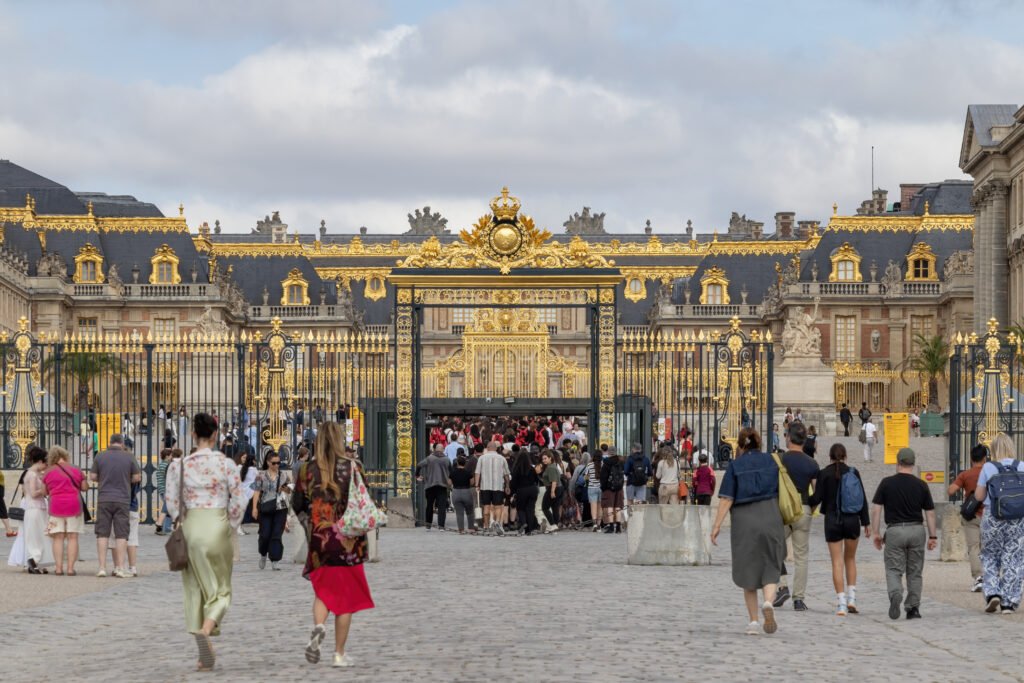
Baroque architecture is a highly ornamented, dramatic style that emerged in Italy in the late sixteenth and early seventeenth centuries before spreading across Catholic Europe and its colonial territories, characterized by dynamic curves, grand scale, theatrical use of light, and an overall emphasis on emotional impact rather than restrained classical proportion.
The style developed partly as a tool of the Catholic Church during the Counter-Reformation, intended to inspire religious awe and reaffirm church authority through overwhelming sensory experience, while simultaneously serving absolute monarchs across Europe who found baroque grandeur well suited to projecting royal power and prestige.
Origins in Counter-Reformation Rome
Baroque architecture’s earliest and most influential examples arose in Rome, where the Catholic Church commissioned churches and public spaces designed to counter the visual austerity associated with Protestant reform movements, using dramatic architectural effects to reassert the emotional and spiritual power of Catholic worship.
Architects working in this period developed a vocabulary of dynamic curves, elaborate facades, and dramatic interior lighting that distinguished baroque churches sharply from the more restrained classical balance characteristic of earlier Renaissance architecture, establishing a new aesthetic language that would spread rapidly across Catholic Europe.
Key Formal Characteristics
Baroque buildings typically feature curved facades, dramatic use of columns and pilasters, elaborate sculptural ornamentation, and a pronounced play of light and shadow achieved through strategic window placement and carefully modulated interior volumes designed to guide a visitor’s emotional and visual experience through a sequence of spaces.
Interior design often incorporated illusionistic ceiling paintings that appeared to open onto heavenly scenes, combined with gilded ornamentation and elaborate altarpieces, creating an immersive total artistic environment in which architecture, sculpture, and painting worked together toward a unified dramatic effect.
Spread Across Catholic Europe
Following its origins in Rome, baroque architecture spread throughout Catholic Europe, adapting to local building traditions and materials while retaining core stylistic principles, with particularly rich regional variations developing in Austria, southern Germany, and the Iberian Peninsula over the following century.
Colonial territories under Spanish and Portuguese rule in Latin America also developed distinctive baroque traditions, often blending European baroque forms with local decorative motifs and craft traditions, producing architectural variants sometimes studied separately as distinct colonial baroque styles.
Baroque Urban Planning and Public Space
Beyond individual buildings, baroque design principles extended to urban planning, with architects designing grand public squares, radiating boulevards, and monumental vistas intended to create dramatic processional experiences through entire city centers rather than isolated architectural set pieces.
These urban interventions often served explicit political purposes, allowing rulers to stage grand public ceremonies and processions through carefully choreographed urban space, reinforcing baroque architecture’s broader role as an instrument of both religious and secular power.
French Baroque and Absolutist Palace Design
French baroque architecture developed a somewhat more restrained and classically influenced variant compared to its Italian counterpart, exemplified by the Palace of Versailles, where baroque grandeur combined with classical symmetry to create a built environment explicitly designed to express the absolute authority of the French monarchy.
This French approach to baroque design subsequently influenced palace and court architecture across much of Europe, as other monarchs sought to emulate Versailles’s combination of scale, formal garden design, and architectural splendor as a model for projecting their own royal power.
Notable Architects and Landmark Buildings
Several architects became closely associated with defining and advancing baroque architectural principles, producing landmark churches, palaces, and public spaces that remain among the most visited architectural monuments in Europe today, admired both for their technical innovation and their sustained emotional impact on visitors.
These architects often worked across multiple artistic disciplines, since baroque design’s emphasis on total sensory effect required close integration between architecture, sculpture, and painting, blurring boundaries between specialties in ways that distinguished baroque practice from more narrowly defined architectural work in other periods.
Legacy and Influence on Later Styles
Baroque architecture’s emphasis on dramatic effect and emotional engagement influenced the subsequent rococo style, which further elaborated baroque ornamentation into even lighter, more delicate decorative forms, before a reaction against baroque excess helped drive the rise of a more restrained neoclassical architecture later in the eighteenth century.
Despite this eventual stylistic reaction, baroque architecture’s innovations in spatial drama, urban planning, and the integration of multiple artistic disciplines continued to influence architectural practice well beyond the period, and its landmark buildings remain central reference points in architectural history and education today.
Restoration of baroque monuments presents particular conservation challenges, since the elaborate stucco ornamentation, gilding, and illusionistic frescoes typical of the style often require specialized craft techniques that have become increasingly rare as traditional artisan trades have declined over recent generations.
Tourism tied to baroque architecture remains a significant economic driver for many European cities, with elaborately decorated churches, palaces, and public squares from this period continuing to rank among the most visited cultural destinations on the continent today.
FAQ
What is the main purpose behind baroque architecture’s dramatic style?
Baroque architecture developed partly to inspire religious awe during the Catholic Counter-Reformation and to project royal power for absolute monarchs, using dramatic scale, curves, and light to create overwhelming emotional and sensory experiences.
Where did baroque architecture originate?
Baroque architecture originated in Rome in the late sixteenth and early seventeenth centuries before spreading across Catholic Europe and its colonial territories over the following century.
What is the difference between baroque and rococo architecture?
Rococo developed from baroque but emphasized even lighter, more delicate ornamentation and pastel color schemes, typically applied to smaller-scale interiors rather than the grand civic and religious structures associated with baroque design.
More in Architecture
Editorially reviewed by Specialty Digest Editorial TeamLast reviewed November 4, 2026Researched and drafted with AI assistanceReport an issue