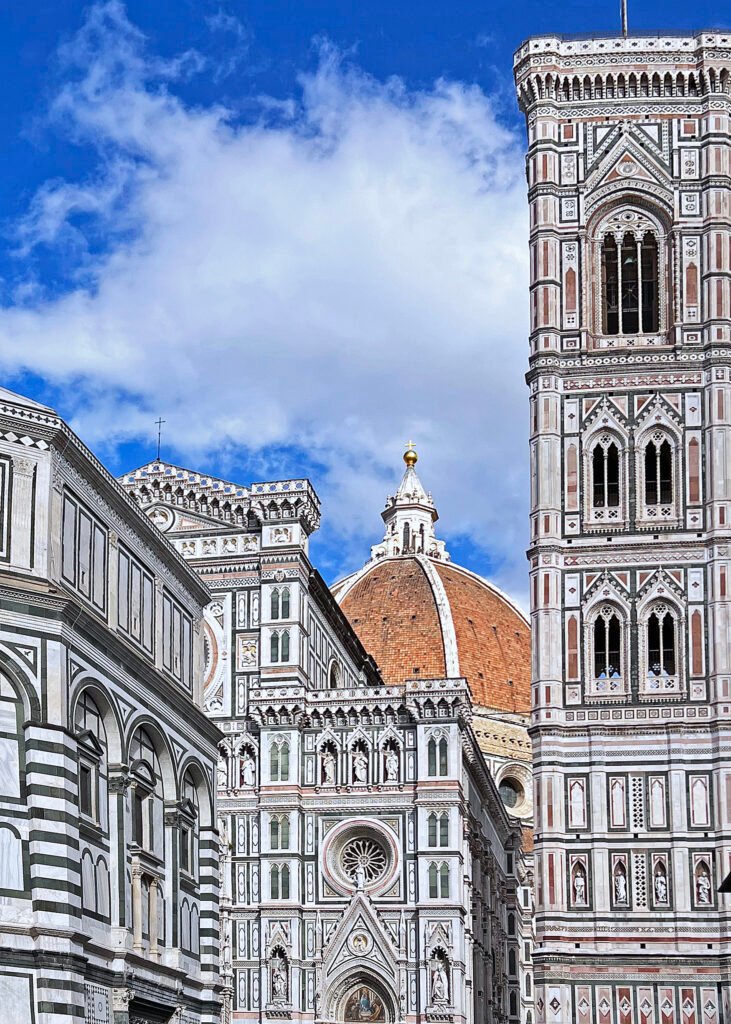
Renaissance architecture refers to the style that emerged in Italy during the fifteenth century, marking a deliberate revival of classical Greek and Roman architectural principles after centuries of medieval Gothic design, and emphasizing symmetry, proportion, and geometric clarity drawn directly from ancient precedent and newly rediscovered classical texts.
The movement began in Florence and gradually spread across Italy and then much of Europe over the following two centuries, driven by a broader cultural revival of classical learning, humanist philosophy, and renewed interest in mathematics and proportion as foundations for both art and architecture.
Rediscovery of Classical Principles
Renaissance architects drew heavily on the surviving writings of the ancient Roman architect Vitruvius, whose treatise on architecture, rediscovered and widely studied during this period, provided theoretical grounding for classical proportion, symmetry, and the use of the architectural orders that had largely fallen out of systematic use during the medieval period.
Direct study of surviving ancient Roman ruins also informed Renaissance practice, with architects traveling to examine and measure classical structures firsthand, treating ancient buildings as instructive models to be understood and adapted rather than merely admired from a distance.
Key Formal Principles and Proportion
Renaissance buildings emphasized mathematical proportion and geometric harmony, often organizing facades and floor plans around carefully calculated ratios believed to reflect universal principles of beauty and order, a marked contrast to the more intuitively composed, often asymmetrical massing common in preceding Gothic architecture.
Classical elements such as columns, pilasters, pediments, and rounded arches became central vocabulary for Renaissance facades, typically organized with clear symmetry and a hierarchical sense of proportion between different stories and architectural elements across a building’s exterior.
The Dome and Engineering Innovation
Renaissance architects made significant engineering advances in dome construction, most famously demonstrated in the dome of Florence Cathedral, completed in the fifteenth century using an innovative double-shell structure and construction methods that solved engineering challenges which had stumped builders for over a century after the cathedral’s initial design.
This achievement demonstrated that Renaissance architecture combined aesthetic revival with genuine structural innovation, since architects were not simply imitating ancient forms but developing new engineering solutions to achieve monumental effects beyond what ancient Roman builders had themselves accomplished.
Spread Beyond Florence and Italy
Renaissance architectural principles spread from Florence to Rome, Venice, and other Italian centers before crossing into France, England, and other parts of Europe during the sixteenth century, with each region adapting classical principles to local building traditions, materials, and climate conditions.
This diffusion occurred partly through architectural treatises and pattern books that circulated classical design principles across Europe, allowing architects far from Italy to study and apply Renaissance proportion and ornament even without direct firsthand exposure to the Italian buildings that had originated the style.
Renaissance Palaces and Civic Architecture
Beyond churches, Renaissance architecture produced influential models for secular civic and residential buildings, with wealthy Italian families commissioning grand urban palaces that combined defensive solidity on lower floors with increasingly refined classical ornament on upper stories, reflecting both practical security concerns and aspirational cultural display.
These palace designs established enduring templates for urban residential architecture that influenced civic and domestic building well beyond Italy, with the organizing logic of a formal, symmetrical facade fronting a more flexible interior courtyard arrangement proving especially influential across subsequent European architectural traditions.
Notable Architects and Landmark Buildings
Several architects became closely identified with defining Renaissance architectural principles through both built work and influential theoretical writings, producing churches, palaces, and civic buildings that became essential reference points for subsequent generations of European architects studying classical design.
These architects often combined practical building expertise with scholarly engagement with classical texts and mathematics, reflecting the broader Renaissance ideal of the architect as a learned figure rather than purely a craftsman executing predetermined designs handed down by patrons or guild tradition.
Legacy and Influence on Later Classical Revivals
Renaissance architecture established classical revival as a recurring theme in subsequent European architectural history, directly informing later movements including baroque architecture, which built upon and dramatically elaborated Renaissance classical vocabulary, and much later neoclassical architecture, which sought a return to Renaissance-style restraint and proportion.
This enduring influence means Renaissance architectural principles continued shaping Western building practice for centuries after the movement’s original Italian flowering, establishing classical proportion and symmetry as a recurring touchstone that architects have repeatedly revisited across many subsequent historical periods.
Modern conservation efforts at major Renaissance landmarks increasingly combine traditional restoration craft with digital scanning and structural monitoring, allowing specialists to track subtle deformation in centuries-old masonry while preserving the original material fabric as closely as possible.
Renaissance treatises on proportion also shaped art education more broadly, since architecture, painting, and sculpture were often taught within shared workshops where the same geometric and proportional principles applied equally across different artistic disciplines.
Scholars continue to debate how much Renaissance architects genuinely understood ancient Roman construction methods versus reinterpreting surviving fragments through their own period’s aesthetic priorities, a question that remains central to ongoing research into the movement’s true relationship with classical antiquity.
FAQ
What inspired Renaissance architecture?
Renaissance architecture was inspired by a revival of classical Greek and Roman architectural principles, drawing on rediscovered ancient texts, especially the writings of Vitruvius, and direct study of surviving Roman ruins.
Where did Renaissance architecture begin?
Renaissance architecture began in Florence, Italy, during the fifteenth century before spreading across Italy and then much of Europe over the following two centuries.
What is the most famous engineering achievement of Renaissance architecture?
The dome of Florence Cathedral, completed in the fifteenth century using an innovative double-shell construction method, is widely considered the era’s most celebrated engineering achievement.
More in Architecture
Editorially reviewed by Specialty Digest Editorial TeamLast reviewed November 4, 2026Researched and drafted with AI assistanceReport an issue