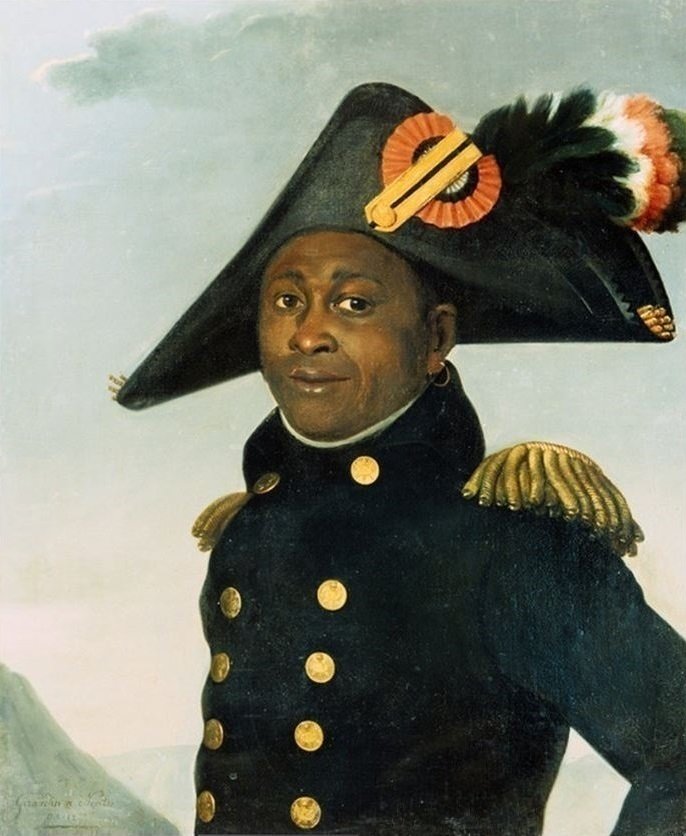
The Haitian Revolution was a series of uprisings and wars from 1790 to 1804 in the French colony of Saint-Domingue, in which enslaved people won their freedom and founded the independent state of Haiti. It brought freedom to about 450,000 enslaved people, according to the International Encyclopedia of the Social Sciences, and Haiti became the second nation in the Americas to free itself from colonial rule.
Background of the Haitian Revolution
In 1789, Saint-Domingue was the richest colony in the Americas. Almost half a million enslaved people worked on its sugar, coffee, indigo and cotton plantations. More than 30,000 newly enslaved Africans arrived each year, to replace those who died of overwork or disease and to feed a rapid economic expansion in the 1780s.
Between a third and a half of the enslaved population had been born in Africa. They had developed their own culture, including a creole language and a religion called vaudou, both strongly influenced by African models. After the Jesuit missionaries who had taught and evangelized them were expelled in 1767, the enslaved were left to their own resources.
The enslaved were held by a free population of about 50,000, roughly half of whom were free people of color. Many of the largest plantations belonged to white absentee owners living in France. Poorer whites hoped to become planters, while some free people of color owned plantations themselves. Racial and class divisions were sharp, and the masters were heavily outnumbered, so the colony depended on French troops for security.
Course of the Haitian Revolution
The upheaval began as an echo of the French Revolution. In 1789, both white and free colored planters appealed to the revolutionary assemblies in France, which avoided the questions of slavery and the civil rights of free people of color for two years. In 1790, two wealthy free men of color, Vincent Oge and Jean-Baptiste Chavannes, led a rebellion demanding civil rights. It was crushed and both men were executed.
The enslaved did not wait for others to decide their fate. Leaders among them, including coachmen, work-gang foremen and vaudou practitioners, organized a great uprising in the rich northern plain. It began in the fourth week of August 1791, with hundreds of plantations burned and many planters killed or driven out. An early leader, Boukman, organized a vaudou ceremony at Bois Caiman that may have been the signal. The ultimate commander of the rebel army was Toussaint Louverture, who had been born into slavery but had been freed before the revolution and had become a small-scale planter.
The fighting lasted for years and involved many enemies, including French revolutionary governors, French royalists, and Spanish and British invaders. In 1793, the French commissioner Leger-Felicite Sonthonax proclaimed the end of slavery in the colony. In 1794, the government in Paris abolished slavery, and Toussaint switched from the Spanish side to the French. By 1801, he controlled the entire island, and he issued a constitution that named him governor-general for life while still professing loyalty to France.
Toussaint also set up a system of required labor for former slaves, which was unpopular because they wanted to farm their own land. Sugar production stayed low. In France, Napoleon Bonaparte, now first consul, distrusted emancipation and decided to retake the island and restore the old system. Sources date the dispatch of his expedition, led by his brother-in-law Charles Leclerc, to 1801 or 1802.
Independence and aftermath
Toussaint and some of his soldiers resisted, but most of his army obeyed orders from France, and he was arrested and taken to France. He died in prison in 1803. Meanwhile, disease weakened the French force, and Haitian officers who had surrendered began to see that slavery would be restored. They rose again under Jean-Jacques Dessalines, who is said to have torn the white band out of the French flag as a sign of the break.
More than a year of heavy fighting followed, with massacres on both sides. The French were finally defeated at Vertieres on 18 November 1803. On 1 January 1804, Dessalines declared Haitian independence. The International Encyclopedia of the Social Sciences adds that the remaining white inhabitants were expelled or killed, and it states that the population of Haiti fell by at least 125,000 between 1789 and 1804.
No other nation recognized Haiti until the 1820s. Even the newly independent states of the Americas stayed away from a country of freed slaves, although Simon Bolivar took refuge there during his struggle against Spain. Haiti ceased to be a major exporter of sugar or coffee, since most Haitians left the plantations to become independent farmers. Former free people of color and military leaders formed an urban elite with a largely European culture.
Significance and legacy
The revolution was, in the words of the Gale encyclopedia, a true social revolution, unlike the colonial independence movements of the same era that left society mostly unchanged. It became a symbol of liberty for millions who remained enslaved in the Americas, and a rallying cry for later movements, from Denmark Vesey’s planned uprising in South Carolina in 1822 to the independence of Guinea in 1957.
Haiti’s leaders were demonized in French and American propaganda of the time and since, and the source notes that the country has often been held up as an example of why black people supposedly need supervision. The source presents this as prejudice and not as evidence.
Toussaint became a symbol across the African diaspora. William Wordsworth wrote a sonnet about him in 1802, and the artist Jacob Lawrence painted a famous series on his life. C. L. R. James’s 1938 book The Black Jacobins made him a tragic hero. Later scholars, according to the same source, added that his regime was repressive and that he began as a planter and slaveholder, but they still see him as an essentially heroic and flawed figure.
More in History
Key facts
- The Haitian Revolution lasted from 1790 to 1804 and freed about 450,000 enslaved people.1
- The great uprising in the northern plain began in the fourth week of August 1791.1
- The French were defeated at Vertieres on 18 November 1803.1
- Jean-Jacques Dessalines declared Haitian independence on 1 January 1804.12
- The population of Haiti fell by at least 125,000 between 1789 and 1804.1
Related concepts
Quick checkWhen did Haiti become independent?Show answer
Jean-Jacques Dessalines declared Haitian independence on 1 January 1804, after the French were defeated at Vertieres in November 1803.
Sources
- International Encyclopedia of the Social Sciences via Encyclopedia.com, Haitian Revolution, https://www.encyclopedia.com/history/encyclopedias-almanacs-transcripts-and-maps/haitian-revolution
- International Encyclopedia of the Social Sciences via Encyclopedia.com, Toussaint-Louverture, https://www.encyclopedia.com/history/encyclopedias-almanacs-transcripts-and-maps/toussaint-louverture
Editorially reviewed by Specialty Digest Editorial TeamLast reviewed November 4, 2026Researched and drafted with AI assistanceReport an issue