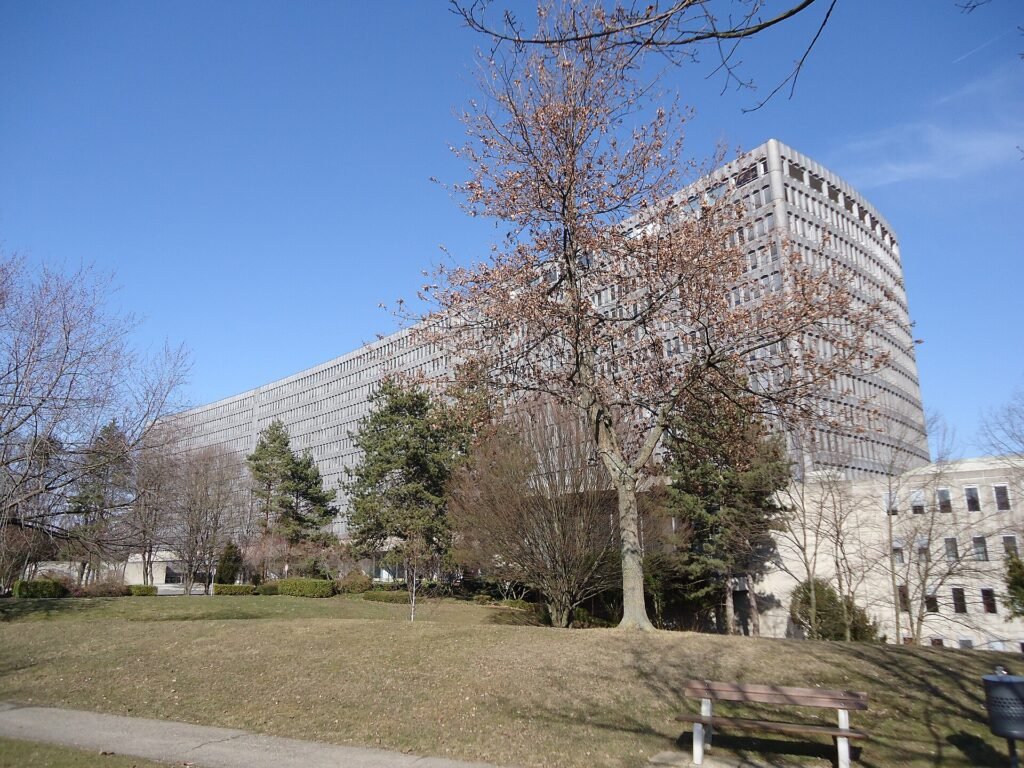
The International Labour Organization (ILO) is the United Nations specialized agency that sets international labor standards and promotes social justice and decent work. Created in 1919, it is the only tripartite UN agency: governments, employers and workers of its 187 member states all have a voice in its decisions.
History of the International Labour Organization
The ILO was created in 1919 as part of the Treaty of Versailles that ended the First World War. Its founding idea was that universal and lasting peace can be achieved only if it is based on social justice.
It moved to Geneva in the summer of 1920 under its first director, Albert Thomas of France. In less than two years it adopted nine International Labour Conventions and ten Recommendations on subjects including hours of work, unemployment, maternity protection, night work for women and young persons, and minimum age. In 1926 it set up a Committee of Experts, still in existence, to supervise how its standards are applied.
Harold Butler of Britain succeeded Thomas in 1932, as the Great Depression brought mass unemployment and a need for international cooperation on labor issues. The United States became a member in 1934, although it stayed out of the League of Nations. John Winant, an American, took over in 1939. As the Second World War approached, the ILO’s headquarters moved temporarily to Montreal in May 1940 for safety. Winant’s successor, Edward Phelan of Ireland, had helped write the 1919 Constitution and played an important part again at the International Labour Conference in Philadelphia, where government, employer and worker delegates from 41 countries adopted the Declaration of Philadelphia, which remains the charter of the ILO’s aims. It states, among other principles, that labor is not a commodity.
The ILO became a specialized agency of the new United Nations in 1946. Under David Morse, Director-General from 1948 to 1970, the number of member states doubled and industrialized countries became a minority among developing ones. The ILO established an International Institute for Labour Studies in Geneva in 1960 and an International Training Centre in Turin in 1965.
Mission and tripartism
The ILO says it is devoted to promoting social justice and internationally recognized human and labor rights, pursuing its founding mission. Its work centers on four objectives:
Setting and promoting standards and fundamental principles and rights at work.
Creating greater opportunities for women and men to obtain decent employment and income.
Enhancing the coverage and effectiveness of social protection.
Strengthening tripartism and social dialogue.
Tripartism is the organization’s distinguishing feature. Workers’ organizations, employers’ organizations and governments have equal voices in setting labor standards and shaping policy, so that standards reflect the views of the people who must apply them.
Structure and governance
The main bodies are the International Labour Conference, the Governing Body and the International Labour Office, the permanent secretariat. The ILO Director-General is elected by the Governing Body. Gilbert F. Houngbo of Togo was elected the 11th Director-General in March 2022 for a five-year term and took office in October 2022.
The ILO’s biennial Programme and Budget is proposed by the Governing Body and must be adopted by a vote of the Conference. It rests on a medium-term Strategic Plan; the current one covers 2026 to 2029. The work is delivered in member states mainly through Decent Work Country Programmes, which are developed with national governments and with employers’ and workers’ organizations and aligned with national development plans.
International labor standards
The ILO’s standards take the form of Conventions, which states can ratify and which then bind them, and Recommendations, which give guidance. The Committee of Experts, made up of independent jurists, examines government reports each year and presents its own report to the Conference.
By 1969 the ILO had adopted 128 conventions drawn up by representatives of governments, employers and employees. The Nobel Committee noted that reforms improving working conditions strengthen peace by reducing social injustice.
Freedom of association has been a recurring priority. Under Wilfred Jenks, Director-General from 1970 to 1973, the ILO advanced mechanisms to supervise application of standards, and it later gave its full support to the legitimacy of the Solidarnosc union in Poland, relying on Convention No. 87 on freedom of association, which Poland had ratified in 1957.
Funding
Three main sources of funds finance the ILO’s results. The Regular Budget is funded by assessed contributions from member states, based on the United Nations scale of assessments. A Regular Budget Supplementary Account is funded by voluntary contributions from key partners that provide fully unearmarked core funding. Voluntary contributions from over 140 funding partners, including public and private organizations, international financial institutions and UN entities, support specific development cooperation programs and projects.
Nobel Peace Prize and later development
The ILO received the Nobel Peace Prize in 1969, on its 50th anniversary, for creating international legislation that insures certain norms for working conditions in every country. The Nobel Committee presented the award as following a tradition that went back to 1951, when the Frenchman Léon Jouhaux received the prize. It also recognized its efforts to launch development projects in poor countries and described the prize as part of a tradition of backing UN organizations that build international law on universal human rights.
Later directors-general shifted the emphasis. Francis Blanchard expanded technical cooperation with developing countries. Michel Hansenne, from 1989, set a course of decentralization away from Geneva. Juan Somavia, from 1999, made decent work a strategic international goal and set up the World Commission on the Social Dimension of Globalization. In 2019 the ILO marked its centenary with a Global Commission on the Future of Work.
Legacy and impact
The ILO says it has played a role at key moments, including the Great Depression, decolonization, the rise of Solidarnosc in Poland and the end of apartheid in South Africa. Its lasting contribution is the body of labor standards and the habit of bringing governments, employers and workers to the same table.
More in Public Policy
Key facts
- The ILO was created in 1919 as part of the Treaty of Versailles.1
- It brings together governments, employers and workers of 187 member states.1
- The Declaration of Philadelphia was adopted by delegates from 41 countries.2
- The ILO became a UN specialized agency in 1946.2
- It won the Nobel Peace Prize in 1969 and had adopted 128 conventions by then.3
Related concepts
Quick checkWhat does tripartite mean at the ILO?Show answer
It means workers, employers and governments each have an equal voice in the ILO's decisions on labor standards and policy.
Sources
- International Labour Organization, About the ILO, https://www.ilo.org/about-ilo
- International Labour Organization, History of the ILO, https://www.ilo.org/global/about-the-ilo/history/lang--en/index.htm
- NobelPrize.org, International Labour Organization: Facts, Nobel Peace Prize 1969, https://www.nobelprize.org/prizes/peace/1969/labour/facts/
Editorially reviewed by Specialty Digest Editorial TeamLast reviewed November 4, 2026Researched and drafted with AI assistanceReport an issue