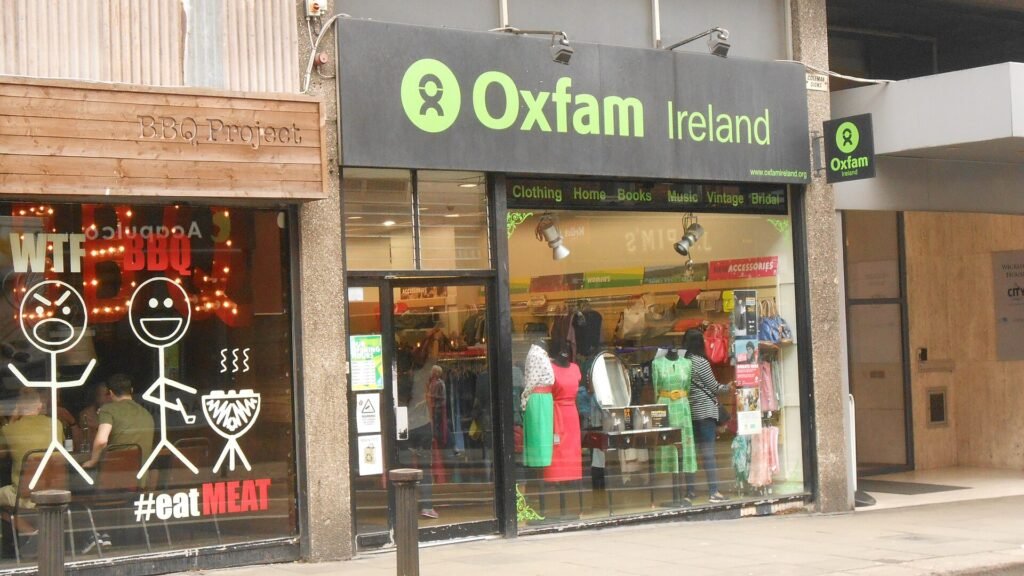
Oxfam is an international confederation of charities that works to reduce poverty and injustice through emergency relief, long-term development, advocacy and campaigning. Its name comes from the Oxford Committee for Famine Relief, founded in Britain in 1942, and Oxfam International was formed in 1995.
History of Oxfam
The Oxford Committee for Famine Relief was founded in 1942, during the Second World War. It campaigned for food supplies to be sent through an Allied naval blockade to starving women and children in enemy-occupied Greece, where the blockade had caused famine. The group raised funds for relief and also spoke out against ordinary people paying the price for decisions made by a few.
In 1945 famine committees around the United Kingdom urged the British government to let people send food parcels to Germany and to lift the blockade. After the war the committee continued, sending materials and financial aid to groups helping poor people throughout Europe. As conditions in Europe improved, its attention shifted to the needs of people in developing countries.
Oxfam opened its first charity shop in Britain in the late 1940s: its UK organization dates it to 1947 on one page and to six years after the committee’s founding on another, with the first permanent shop on Broad Street in Oxford. Today Oxfam GB says 23,000 volunteers run 560 shops across the country, raising money and serving as community spaces.
In 1995 a group of independent non-governmental organizations joined together as a confederation called Oxfam International, aiming to maximize efficiency and achieve greater impact in reducing global poverty and injustice.
Structure and membership
Oxfam International describes 22 member organizations in the confederation, based in Australia, Belgium, Brazil, Canada, Colombia, Denmark, France, Germany, Great Britain, Hong Kong, Ireland, India, Italy, Mexico, the Netherlands, New Zealand, the Philippines, Quebec, South Africa, Spain, Turkey and the United States. Oxfam GB, in its own description, says it belongs to a confederation of 21 Oxfams, so counts differ between pages and over time.
Two public engagement offices, in South Korea and Sweden, focus on raising funds and awareness. The Oxfam International Secretariat is based in Nairobi, Kenya, and runs offices in Addis Ababa, Brussels, Geneva, New York and Washington, DC.
Oxfam International says it was formed so that independent organizations could share knowledge and resources and combine their efforts.
What Oxfam does
Oxfam International says it works in 77 countries with thousands of partners, allies and communities. Its stated aims are to save and protect lives in emergencies, help people rebuild their livelihoods and campaign for lasting change, keeping women’s rights at the heart of its work.
The organization has long paired practical action with public campaigning. Oxfam GB says it has throughout its history combined practical action with bold campaigning, looking for ways to make sure marginalized groups have their voices heard and acted on. Its shops in Britain, run by volunteers, raise vital funds for this work and, Oxfam GB notes, act as community spaces that help people shop more sustainably.
Criticism and controversies
Oxfam has faced serious criticism over safeguarding, the protection of people from abuse by staff. The clearest account is the report of the Charity Commission for England and Wales, published on 11 June 2019 after an inquiry into Oxfam GB that took into account over 7,000 items of evidence.
The inquiry examined the charity’s handling of events in Haiti in 2011 and, separately, its wider record on protecting beneficiaries, volunteers and staff. It found that the then executive had mishandled aspects of its response to allegations of misconduct in Haiti and that there had been a culture of poor behavior and poor accountability among staff there. The Commission said the charity’s reports to donors and to the Commission itself were not as full and frank about the incidents as they should have been, and that its approach to disclosure was at times marked by a desire to protect its reputation and donor relationships.
Specific findings included that the charity did not adequately follow up whether victims of sexual misconduct in Haiti were minors, did not report allegations of child abuse by staff there, and treated senior staff more leniently than junior staff. On its wider record, the regulator concluded that the charity repeatedly fell short of the standards expected, that leadership up to 2018 applied insufficient resources to safeguarding, and that these and other systemic weaknesses amounted to mismanagement in the administration of the charity.
The Commission issued Oxfam GB with an Official Warning and Directions under section 84 of the Charities Act 2011.
Oxfam GB accepted the findings. Its own account says that what happened in Haiti was appalling and that it is deeply sorry to those affected. It says it tripled its investment in safeguarding, created a Director of Safeguarding post, introduced mandatory training for 10,000 employees worldwide and placed safeguarding focal points in every country where it works.
It agreed a 100-point action plan with the Commission. In February 2021 the Commission concluded that Oxfam had made significant progress against the plan, pointing to improvements in support for survivors, case management, recruitment policies and resourcing, and that ended a period of formal oversight by the regulator. Oxfam says there is more to do.
Oxfam GB has also addressed a different kind of criticism, about how aid organizations portray the people they serve. It acknowledges that part of its history placed people in the Global North as saviors and people in the Global South as victims, and says it is working to rebalance power toward the people best placed to lead the fight against poverty.
Legacy and impact
Oxfam is one of the best-known examples of an organization that grew from a single wartime campaign into a worldwide confederation. Its 1942 origin as a famine relief committee that challenged a blockade set a pattern of combining relief with public argument, which it continues alongside its efforts to reform its own conduct.
More in Social Policy and Welfare Systems
Key facts
- Oxfam began as the Oxford Committee for Famine Relief, founded in Britain in 1942.1
- Oxfam International was formed in 1995 by independent organizations joining as a confederation.1
- Oxfam International lists 22 member organizations and works in 77 countries.1
- Its secretariat is in Nairobi, Kenya.1
- The Charity Commission published an inquiry report on Oxfam GB on 11 June 2019.3
Related concepts
Quick checkWhere does the name Oxfam come from?Show answer
It comes from the Oxford Committee for Famine Relief, founded in Britain in 1942 to campaign for food to reach people in enemy-occupied Greece.
Sources
- Oxfam International, Our history, https://oxfam.org/en/node/7405
- Oxfam GB, History of Oxfam, https://www.oxfam.org.uk/about-us/history-oxfam/
- Charity Commission for England and Wales, Charity Commission reports on inquiry into Oxfam GB, 11 June 2019 (withdrawn 2023 as no longer current), https://www.gov.uk/government/news/charity-commission-reports-on-inquiry-into-oxfam-gb-no-charity-is-more-important-than-the-people-it-serves-or-the-mission-it-pursues
- Oxfam GB, Charity Commission Report, https://www.oxfam.org.uk/about-us/tackling-abuse-information-and-updates/charity-commission-report/
Editorially reviewed by Specialty Digest Editorial TeamLast reviewed November 4, 2026Researched and drafted with AI assistanceReport an issue