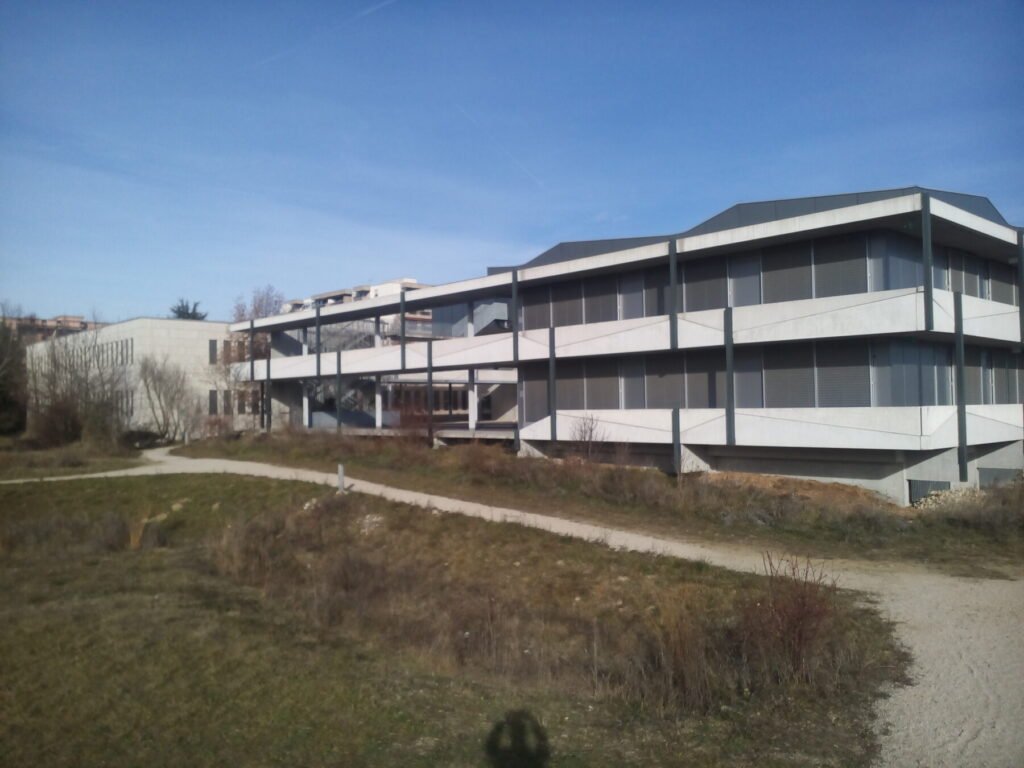
The International Union for Conservation of Nature (IUCN) is a membership organization of governments and civil society groups that sets scientific standards for nature conservation and keeps the global Red List of Threatened Species. Established in 1948 and based in Gland, Switzerland, it describes itself as the global authority on the status of the natural world.
History of the International Union for Conservation of Nature
IUCN was established on 5 October 1948 in the French town of Fontainebleau. It was the first global environmental union, bringing governments and civil society together around a shared goal of protecting nature. Its stated aim was to encourage international cooperation and to provide scientific knowledge and tools to guide conservation.
In its first decade, IUCN concentrated on the effect of human activity on nature. It flagged the damaging effects of pesticides and promoted environmental impact assessments, which have since become the norm in many sectors. Much of its work in the 1960s and 1970s went into protecting species and the habitats they need. In 1964 it established the IUCN Red List of Threatened Species.
IUCN also helped create major international agreements, including the Ramsar Convention on Wetlands (1971), the World Heritage Convention (1972), the Convention on International Trade in Endangered Species (1974) and the Convention on Biological Diversity (1992). In 1980 it joined the UN Environment Programme and the World Wildlife Fund to publish the World Conservation Strategy, which helped define the idea of sustainable development. A follow-up, Caring for the Earth, appeared before the 1992 Earth Summit.
In 1999 the UN General Assembly gave IUCN official observer status. In the early 2000s it developed a strategy for engaging business, prioritizing sectors with a large impact on nature such as mining and oil and gas, and later in the decade it pioneered Nature-based Solutions, which are actions to conserve nature that also address challenges such as food and water security and climate change.
Structure and membership of IUCN
IUCN is a membership union with more than 1,600 Member organizations and over 19,000 experts. Members include states and government agencies at national and subnational levels, large and small non-governmental organizations, indigenous peoples’ organizations, scientific and academic institutions and business associations. Companies and businesses themselves are not eligible for membership, although IUCN has partnerships with businesses in many countries. There are different categories of Membership, which IUCN explains on its website.
Members set the direction of the Union every four years at the IUCN World Conservation Congress. Between Congress sessions, the IUCN Council is the principal governing body. Members elect it at the Congress, and the IUCN President chairs it. The Council sets strategic direction and policy guidance and oversees the Director General.
Thousands of scientists and experts volunteer their knowledge in IUCN’s seven expert Commissions. The Commissions prepare assessments, reports, action plans and criteria, carry out research and give advice to the Union and its Members. They also work with Members and the Secretariat to develop activities in the regions. The Secretariat, led by the Director General, includes around 1,000 staff in over 50 countries, with headquarters in Gland, near Geneva and regional, outpost, country and project offices around the world.
What IUCN does
IUCN’s best-known product is the Red List of Threatened Species, which it describes as the world’s most comprehensive data source on global extinction risk. Species are placed in categories such as Extinct, Critically Endangered, Endangered, Vulnerable and Least Concern, according to criteria applied to their status.
In the 2026-1 update, more than 175,900 species had been assessed and more than 49,500 were threatened with extinction, which is 28 percent of all assessed species. By group, the threatened shares are 41 percent for amphibians, 26 percent for mammals, 34 percent for conifers, 11 percent for birds, 38 percent for sharks and rays, 44 percent for reef corals, 28 percent for selected crustaceans, 21 percent for reptiles and 71 percent for cycads. The Red List Strategic Plan for 2021 to 2030 aims for 260,000 species assessed and for 142,000 to be reassessed. IUCN says it needs to assess many more wild species, particularly plants, invertebrates and fungi.
IUCN also provides the standards, guidelines and tools behind conservation projects. It works in more than 160 countries on research, analysis, policy and projects such as forest and landscape restoration, Nature-based Solutions standards and climate resilience for coastal communities. Its work on protected areas is one part of that effort.
For UNESCO‘s World Heritage system, IUCN is one of three advisory bodies. It provides the World Heritage Committee with technical evaluations of natural heritage properties and reports on the state of conservation of listed properties.
Funding and governance of IUCN
IUCN says it relies on a diverse funding base to carry out conservation projects in nearly 160 countries. Framework partners give multi-year core funding, and because this funding is unrestricted it contributes to every result IUCN delivers. Other income supports specific projects, and IUCN invites donations and publishes an annual report.
Members elect the Council, which oversees the Director General, and the Secretariat is accountable to the Council. Dr Grethel Aguilar assumed office as Director General in October 2023, and Razan Al Mubarak is the IUCN President. This entry does not give a budget total because the figures were not available in the pages read.
Legacy and impact of IUCN
IUCN presents its strength as the combination of science with an international membership. Its Red List gives governments, researchers and campaigners a common reference point, and IUCN says it was fundamental to the creation of the Ramsar, World Heritage, CITES and Biological Diversity conventions. IUCN describes itself as a neutral space where governments, scientists, businesses, local communities and indigenous peoples’ organizations can work on environmental challenges together.
Its work links to many topics in this encyclopedia, including endangered species and habitat protection.
More in Conservation
Key facts
- IUCN was established on 5 October 1948 in Fontainebleau, France.1
- IUCN established the Red List of Threatened Species in 1964.1
- IUCN has more than 1,600 Member organizations and over 19,000 experts.2
- IUCN Members set the direction of the Union every four years at the World Conservation Congress.2
- In the 2026-1 update, more than 175,900 species have been assessed for the Red List and more than 49,500 are threatened, 28 percent of those assessed.3
- IUCN is one of three advisory bodies to the UNESCO World Heritage Committee, advising on natural heritage.4
Related concepts
In the news
Quick checkWho may be a member of IUCN?Show answer
States, government agencies, non-governmental organizations, indigenous peoples' organizations, scientific institutions and business associations may be Members, but companies and businesses are not eligible.
Sources
- IUCN. Seventy five years of experience (history). Undated (accessed 4 November 2026)
- IUCN. About IUCN and Member Organisations. Undated (accessed 4 November 2026)
- IUCN. The IUCN Red List of Threatened Species, 2026-1. 2026 (accessed 4 November 2026)
- UNESCO World Heritage Centre. Advisory Bodies. Undated (accessed 4 November 2026)
- IUCN. Member Organisations. Undated (accessed 4 November 2026)
- IUCN. IUCN President and Council. Undated (accessed 4 November 2026)
- IUCN. Secretariat and Director General. Undated (accessed 4 November 2026)
- IUCN. Expert Commissions. Undated (accessed 4 November 2026)
- IUCN. Partners and donors. Undated (accessed 4 November 2026)
Editorially reviewed by Specialty Digest Editorial TeamLast reviewed November 4, 2026Researched and drafted with AI assistanceReport an issue