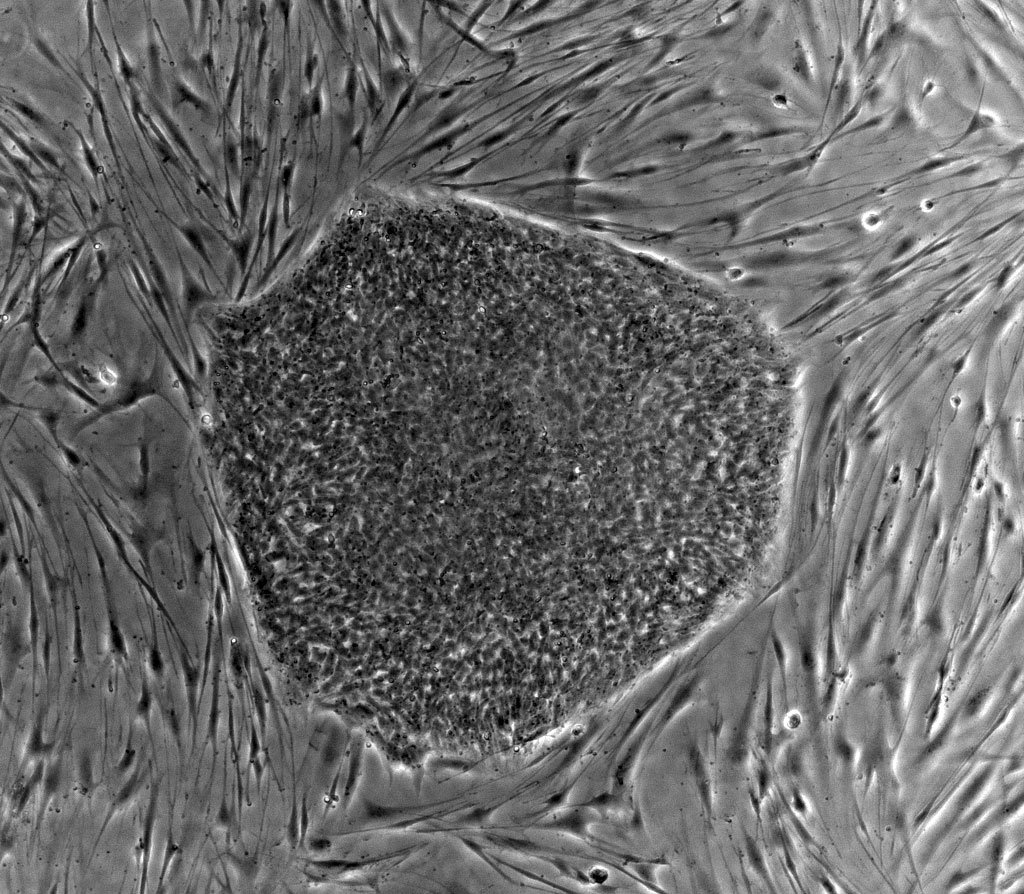
The discovery of stem cells was a series of findings between the early 1900s and the 2000s showing that some cells can renew themselves and give rise to specialized cell types. The key steps were the identification of blood-forming stem cells by James Till and Ernest McCulloch in the early 1960s, the culture of mouse embryonic stem cells in 1981, and the derivation of human embryonic stem cells in 1998.
Background
The stem cell idea first took shape in studies of blood. Pappenheim, Maximow and Dantschkoff introduced the stem cell concept for the formation of blood cells, and Pappenheim drew a scheme for a hierarchy of such cells. The concept remained a hypothesis until it could be tested in animals.
Two developments in the 1950s made that possible. In 1956 Ford and colleagues showed that bone marrow cells could be transplanted successfully into irradiated mouse hosts. In 1957 Donnell Thomas and colleagues carried out the first transplant of bone marrow from a genetically different donor into humans. The first six patients died within 100 days, but there were signs that the donor cells had taken hold, which showed that the concept was viable.
The discovery
Blood-forming stem cells
In the early 1960s, the biophysicist Ernest McCulloch and the cell biologist James Till gave the first functional proof. They injected bone marrow cells into the previously irradiated mice and saw nodules form in the spleen. Each nodule grew from a single progenitor cell. Till and McCulloch showed that these hematopoietic stem cells could both renew themselves and give rise to several kinds of mature blood cells.
Embryonic stem cells
Researchers next asked whether cells that could produce every cell type of the body could be grown in the laboratory. In 1981, Martin Evans and Matthew Kaufman, and Gail Martin working separately, cultured cells from the inner cell mass of the mouse embryo. The cells were called embryonic stem cells, and they formed tumors known as teratocarcinomas when transplanted. Three years later Evans and colleagues showed that such cells could yield mice carrying the cells in their germline.
In 1998 James Thomson reported the derivation of human embryonic stem cell lines from blastocysts, the early embryos that form a few days after fertilization.
Reprogramming adult cells
The Nobel Foundation traces a third line of discovery. In 1962 John Gurdon replaced the nucleus of a frog egg cell with the nucleus of a mature intestinal cell, and the egg developed into a normal tadpole. That showed that specialization of cells is reversible, since the DNA in the mature cell still held the information to build every cell of the animal.
More than 40 years later, in 2006, Shinya Yamanaka found that mature mouse cells could be reprogrammed into immature pluripotent stem cells by introducing only a few genes. In 2007 Thomson and colleagues reported human induced pluripotent stem cell lines made from skin cells.
How it was confirmed
Each claim rested on a functional test. Till and McCulloch counted colonies in the spleens of irradiated mice, and the cultured embryonic cells of Evans and Martin formed teratocarcinomas, tumors that contain many tissue types. Later work showed that mouse embryonic stem cells could contribute to the germline.
Irving Weissman’s laboratory then built on the Till and McCulloch results. It combined fluorescence-activated cell sorting with new monoclonal antibodies and a negative selection strategy to produce the first set of molecular markers that gave a high enrichment of blood stem cells.
Clinical use of blood stem cells advanced in parallel. In 1988 the first umbilical cord blood stem cell transplant was performed on a child with Fanconi anemia. A 2021 review states that more than 6,000 such transplants have been performed since. In 1981 Howard Green and colleagues also treated two patients with third-degree burns using autologous skin grafts, meaning grafts made from the patients’ own cells, an early step toward a life-saving therapy for severe burns.
Disputes over credit
Credit for mouse embryonic stem cells is shared. Evans and Kaufman and Martin reported their cultures independently in 1981. The 2007 Nobel Prize in Physiology or Medicine went to Evans, together with Mario Capecchi and Oliver Smithies. The 2012 prize went to Gurdon and Yamanaka for the discovery that mature cells can be reprogrammed to become pluripotent.
Impact and legacy
The Nobel Foundation says that the reprogramming discoveries changed the view of development and cellular specialization. A mature cell does not have to stay in its specialized state forever. Researchers can now study diseases in cells made from patients and use such cells to test methods of diagnosis and therapy.
The work also raises ethical questions. Research that uses human embryos is linked to moral issues that are debated around the world, and the potential of new therapies for serious diseases is weighed against them. Rules differ between countries.
Stem cell research is also tied to modern biotechnology and to gene therapy. A 2022 review notes that skin grafts in which the LAMB3 gene was inserted have been used to treat a patient with the skin disease junctional epidermolysis bullosa.
FAQs
Who discovered stem cells? The idea came from early blood studies, and Till and McCulloch gave functional proof of blood-forming stem cells in the early 1960s. Embryonic stem cells were cultured from mice in 1981 and from human embryos in 1998.
What did Yamanaka discover? In 2006 he showed that mature mouse cells could be reprogrammed into pluripotent stem cells with just a few genes. He shared the 2012 Nobel Prize with John Gurdon.
What does pluripotent mean? Pluripotent cells are immature cells that can develop into all the types of cells in the body.
Are all stem cell uses established treatments? No. Blood stem cell transplants and some skin grafts are established, while many other uses remain under research.
Key facts
- Till and McCulloch showed in the early 1960s that blood-forming stem cells can renew themselves and give rise to several cell types.12
- The first human allogeneic bone marrow transplant was performed by Donnell Thomas and colleagues in 1957.1
- Mouse embryonic stem cells were cultured in 1981 by Evans and Kaufman and by Martin.12
- Thomson reported human embryonic stem cell lines in 1998.2
- Gurdon showed in 1962 that cell specialization is reversible, and Yamanaka reprogrammed mouse cells in 2006.3
- Gurdon and Yamanaka shared the 2012 Nobel Prize in Physiology or Medicine.3
This entry explains a medical term. It is not medical advice. If you are concerned about your health, speak with a qualified health professional.
Related concepts
Quick checkWho discovered stem cells?Show answer
James Till and Ernest McCulloch showed that blood-forming stem cells exist in the early 1960s, and later work cultured mouse embryonic stem cells in 1981 and human ones in 1998.
Sources
- Stem Cell Reports (2022), 100 plus years of stem cell research, 20 years of ISSCR, https://pmc.ncbi.nlm.nih.gov/articles/PMC9213821/
- Stem Cells International (2021), Stem Cells: A Historical Review about Biological, Religious, and Ethical Issues, https://pmc.ncbi.nlm.nih.gov/articles/PMC8105090/
- Nobel Prize, The Nobel Prize in Physiology or Medicine 2012, Press release, https://www.nobelprize.org/prizes/medicine/2012/press-release/
Editorially reviewed by Specialty Digest Editorial TeamLast reviewed November 5, 2026Researched and drafted with AI assistanceReport an issue