Dietary guidelines are official, government-issued recommendations describing what and how much a population should eat to maintain health and reduce chronic disease risk. Most countries publish their own version, revised periodically as nutrition science advances, and the guidelines shape everything from school lunch programs to food labeling requirements.
The U.S. Dietary Guidelines
The United States Dietary Guidelines for Americans, published jointly by the Department of Agriculture and the Department of Health and Human Services, is updated every five years and serves as the basis for federal nutrition programs including school meals and the Supplemental Nutrition Assistance Program. Current guidance emphasizes a dietary pattern over isolated nutrients, encouraging variety across vegetables, fruits, whole grains, lean protein, and dairy while limiting added sugar, saturated fat, and sodium. The guidelines are explicitly written to apply across the life span, with distinct advice for infants, children, pregnant people, and older adults rather than a single one-size-fits-all target.
Development Process
An independent advisory committee of nutrition scientists reviews current research and issues a scientific report, which federal agencies then translate into public-facing guidance, a process intended to separate the science review from political and industry influence, though the guidelines remain a frequent target of lobbying from food industry groups. Revisions tend to be incremental rather than dramatic, reflecting both the slow pace of consensus nutrition science and the practical difficulty of changing established dietary advice without public confusion.
International Variation and Criticism
Other countries issue comparable guidance shaped by local food culture, such as Brazil’s guidelines, which emphasize minimally processed foods and traditional meal patterns over nutrient-by-nutrient targets, a notably different framing from the U.S. approach. Critics argue that dietary guidelines can lag behind emerging research, have historically been influenced by agricultural industry interests, particularly around dairy and meat recommendations, and sometimes oversimplify complex nutrition science into guidance the public finds difficult to apply consistently in daily life.
Implementation Challenges
Translating dietary guidelines into actual public behavior change has proven difficult across most countries that publish them, since awareness of guidelines does not reliably translate into dietary habits, which are shaped by cost, food access, culture, and marketing pressures the guidelines themselves cannot directly address. Public health researchers have found that socioeconomic barriers, particularly food deserts with limited access to fresh produce, often prevent households from following guidance even when they are aware of and agree with it, highlighting a gap between nutrition science and the practical food environment many people navigate daily.
Role in Food Policy
Beyond individual consumer guidance, dietary guidelines influence a wide range of policy decisions, including agricultural subsidies, school nutrition standards, military food procurement, and nutrition assistance program requirements, giving them outsized influence on the food system well beyond their stated audience of individual consumers. This policy influence is part of why the guideline development process attracts significant lobbying attention from food and agriculture industries, each hoping that final language favors their particular products or ingredient category over competitors.
A Persistent Policy Tension
The gap between what dietary guidelines recommend and what food policy actually incentivizes, through subsidies, marketing regulation, and school lunch funding, remains a recurring theme in nutrition policy research, with many analysts arguing that genuine dietary improvement at the population level requires policy alignment well beyond simply publishing updated guidance every five years.
Communicating Guidance to the Public
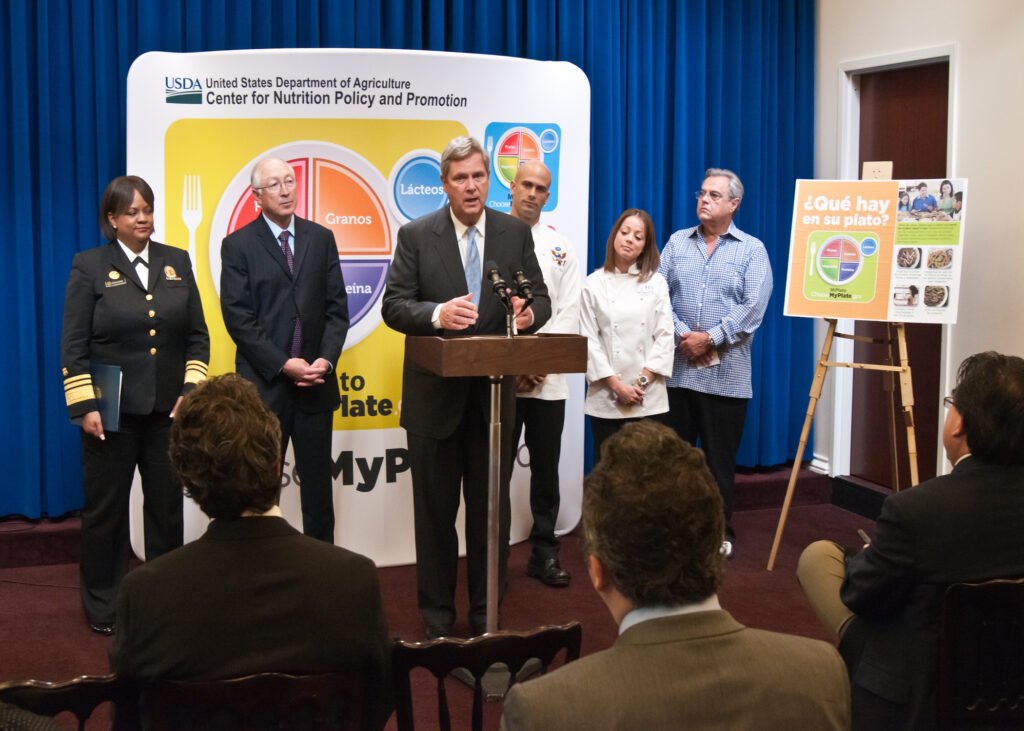
Translating dense scientific findings into language ordinary consumers can act on is one of the hardest parts of the guideline process, which is why federal agencies produce simplified consumer materials, such as MyPlate graphics and sample menus, alongside the full technical report aimed at researchers and policymakers. This two-tier communication strategy reflects a recognition that most people will never read the underlying scientific report directly, making the quality and clarity of the simplified public-facing materials arguably more consequential for everyday behavior than the technical document itself.
Guidelines for Specific Populations
Recent editions of national dietary guidelines have expanded coverage of specific life stages, including detailed guidance for infants and toddlers under age two, a population not addressed in earlier versions, reflecting growing recognition that early childhood nutrition habits can shape long-term health outcomes. Guidance for pregnant and breastfeeding individuals similarly receives dedicated attention, addressing nutrient needs such as folate and iron that differ meaningfully from general adult recommendations.
Industry influence over guideline language remains an ongoing area of scrutiny, with public health researchers periodically publishing analyses of financial ties between advisory committee members and food or pharmaceutical companies, arguing that greater transparency in the development process would strengthen public trust in the final recommendations regardless of their actual scientific merit.
Ultimately, dietary guidelines function less as a rigid prescription and more as a periodically updated consensus statement, one that reflects both the state of nutrition science at a given moment and the practical realities of translating that science into guidance a large, diverse population can realistically act on.
Comparing to Other National Approaches
Japan’s dietary guidance uses a spinning-top visual model emphasizing physical activity alongside food balance, while Canada’s current guide moved toward a plate-based model similar to MyPlate but with a notably stronger emphasis on protein foods including plant-based protein sources, illustrating how even countries with comparable nutrition science can arrive at meaningfully different visual and rhetorical approaches to the same underlying goal of balanced eating guidance.
Regardless of regional framing, researchers studying dietary guideline effectiveness consistently find that guidance paired with supportive policy, such as subsidized produce access or school meal reform, produces more measurable dietary change than guidance published as information alone, reinforcing that the document itself is only one piece of a much larger public health effort.
More in Nutrition & Dietetics
Key facts
- The U.S. Dietary Guidelines for Americans is updated every five years.nGuidelines shape federal nutrition programs including school meals and SNAP.nAn independent scientific advisory committee reviews research before guidelines are finalized.nCountries vary in approach, with some emphasizing processed-food limits over nutrient targets.
Quick checkHow often are the U.S. Dietary Guidelines for Americans updated?Show answer
The U.S. Dietary Guidelines for Americans are updated every five years by the Department of Agriculture and Department of Health and Human Services.
Sources
- USDA Dietary Guidelines for Americans, World Health Organization
Editorially reviewed by Specialty Digest Editorial TeamLast reviewed November 3, 2026Researched and drafted with AI assistanceReport an issue