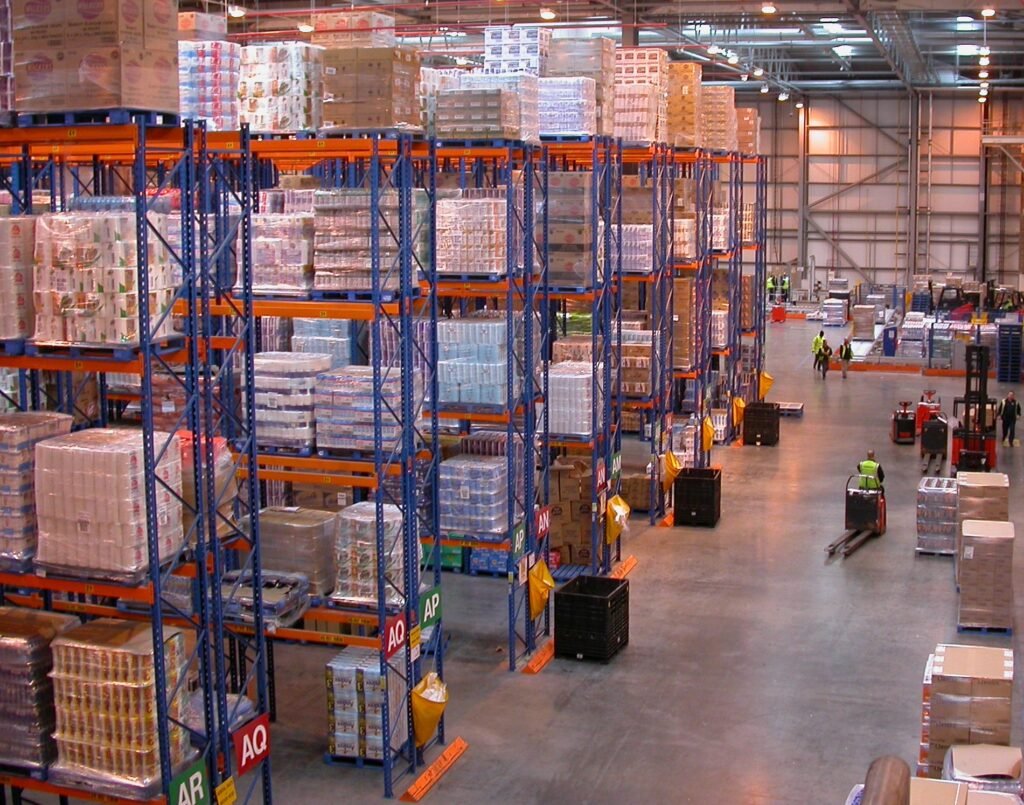
What a Distribution Center Does
A distribution center is a facility built to receive large shipments of goods and quickly break them down into smaller shipments for delivery to stores, other warehouses, or directly to customers. Unlike a traditional storage warehouse, a distribution center is optimized for speed and throughput rather than holding inventory for long periods.
Role in the Supply Chain
Distribution centers typically serve as regional hubs, positioned to minimize the distance and time needed to reach a defined set of destinations, such as a chain of retail stores within a geographic region. Goods arrive from manufacturers or ports, are sorted, and are shipped out again within hours or days rather than weeks.
Design and Layout
A distribution center is laid out to minimize travel distance between receiving, sorting, and shipping areas. Cross-docking is frequently used within distribution centers to move goods directly from inbound to outbound trailers. Facility design often prioritizes dock door count and yard space to handle high volumes of truck traffic.
Automation and Technology
Large distribution centers increasingly use conveyor systems, automated sortation equipment, and warehouse management software to handle high volumes with speed and accuracy. Real-time tracking lets operators monitor throughput and quickly identify bottlenecks in the receiving, sorting, or shipping process.
Types of Distribution Centers
A regional distribution center serves stores or customers within a defined geographic area, while a national distribution center serves an entire country and typically feeds goods down to regional facilities. E-commerce fulfillment centers are a specialized type of distribution center designed around individual parcel orders rather than bulk shipments to stores, with layouts optimized for picking single items quickly.
Location Strategy
Distribution centers are typically sited based on proximity to major highways, rail lines, ports, or population centers, balancing transportation cost against delivery speed to the markets they serve. Companies often use network modeling software to determine the optimal number and placement of distribution centers given their customer base and desired delivery times.
Role in Omnichannel Retail
As retailers increasingly fulfill both store restocking and direct-to-consumer online orders from the same network, many distribution centers have been redesigned or supplemented with dedicated e-commerce zones. This omnichannel approach lets a single facility serve multiple sales channels, improving asset utilization but requiring more complex picking and sortation processes than a traditional single-channel distribution center.
Staffing and Labor Models
Distribution centers often operate multiple shifts to handle fluctuating volume, especially around peak shopping seasons, and increasingly supplement permanent staff with temporary or seasonal labor during high-demand periods. Labor management systems track picking rates and set performance expectations, helping distribution center managers balance throughput targets against worker safety and retention.
Sustainability in Distribution Centers
Newer distribution centers increasingly incorporate sustainability features such as solar panels, energy-efficient lighting, and electric vehicle charging infrastructure for delivery fleets, reflecting both regulatory pressure and corporate commitments to reduce logistics-related carbon emissions. Packaging optimization within distribution centers also reduces material waste and improves trailer fill rates for outbound shipments.
Network Design Trade-offs
Companies face a constant trade-off between operating fewer, larger distribution centers, which lowers facility and inventory costs through economies of scale, and operating more, smaller facilities positioned closer to customers, which improves delivery speed. The rise of same-day and next-day delivery expectations has pushed many retailers toward denser networks of smaller facilities despite the higher per-facility overhead.
Distribution Center Security
Because distribution centers hold large volumes of valuable inventory moving through a facility with many employees, contractors, and trucking partners, security measures such as access control, inventory audits, and surveillance systems are standard practice. Shrinkage, the loss of inventory to theft, damage, or administrative error, is tracked closely since even small percentage losses add up significantly at the volume a major distribution center handles.
Relationship to Manufacturing Facilities
Distribution centers are often located separately from manufacturing plants, allowing production facilities to focus purely on manufacturing efficiency while distribution centers specialize in order fulfillment and transportation coordination. In some industries, however, companies colocate a distribution center directly adjacent to a factory to minimize the handoff time between production completion and outbound shipment.
Dock Scheduling and Yard Management
Large distribution centers use yard management systems to track trailers waiting in the facility yard and schedule dock door assignments, reducing truck idle time and keeping the flow of inbound and outbound trailers synchronized with warehouse labor availability.
Last-Mile Integration
Many distribution centers now serve as the launch point for last-mile delivery fleets rather than only feeding retail stores, reflecting the growth of direct-to-consumer shipping and requiring facilities to manage smaller, more frequent outbound loads than traditional store-replenishment shipments.
Distribution Center Capacity Planning
Capacity planning for a distribution center involves forecasting future volume growth and deciding when to expand an existing facility, add a new one, or invest in automation to handle more throughput within the same footprint, balancing capital cost against the risk of outgrowing capacity during a critical peak period.
Cost Allocation in Distribution Centers
Distribution center costs, including labor, facility lease, equipment, and utilities, are often allocated to specific product lines or business units based on storage space or throughput volume, helping company leadership understand the true fulfillment cost associated with each part of the business.
Distribution Center Expansion Planning
When evaluating a new distribution center, companies model projected order volume, transportation lane costs, and local labor availability years in advance, since construction and ramp-up for a major facility typically takes well over a year from site selection to full operational capacity.
As delivery speed expectations keep rising, distribution centers are likely to continue moving physically closer to the population centers they serve, even at higher real estate cost per facility.
Key facts
- Array
Quick checkHow is a distribution center different from a traditional warehouse?Show answer
A distribution center is designed for fast throughput and redistribution, while a traditional warehouse emphasizes longer-term storage.
Sources
- Array
Editorially reviewed by Specialty Digest Editorial TeamLast reviewed November 4, 2026Researched and drafted with AI assistanceReport an issue