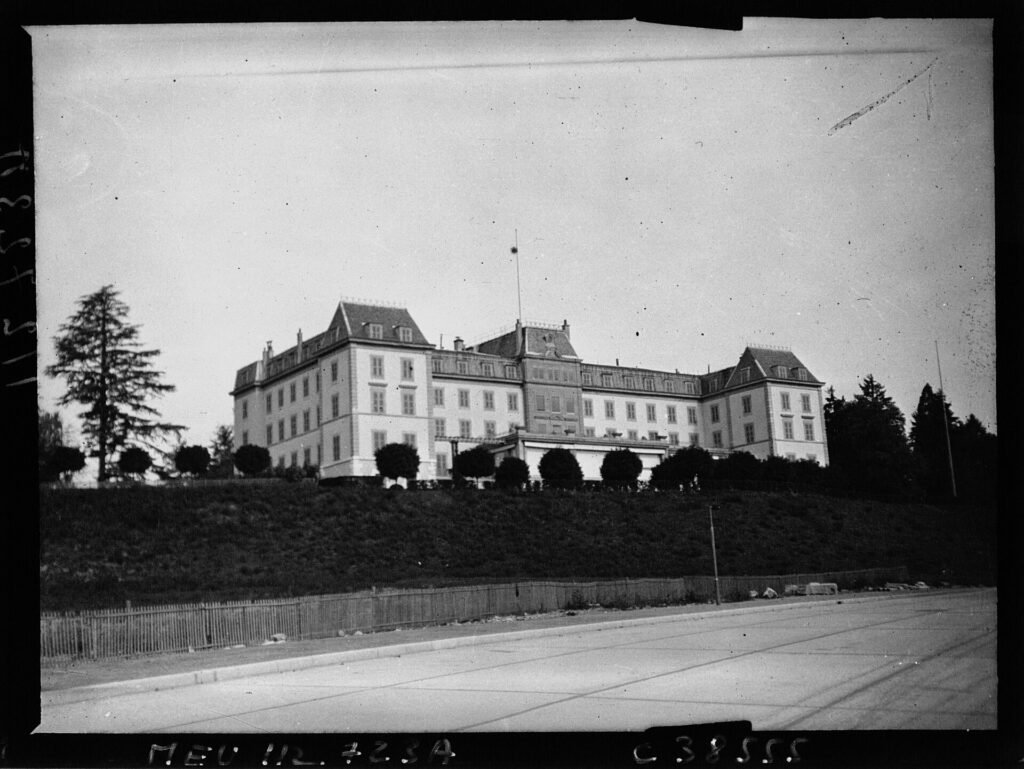
The International Committee of the Red Cross (ICRC) is a neutral, impartial and independent humanitarian organization, founded in Geneva in 1863, that protects and assists people affected by armed conflict and other violence. States gave it its mandate through the Geneva Conventions, and it works alongside, but separately from, the national Red Cross and Red Crescent societies.
History of the International Committee of the Red Cross
The committee first met in February 1863 in Geneva, Switzerland. Among its five founding members was Henry Dunant, a local man who had published a book the year before, A Memory of Solferino, calling for better care of wounded soldiers in wartime.
By the end of 1863 the committee had gathered government representatives to agree on national relief societies that would support army medical services. The first of these societies was formed in the German state of Württemberg in November 1863. In August 1864 governments adopted the first Geneva Convention, a treaty that obliged armies to care for wounded soldiers whatever side they fought on and introduced a single emblem for medical services, a red cross on a white background.
At first the ICRC mainly coordinated. Over time, the need for a neutral go-between in wars drew it into field operations.
During the First World War the ICRC opened the International Prisoners of War Agency in Geneva to restore contact between captured soldiers and their families. In 1918 it publicly appealed to the warring parties to give up mustard gas, and it visited political prisoners for the first time, in Hungary. National societies founded the League of Red Cross Societies in 1919 as a future coordinating body, and in 1929 governments adopted a new Geneva Convention giving prisoners of war greater protection.
The Second World War brought a large expansion of work. Delegates visited prisoners of war around the world, relief supplies were shipped to prisoners and civilians, and millions of Red Cross messages passed between family members. The ICRC itself describes the period as also containing its greatest failure, a lack of action on behalf of victims of the Holocaust and other persecuted groups.
In 1949, at the ICRC’s initiative, states revised three Geneva Conventions and added a fourth to protect civilians living under enemy control. In 1977 two Protocols additional to the Conventions followed, one for international and one for non-international armed conflicts, and they also set rules on how hostilities are conducted.
Mandate and legal status
The ICRC’s mandate is to help and protect people affected by armed conflict and by what it calls other situations of violence. That phrase covers violence that has not reached the threshold of an armed conflict but is carried out by large groups and has humanitarian consequences.
States conferred this mandate through the four Geneva Conventions of 1949, the Additional Protocols of 1977 and 2005, and the Statutes of the International Red Cross and Red Crescent Movement of 1986. The ICRC says this basis sets it apart from both intergovernmental organizations, such as the specialized agencies of the United Nations, and from non-governmental organizations. In practice, the status lets it act independently of governments and serve people in greatest need of protection and assistance without taking sides.
International humanitarian law, the body of rules that limits the effects of armed conflict, is the framework for this work. The ICRC both applies it in the field and urges governments to strengthen it and respect it.
Structure and membership
The ICRC is governed by an Assembly, an Assembly Council and a Directorate. The Assembly can have up to 25 co-opted members of Swiss nationality. The Council is a subsidiary body with certain delegated powers, and the Directorate is the executive body. The President chairs both the Assembly and the Council and is assisted by a Vice-President.
Mirjana Spoljaric has been President since October 2022. Under her leadership the ICRC works in more than 90 contexts around the world.
The ICRC is one part of the International Red Cross and Red Crescent Movement. The Movement also includes 191 National Red Cross and Red Crescent Societies and the International Federation of Red Cross and Red Crescent Societies. The ICRC describes the Movement as the largest humanitarian network in the world and says it works closely with its members for a coordinated and rapid response to conflict.
What the ICRC does
By its own account, the ICRC’s sole objective since 1863 has been to ensure protection and assistance for victims of armed conflict and strife. It does this through direct action and by encouraging the development of international humanitarian law and respect for it by governments and all weapon bearers.
Several kinds of activity recur throughout its history. Delegates visit people held in connection with conflicts, from prisoners of war to political detainees. Teams help families regain contact after separation, an approach that began with the Prisoners of War Agency and the exchange of messages in the world wars. The organization also acts as a neutral intermediary between parties that cannot talk directly.
Funding and governance
The ICRC is funded by voluntary contributions. Its donors include states party to the Geneva Conventions, National Red Cross and Red Crescent Societies, supranational organizations such as the European Commission, and other public and private sources. Governments are the main donors: over the past five years they have contributed about 82 percent of the budget on average.
The organization itself notes that contributions remain voluntary and that nothing guarantees they will continue in the long term. Each year it launches appeals to cover projected costs, and in February 2026 it appealed for 1.8 billion Swiss francs for its 2026 operations. It reports on its work and spending in an annual report; the report for 2025 was published in July 2026.
Recognition and criticism
The ICRC has received the Nobel Peace Prize three times, in 1917, 1944 and 1963. The 1963 award fell on the centenary of the founding and was shared with the League of Red Cross Societies. The Norwegian Nobel Committee cited the ICRC’s work on the revised Geneva Convention of 1949 and its activity during conflicts in Hungary, Algeria, the Congo and Tibet. Henry Dunant had himself received the first Peace Prize in 1901.
The sharpest criticism comes from the ICRC’s own history. Its account of the Second World War admits a failure to take decisive action or speak out for victims of the Holocaust. It explains that the organization lacked a specific legal basis, was bound by traditional procedures and was hindered by its ties to the Swiss establishment, and that individual delegates did what they could to save groups of Jews.
More in International Relations
Key facts
- The ICRC first met in Geneva in February 1863, and its founders included Henry Dunant.1
- Governments adopted the first Geneva Convention in August 1864, which created the red cross emblem for medical services.1
- The ICRC won the Nobel Peace Prize in 1917, 1944 and 1963.2
- Its Assembly has up to 25 co-opted members of Swiss nationality.3
- Governments provided about 82 percent of its budget on average over five years.4
Related concepts
Quick checkIs the ICRC the same as the Red Cross and Red Crescent Movement?Show answer
No. The ICRC is one part of the International Red Cross and Red Crescent Movement, which also includes 191 National Societies and the International Federation of Red Cross and Red Crescent Societies.
Sources
- International Committee of the Red Cross, Our history, https://www.icrc.org/en/who-we-are/history
- NobelPrize.org, International Committee of the Red Cross: Facts, Nobel Peace Prize 1963, https://www.nobelprize.org/prizes/peace/1963/red-cross/facts/
- International Committee of the Red Cross, How we are run, https://icrc.org/en/how-we-are-run
- International Committee of the Red Cross, Our finances, https://icrc.org/en/our-finances
Editorially reviewed by Specialty Digest Editorial TeamLast reviewed November 4, 2026Researched and drafted with AI assistanceReport an issue