Italy is a country in Southern Europe extending into the Mediterranean Sea, known for the legacy of ancient Rome, the art of the Renaissance, and a culture whose influence on food, fashion and design reaches far beyond its borders. Its capital, Rome, was the seat of one of history’s largest empires and remains one of the world’s most visited cities.
Where Is Italy Located?
Italy occupies a long, boot-shaped peninsula in Southern Europe, bordered by France to the northwest, Switzerland and Austria to the north, and Slovenia to the northeast, with the Mediterranean, Adriatic, Ionian and Tyrrhenian Seas surrounding its coasts. The country includes the islands of Sicily and Sardinia and encloses the independent states of San Marino and Vatican City. Its terrain is largely mountainous or hilly, dominated by the Alps in the north and the Apennine range running the length of the peninsula, with the Po Valley forming its main lowland region.
A Brief History
According to tradition, Rome was founded in 753 BCE, and the city grew from a small settlement into the capital of the Roman Republic and then the Roman Empire, which at its height controlled territory across Europe, North Africa and the Middle East. After the fall of the Western Roman Empire in 476 CE, the Italian peninsula fragmented into numerous city-states and kingdoms for centuries, a period that produced the Renaissance, a flowering of art, science and humanist thought centered in cities including Florence, Venice and Rome. Italy was not unified as a single nation-state until 1861, and became a republic in 1946 after the Second World War and the fall of the Fascist regime that had ruled since 1922.
Government and Economy Today
Italy is a parliamentary republic and a founding member of the European Union, tracing that membership to the 1957 Treaty of Rome, which was signed in the city. It is one of the world’s largest advanced economies and a member of the Group of Seven (G7) leading industrialized nations, with an economy built on manufacturing, tourism, fashion and design, and a large base of small and medium-sized enterprises. According to the World Bank, Italy holds significant voting power within the World Bank Group’s governing structure and has long been a donor to the International Development Association, the institution’s fund for the world’s poorest countries.
Culture and People
Italian is the official language, and the country’s culture has shaped Western art, architecture, cuisine and design for centuries, from Roman engineering and Renaissance painting and sculpture to opera and modern fashion. Italy has more UNESCO World Heritage Sites than any other country, reflecting the density of historic city centers, archaeological sites and cultural landscapes across the peninsula.
What Is Italy Known For?
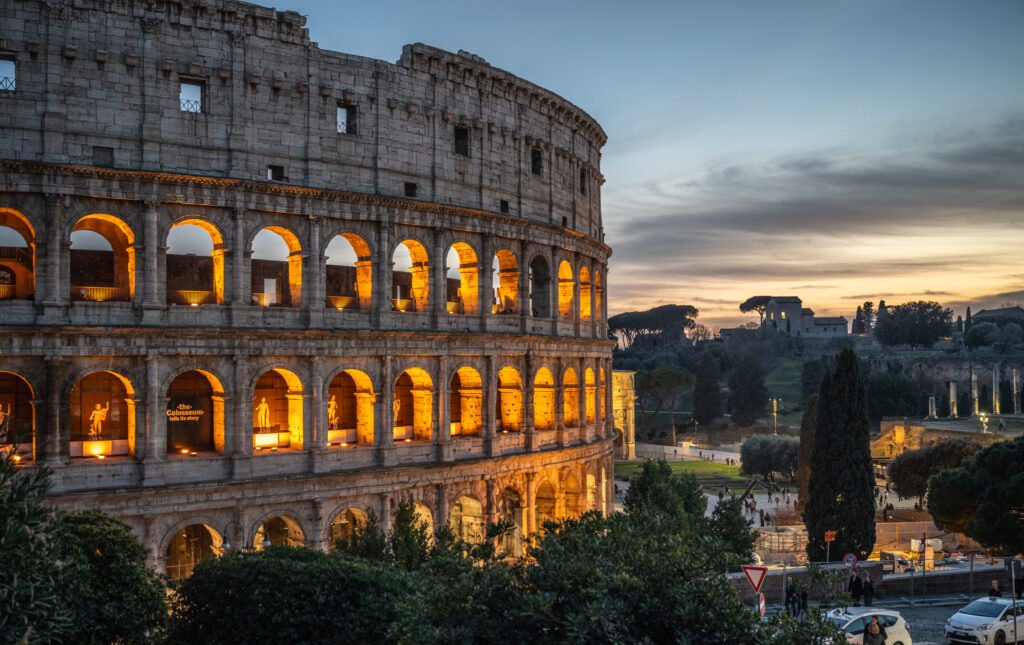
Italy is best known internationally for the ruins and history of ancient Rome, above all the Colosseum, the amphitheater completed around 80 CE where gladiatorial contests and public spectacles were once held; for Renaissance art in cities such as Florence; and for its cuisine, wine and fashion industries, which are recognized worldwide.
Key Takeaways
- Italy occupies a boot-shaped peninsula in Southern Europe and includes Sicily, Sardinia, and the enclosed states of San Marino and Vatican City.
- Rome grew from a legendary founding in 753 BCE into the capital of the Roman Empire before the peninsula fragmented for centuries; Italy was not unified until 1861.
- Italy is a founding EU member, tracing its membership to the 1957 Treaty of Rome, and a G7 economy built on manufacturing, tourism and design.
- Italy has more UNESCO World Heritage Sites than any other country.
- The Colosseum in Rome, completed around 80 CE, is the country’s most recognizable landmark.
Key facts
Quick checkWhen was Italy unified as a single nation-state?Show answer
Italy was unified in 1861, after centuries during which the peninsula was divided among separate city-states and kingdoms.
Sources
- World Bank. Italy Overview. Accessed 2026 (accessed 2026)
- World Bank. Italy, Population total. 2025 (accessed Accessed 2026)
Editorially reviewed by Specialty Digest Editorial TeamLast reviewed September 27, 2026Researched and drafted with AI assistanceReport an issue