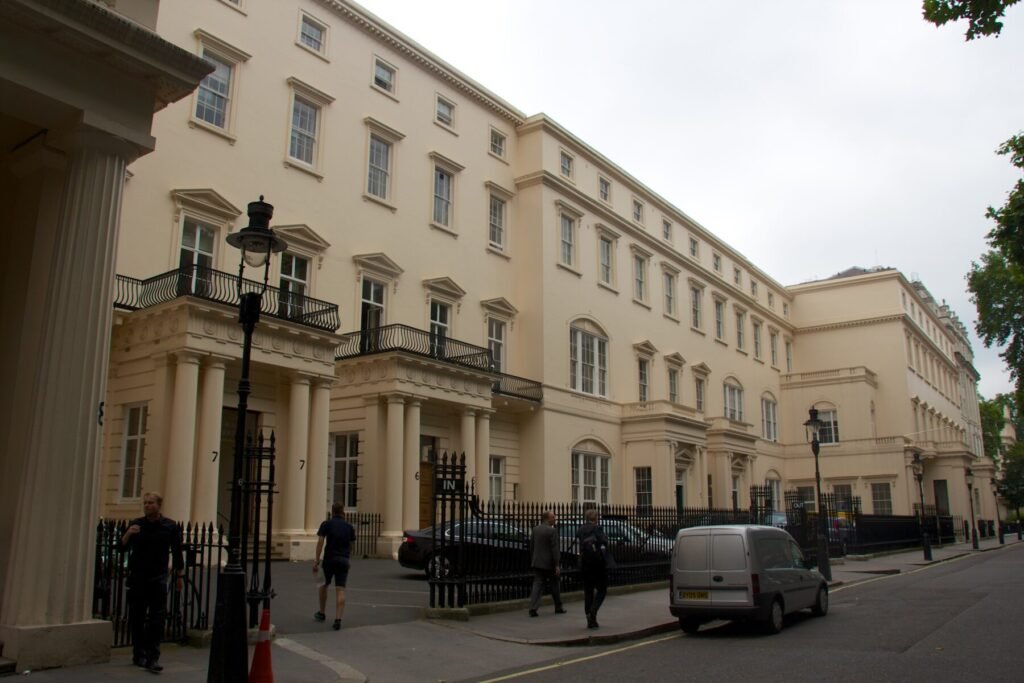
The Royal Society is the national academy of sciences of the United Kingdom and a fellowship of many of the world’s most eminent scientists. Founded in London in 1660, it describes itself as the oldest scientific academy in continuous existence.
History of the Royal Society
The Royal Society grew from informal gatherings of London and Oxford intellectuals in the mid-17th century. They coalesced into a chartered organization named The Royal Society of London for Improving Natural Knowledge.
Its first meeting took place on 28 November 1660, after a lecture by Christopher Wren, who was then Professor of Astronomy at Gresham College in London. Gresham College confirms that the Society held its first meeting there and continued to meet on the site for the next fifty years. Gresham’s early professors, among them Robert Hooke, Henry Briggs, John Greaves and Wren, had built a formidable reputation for research. Wren believed the new Fellowship should act to transform knowledge, profit, health and the conveniences of life.
The early members were not professional scientists. They were lawyers, merchants, physicians, aristocrats and landowners who shared an interest in natural philosophy, the term used then for what is now called science. The Society’s own history notes that they were drawn from the professional and aristocratic classes and were exclusively male.
By 1662 the Society had appointed Henry Oldenburg as Secretary to manage its correspondence and Robert Hooke as Curator of Experiments to oversee demonstrations. In 1665 Oldenburg launched the Philosophical Transactions of the Royal Society, and Hooke published his book Micrographia, a book of minute observations.
Early Fellows included Robert Boyle, John Evelyn and John Locke, and by 1672 Isaac Newton. His Principia Mathematica, published in 1687, appeared under the Society’s imprimatur. Fellows from across Europe and the New World were also elected.
The Society adopted its motto, Nullius in verba, in its First Charter of 1662. The phrase is taken to mean “take nobody’s word for it.” It expresses the determination of the Fellows to resist the authority of others and to check every statement against facts established by experiment.
Structure and Fellowship
The Royal Society describes itself as three things at once: a registered charity, a fellowship and a national academy. The Fellowship is made up of the most eminent scientists, engineers and technologists, and the Society elects both Fellows and Foreign Members from all over the world.
There are currently about 1,800 Fellows and Foreign Members, including around 85 Nobel laureates. They are elected for life through a peer review process based on excellence in science. Each year up to 73 Fellows and up to 24 Foreign Members are elected from a group of around 800 candidates proposed by the existing Fellowship.
Because it is a charity, the Society produces an annual Trustees’ Report and financial statements, as charity law requires. Its current five-year strategy was launched in 2022. It also states a goal of helping ensure that anyone with the passion and talent for science can study and work in it, an aim that contrasts with its early membership, which was exclusively male.
What the Royal Society does
The Society’s activities fall into several programs, each described on its website.
It advises policy makers so that decisions and political debate draw on scientific evidence. Its Science and Industry program handles industry engagement, and its international work helps develop partnerships across borders. It also engages with the public and with schools, where it speaks for an excellent education system through its policy program.
Grant giving is the main way the Society supports researchers and outstanding science. It also organizes scientific conferences and publishes scientific journals, a tradition that goes back to the Philosophical Transactions of 1665.
Recognizing excellence is a tenet of its founding charters of the 1660s, and the Society still honors scientific achievement. Its collections of rare books, archives, portraits and scientific objects record the history of science. A program on science and the law brings scientists and members of the judiciary together to discuss shared questions, and the Society is a partner academy of the first UK-wide national Young Academy.
Funding and governance of the Royal Society
The Society says that it draws on a variety of funding sources to protect its independence. These include gifts from foundations, corporations and individual donors, as well as legacies and contributions made in memory of others.
It also receives a grant from the Department for Science, Innovation and Technology. The grant supports the Society’s work on scientific excellence and innovation, science and mathematics education, international activities and science communication.
Its governance page explains how the Society is run, what its strategic priorities are and how members are elected. The Trustees’ Report and financial statements for the year ended 31 March 2024 are available for download from the Society’s website, and they are the place to look for current income and spending. This entry gives no budget figure because none was checked directly for the latest year.
Legacy and impact
The Royal Society helped set the habits of modern science. Its motto put experiment ahead of authority, its journal gave researchers a regular place to publish results, and its Fellows pursued the questions of the 17th century through observation and demonstration. Newton’s Principia, one of the foundations of physics, was published with its backing.
Its legacy also lies in what it became. A group of amateurs who met after a lecture at Gresham College now has a Fellowship of about 1,800 elected scientists, including around 85 Nobel laureates, and it works as a national academy that informs public policy. Its history shows both the strengths of early scientific societies and their limits, since the early Fellowship was narrow in background and exclusively male.
Key facts
- The Royal Society held its first meeting on 28 November 1660, after a lecture by Christopher Wren at Gresham College.12
- The Philosophical Transactions of the Royal Society began in 1665.1
- The Society adopted its motto Nullius in verba in its First Charter of 1662.1
- There are about 1,800 Fellows and Foreign Members, including around 85 Nobel laureates.3
- Each year up to 73 Fellows and up to 24 Foreign Members are elected from around 800 candidates.3
- The Society receives a grant from the Department for Science, Innovation and Technology alongside gifts from foundations, corporations and donors.4
Related concepts
In the news
Quick checkWhat does the Royal Society motto Nullius in verba mean?Show answer
It is taken to mean take nobody's word for it, an expression of the Fellows' determination to verify statements by appeal to facts determined by experiment.
Sources
- Royal Society. History of the Royal Society. Undated (accessed 4 November 2026)
- Gresham College. Our history. Undated (accessed 4 November 2026)
- Royal Society. Mission and priorities. Undated (accessed 4 November 2026)
- Royal Society. Funding and finances. Undated (accessed 4 November 2026)
- Royal Society. What we do. Undated (accessed 4 November 2026)
- Royal Society. How we are governed. Undated (accessed 4 November 2026)
Editorially reviewed by Specialty Digest Editorial TeamLast reviewed November 4, 2026Researched and drafted with AI assistanceReport an issue