Due process is the principle that government must follow fair, established legal procedures before depriving a person of life, liberty, or property, and that it must apply the law consistently and predictably rather than arbitrarily. It functions as a check on government power, balancing the state’s authority to act against the individual’s right to fair
Due Process Read More »
The principle that government must follow fair, established legal procedures before depriving a person of life, liberty, or property.
Overview The Earned Income Tax Credit is a refundable federal tax credit in the United States designed to supplement the earnings of low-to-moderate-income working individuals and families. Because the credit is refundable, a filer can receive a payment exceeding the amount of tax actually owed, functioning effectively as a wage subsidy delivered through the tax
Earned Income Tax Credit Read More »
A refundable U.S. federal tax credit designed to supplement the income of low-to-moderate-income working individuals and families.
An ecological footprint is a measure of how much biologically productive land and water a given population, activity, or product requires to supply the resources it consumes and absorb the waste it generates, expressed in a standardized unit called the global hectare. The concept was developed in the early 1990s by Mathis Wackernagel, working under
Ecological footprint Read More »
A measure, in global hectares, of how much productive land and water a population or activity requires, developed in the early 1990s.
An ecological niche is the specific role a species plays within its ecosystem, encompassing the full range of environmental conditions it can tolerate, the resources it uses, and its relationships with other species, including what it eats, what eats it, and how it interacts with competitors. The concept extends well beyond simply where a species
Ecological Niche Read More »
An ecological niche is the specific role a species plays in its ecosystem, including the resources it uses and its relationships with other species.
Ecological succession is the process by which the species composition of a biological community changes over time, typically progressing through a predictable series of stages following a disturbance or the formation of new, uncolonized land. The concept is foundational to ecology, describing how ecosystems develop and change even in the absence of further outside disturbance,
Ecological Succession Read More »
Ecological succession is the process by which a biological community changes composition over time, typically after a disturbance or new land formation.
An ecosystem is a community of living organisms interacting with one another and with the nonliving parts of their surroundings, functioning together as a single, loosely bounded system. The idea links two things ecologists had long studied separately, living communities and physical environments, into one unit defined by the flows of energy and matter that
Ecosystem Read More »
An ecosystem is a community of interacting organisms together with the nonliving parts of their environment, functioning as a single system.
An ecotone is a transitional zone where two different ecological communities or biomes meet and gradually blend into one another, rather than a sharp boundary line separating them, such as the gradual shift from forest to grassland, from wetland to upland, or from marine to terrestrial environments along a coastline. Ecotones are often characterized by
Ecotone Read More »
An ecotone is a transitional zone where two ecological communities or biomes meet and gradually blend, often supporting elevated species diversity.
Defining Characteristics Ecotourism describes a specific category of nature-based travel distinguished by its explicit commitment to minimizing environmental impact while generating direct benefits for conservation efforts and local communities living near the natural areas being visited. The International Ecotourism Society and similar organizations define the concept with specific criteria, generally requiring that ecotourism operations limit
Ecotourism Read More »
Ecotourism is a form of tourism focused on visiting fragile, pristine, and relatively undisturbed natural areas in a manner intended to have a low environmental impact while generating conservation funding and benefits for local communities.
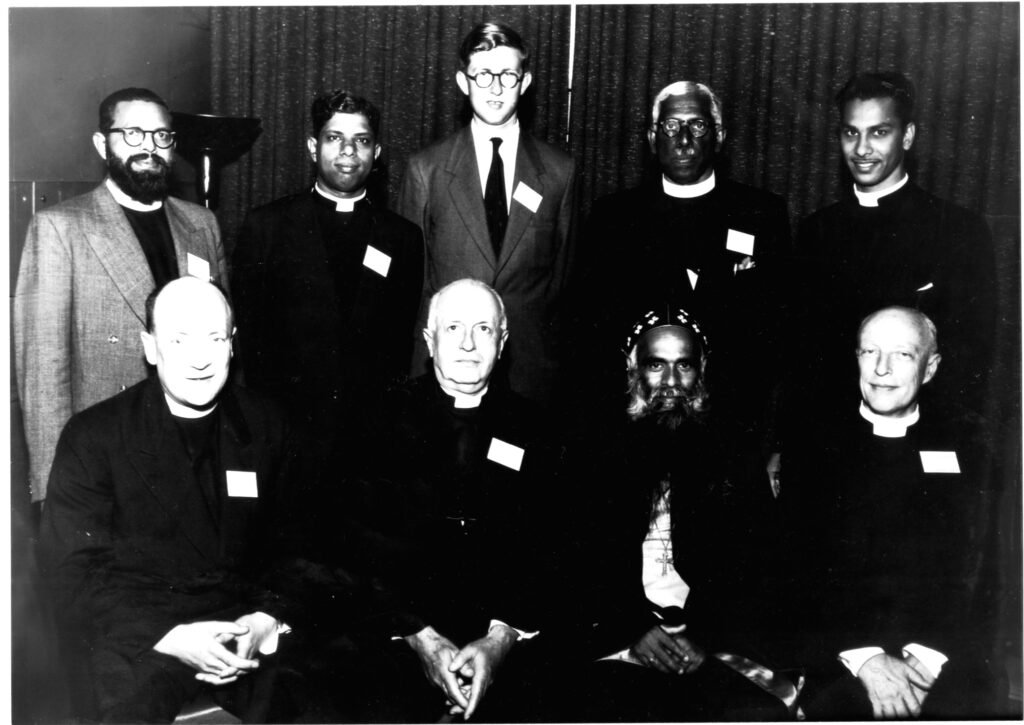
Overview Ecumenism is the movement within Christianity dedicated to fostering greater unity, mutual understanding, and practical cooperation among the many denominations into which the Christian church has historically divided. It addresses divisions dating back to ancient schisms as well as the sixteenth century Reformation, which produced numerous distinct Protestant traditions alongside the Roman Catholic and
Ecumenism Read More »
Ecumenism is the movement within Christianity aimed at promoting unity and cooperation among different Christian denominations.
Overview The Edict of Milan was a landmark proclamation issued jointly by Roman emperors Constantine and Licinius in 313 CE, establishing religious toleration for Christianity and other religions throughout the Roman Empire and marking a decisive turning point in the status of the Christian faith within Roman society and governance. Historical Context The edict followed
Edict of Milan Read More »
The Edict of Milan was a 313 CE proclamation by Roman emperors Constantine and Licinius establishing religious toleration for Christianity throughout the Roman Empire.