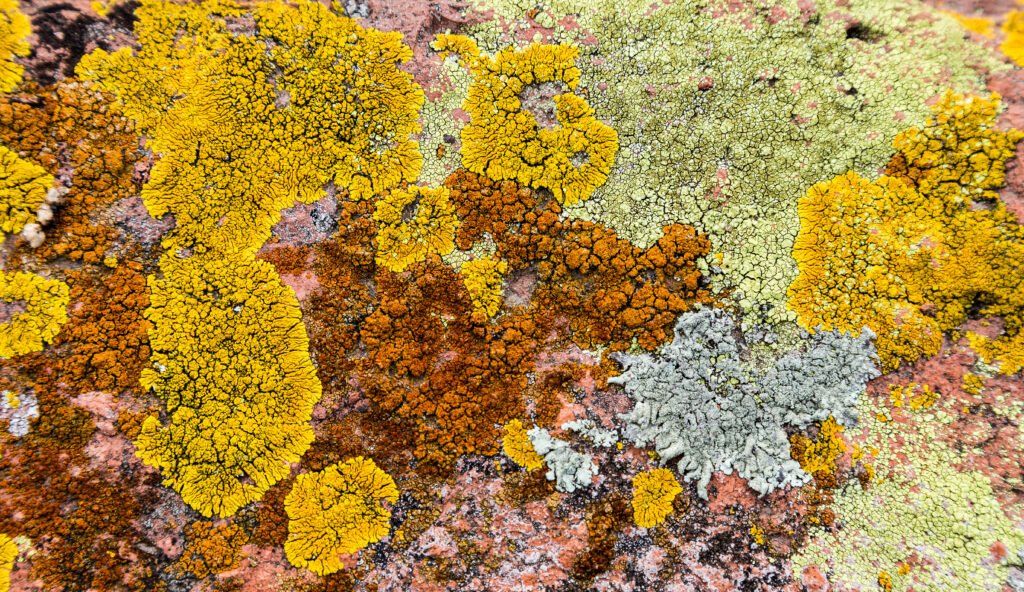
Ecological succession is the process by which the species composition of a biological community changes over time, typically progressing through a predictable series of stages following a disturbance or the formation of new, uncolonized land. The concept is foundational to ecology, describing how ecosystems develop and change even in the absence of further outside disturbance, as early-arriving species gradually create conditions that favor the establishment of different, often longer-lived species that eventually replace them.
Ecologists traditionally divide succession into two broad types: primary succession, which begins on newly exposed or created surfaces with no prior soil or living organisms, such as bare rock left behind by a retreating glacier or a new volcanic lava flow, and secondary succession, which occurs after an existing ecosystem is disturbed but soil and some organisms remain, such as after a forest fire, farmland abandonment, or a severe storm.
Primary Succession
Primary succession begins with pioneer species, hardy organisms such as lichens and certain mosses capable of colonizing bare rock or mineral soil with no existing organic matter, gradually breaking down rock surfaces and contributing organic material as they grow and die. Over time, this accumulating organic matter allows increasingly complex plant life to establish, moving through stages often including grasses and small shrubs before larger woody plants and eventually, in many temperate and tropical regions, forest can develop.
This process can take centuries to reach what ecologists call a climax community, a relatively stable end-stage community that persists until the next major disturbance, and well-documented examples include the gradual forest development that has occurred on land exposed by retreating glaciers in Glacier Bay, Alaska, where researchers have tracked distinct successional stages across areas deglaciated at different points over the past two centuries.
Secondary Succession
Secondary succession proceeds more rapidly than primary succession because soil and often a reservoir of seeds, roots, and other organisms typically survive the disturbance, giving the recovering ecosystem a substantial head start compared to bare rock. A classic example is the recovery of farmland after agricultural abandonment, which often progresses from fast-growing annual weeds and grasses through shrubs and fast-growing trees toward a more mature forest community over several decades.
Forest fires, though often destructive in the short term, frequently trigger secondary succession that can increase overall landscape biodiversity over time, since the resulting mix of recently burned, partially recovered, and mature forest patches supports a wider range of species than a single uniform forest age class would provide, a principle increasingly incorporated into modern forest management and prescribed burning programs.
Succession and Species Replacement
A central feature of ecological succession is that the species present at each stage are often not simply random newcomers but are frequently species whose presence is enabled or constrained by the conditions created by the previous stage’s inhabitants, a process ecologists describe through concepts such as facilitation, in which earlier species improve conditions for later species, and competition, in which later-arriving, often longer-lived species eventually outcompete and replace earlier pioneers.
This dynamic explains why forests that develop through succession often show predictable patterns, such as fast-growing, light-loving tree species dominating early stages before being gradually replaced by slower-growing, shade-tolerant species that can persist in the darker conditions created once an initial tree canopy closes overhead.
Human Influence on Succession
Human activities have profoundly altered succession patterns across much of the world, both by introducing frequent disturbances, such as logging, agriculture, and urban development, that reset ecosystems to earlier successional stages, and by suppressing natural disturbances, such as wildfire, that many ecosystems historically relied on to maintain certain successional stages over the long term.
Invasive species have also disrupted traditional successional pathways in many regions, since an aggressive non-native plant can sometimes outcompete the native pioneer species that would normally establish first, locking an area into an altered successional trajectory that may never progress toward the historical climax community that existed before the invasion.
Succession in Conservation and Restoration
Understanding successional dynamics has become essential to ecological restoration projects, since restoration practitioners often need to actively manage or accelerate succession, for example by planting later-successional tree species directly rather than waiting decades for them to arrive naturally, or by controlling invasive species that would otherwise block the intended successional pathway.
Some conservation strategies deliberately maintain ecosystems at an early or intermediate successional stage rather than allowing progression toward a climax community, since certain valued habitats, such as open grasslands or early-successional shrublands that support specific wildlife species, would otherwise be lost if succession were simply allowed to proceed uninterrupted toward forest.
Long-term ecological monitoring plots established decades ago continue to provide some of the most detailed datasets available for testing and refining successional theory as conditions change.
Citizen science programs have also begun contributing useful successional observations in some regions, expanding the geographic coverage available to professional researchers alone.
FAQ
What is the difference between primary and secondary succession?
Primary succession begins on bare rock or newly formed land with no existing soil or organisms, while secondary succession occurs after a disturbance to an existing ecosystem where soil and some organisms typically survive.
What is a climax community?
A climax community is the relatively stable, long-lasting community that develops at the end stage of ecological succession, persisting until the next major disturbance restarts the process.
How do invasive species disrupt ecological succession?
An aggressive invasive species can outcompete the native pioneer species that would normally establish first, altering or blocking the ecosystem’s natural successional pathway toward its historical climax community.
More in Ecology
Editorially reviewed by Specialty Digest Editorial TeamLast reviewed November 4, 2026Researched and drafted with AI assistanceReport an issue