The discovery of Uranus was the first identification of a planet with the help of a telescope. The astronomer William Herschel noticed the object on the evening of 13 March 1781 and at first took it for a comet or a star. Within about two years astronomers accepted it as a seventh planet, the first
Discovery of Uranus Read More »
The 1781 finding by William Herschel of a seventh planet, the first discovered with a telescope, which he first mistook for a comet.
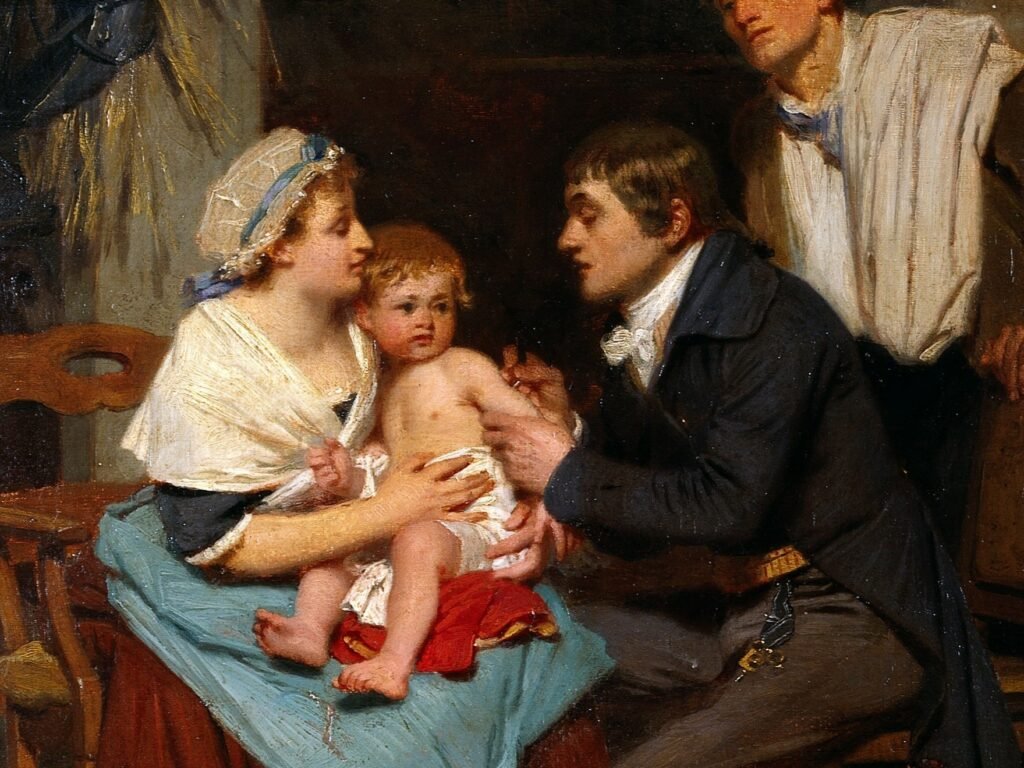
The discovery of vaccination was the finding, made in England between 1774 and 1796, that deliberate exposure to cowpox protects people from smallpox. Benjamin Jesty carried out the first recorded vaccination in 1774, and Edward Jenner tested the idea systematically in 1796 and published it in 1801. Background Smallpox is one of the oldest known
Discovery of vaccination Read More »
The 1774 to 1796 finding by Benjamin Jesty and Edward Jenner that exposure to cowpox protects against smallpox, which founded vaccination.
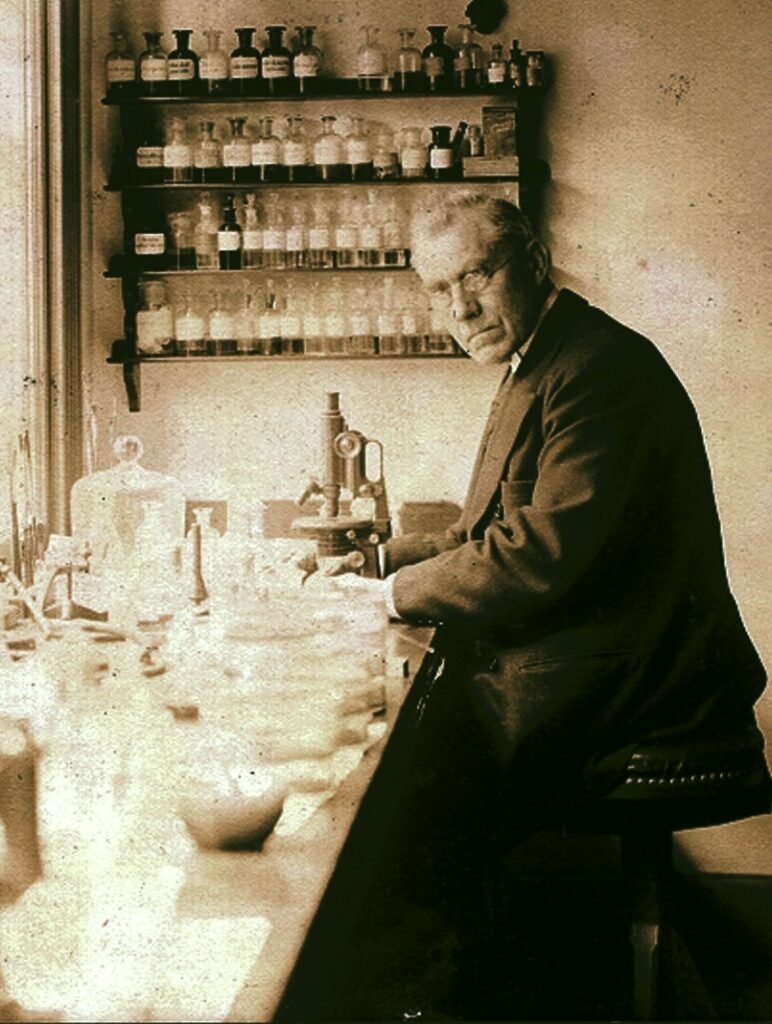
The discovery of viruses was the finding, made in the 1890s, that some infectious diseases are caused by agents smaller than bacteria. Dmitri Ivanovsky and Martinus Beijerinck showed this for tobacco mosaic disease, and Friedrich Loeffler and Paul Frosch reached a similar conclusion for foot-and-mouth disease in 1898. Background In the late 19th century tobacco
Discovery of viruses Read More »
The 1890s finding by Ivanovsky, Beijerinck, Loeffler and Frosch that some infectious diseases are caused by agents smaller than bacteria.
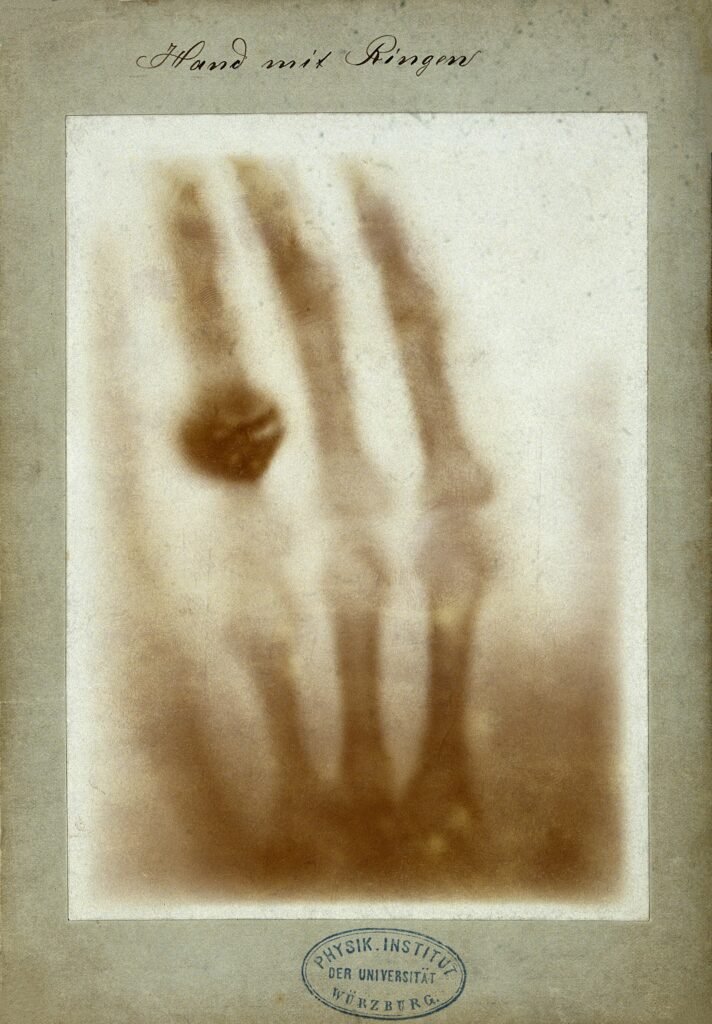
The discovery of X-rays was the identification, by the German physicist Wilhelm Conrad Röntgen at Würzburg in November 1895, of a previously unknown penetrating radiation produced by a vacuum tube. Within a year, doctors were using it to see bones and locate foreign objects inside the body. Background to the discovery of X-rays Röntgen was
Discovery of X-rays Read More »
X-rays were discovered by Wilhelm Conrad Röntgen in Würzburg in November 1895, when he found an invisible radiation that passes through soft tissue.
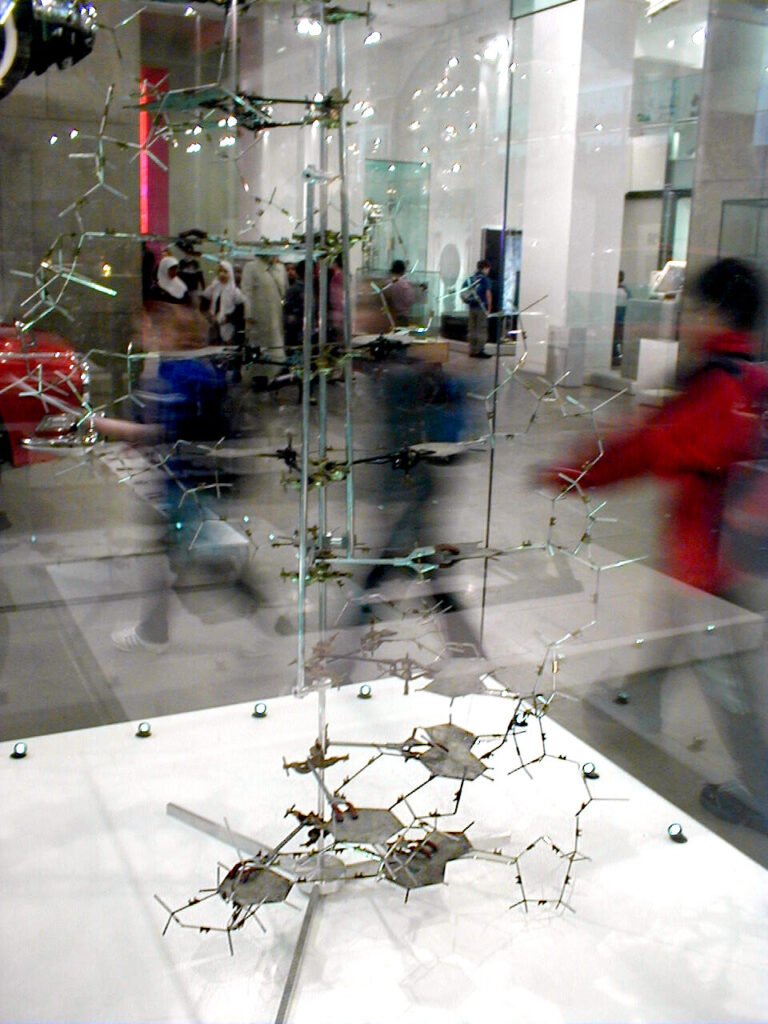
The discovery of the DNA double helix was the 1953 determination that deoxyribonucleic acid (DNA) consists of two strands wound around each other, joined by pairs of chemical bases. James Watson and Francis Crick proposed the structure at the Cavendish Laboratory in Cambridge, England, building on X-ray work done at King’s College London. The model
DNA double helix Read More »
The DNA double helix is the twisted-ladder structure of DNA, proposed in 1953 by Watson and Crick, that showed how hereditary information is copied.
The Rosetta Stone is a broken slab of dark granodiorite carved in 196 BC with a single decree repeated in three scripts: Egyptian hieroglyphs, Demotic and ancient Greek. French soldiers found it in Egypt in 1799. Scholars could already read the Greek, so the stone gave them a way to work out the two Egyptian
Rosetta Stone Read More »
A granodiorite slab carved in 196 BC with one decree in hieroglyphic, Demotic and Greek, which became the key to reading ancient Egyptian writing.