Wilhelm Röntgen Discovers the X-Ray
A physicist noticed a strange glow across his darkened laboratory and realized he had found a new kind of ray that could see straight through solid matter.
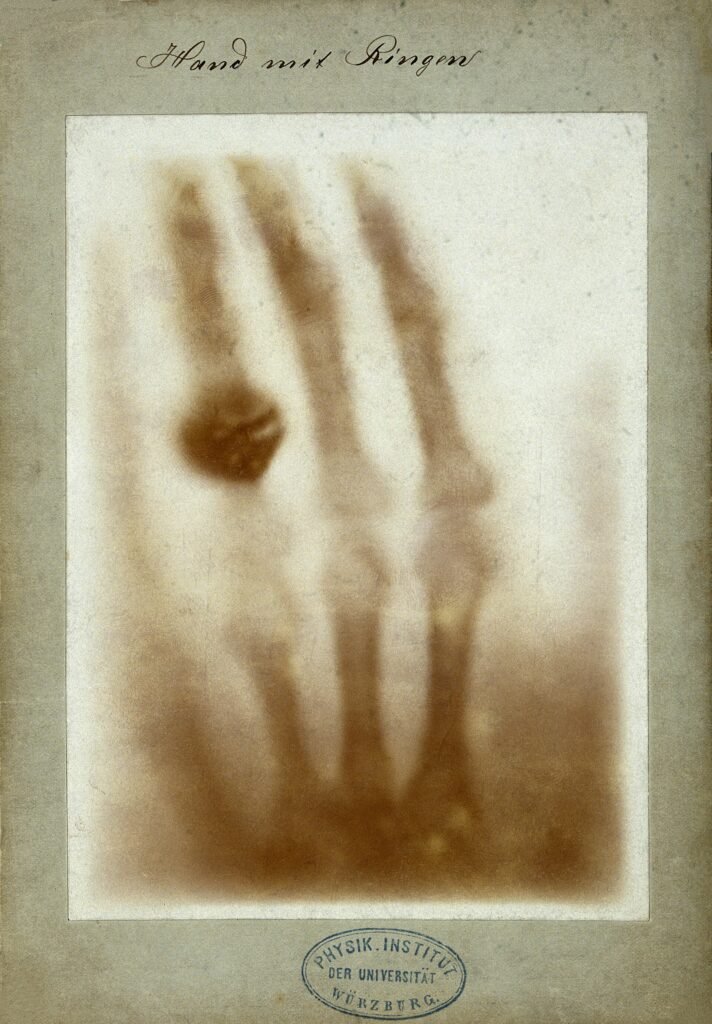
On November 8, 1895, German physicist Wilhelm Conrad Röntgen was testing a cathode-ray tube at the University of Würzburg when he noticed a nearby screen glowing even though the tube was fully covered. Investigating further, he found the mysterious rays could pass through paper, wood, and flesh, and he named them X-rays.
Within weeks of the announcement, doctors were using X-rays to see broken bones and lodged objects without surgery, launching the field of diagnostic radiology and giving medicine, for the first time, a way to look inside a living body without cutting it open.
Röntgen refused to patent his discovery, insisting it belonged to everyone. His accidental find shows how curiosity about a small, unexplained anomaly, a screen that should not have been glowing, can open an entirely new window onto the physical world.
People Behind the Story
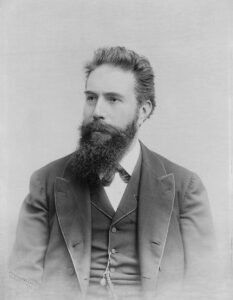
Refused to patent X-rays and donated his 1901 Nobel Prize winnings to the university where he made the discovery, insisting the work belonged to humanity, not to him.
Key Moments
In a darkened laboratory at the University of Würzburg, Röntgen notices an unexplained glow and identifies a new, invisible form of radiation.
He produces the first medical X-ray image ever made: a photograph of his wife Anna Bertha’s hand, bones and wedding ring clearly visible.
Röntgen publishes his findings, “On a New Kind of Rays,” and news of the discovery spreads so fast that doctors begin using X-rays within weeks.
Röntgen receives the first Nobel Prize in Physics ever awarded, for a discovery he refused to patent or claim financially for himself.
Did you know? Röntgen turned down a title of nobility for his discovery, but he did accept one honor: an honorary doctorate of medicine from the University of Würzburg, the institution where he found the ray in the first place.
- “Wilhelm Conrad Röntgen,” Encyclopædia Britannica
- “Celebrating Wilhelm Conrad Röntgen and the Physical Review Journals,” Argonne National Laboratory
- “First Medical X-ray by Wilhelm Röntgen of His Wife Anna Bertha Ludwig’s Hand,” Wikimedia Commons, citing the Wellcome Collection
- “Wilhelm Conrad Röntgen, 1888–1900,” portrait by Erwin Hanfstaengl, Wikimedia Commons
More in History