ESA’s Jupiter Icy Moons Explorer, known as Juice, flew past Earth on September 28, 2026, using the planet’s gravity to bend its path toward Jupiter without spending propellant. According to the German Aerospace Center, DLR, the spacecraft’s camera took 740 images of Earth and the Moon over several days. This article summarizes DLR’s account of the flyby, the images and a laser test, and it lists the dates still to come.
What happened during the flyby?
DLR reports that Juice made its closest approach at 13:45 Central European Summer Time on September 28, 2026, about 8,640 kilometers from Earth, over the Indian Ocean. The purpose was to change the spacecraft’s trajectory toward Jupiter without using onboard propellant. This technique is called a gravity assist. The article does not state the spacecraft’s speed, so we do not give one.
What did the camera capture?
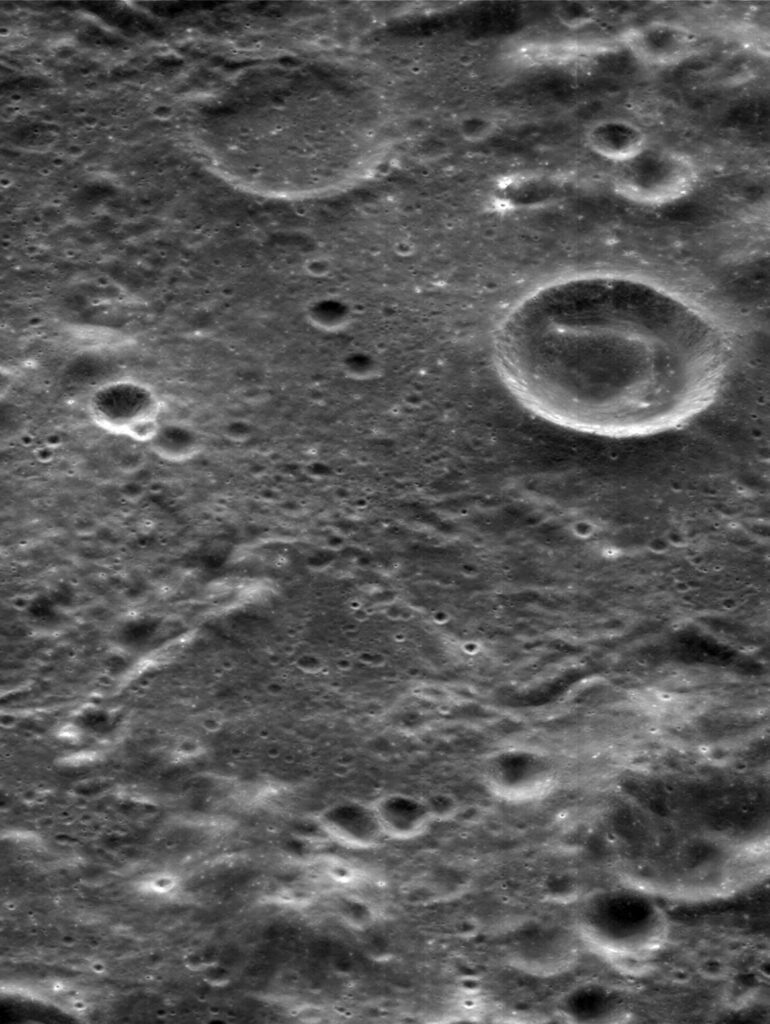
The JANUS scientific camera took 740 images of Earth and the Moon over several days. A sequence of about 20 minutes at closest approach covered Earth’s visible disc from edge to edge. DLR says the Earth swath was about 250 to 300 kilometers wide, covering Madagascar, Mozambique and central Africa to the Gulf of Guinea. Pixel size ranged from about 150 meters over Madagascar to about 375 meters over the Atlantic. A green-filter image of the Moon, taken from about 497,000 kilometers, had a resolution of 7.6 kilometers per pixel.
What other instruments took part?
The JMC1 monitoring camera captured an Earth image at 13:56 CEST. DLR notes it was built to monitor booms and antennas, not for science. The GALA laser altimeter made passive measurements of the Moon from about 124,000 kilometers, more than 20 times per second. On October 2, 2026, it attempted a laser ranging test toward Earth from 3.65 million kilometers away. The ground station at Wettzell faced poor weather and an unfavorable early-morning observation window, so the page does not report a successful result.
What comes next for Juice?
DLR lists these milestones:
- Final Earth flyby: January 2029
- Arrival at the Jupiter system: 2031
- Ganymede orbit: planned for the end of 2034, which would be the first time a probe orbits a moon of another planet
The mission launched on April 14, 2023 from Kourou, French Guiana. Earlier flybys covered the Earth-Moon system in August 2024 and Venus in August 2025. DLR says 35 flybys of Ganymede, Europa and Callisto are planned in total.
How sharp will the camera get at Jupiter?
DLR says JANUS should reach up to 2.4 meters per pixel at Ganymede in its closest orbit and about 10 kilometers per pixel at Jupiter. By our own arithmetic, the best Earth pixel size in this flyby, 150 meters, is about 60 times coarser than 2.4 meters. The flyby images therefore work as a test and a calibration, not as a preview of the quality to come. That comparison is ours, and the text does not say it explicitly.
How to read the numbers
By our own arithmetic, the time from launch on April 14, 2023 to the Earth flyby on September 28, 2026 is about 3.4 years. The wait from this flyby to arrival at Jupiter in 2031 is about four to five years. The gap between the August 2024 Earth-Moon flyby and this flyby is roughly two years. A pixel size of 7.6 kilometers for the Moon from 497,000 kilometers shows how distance sets detail. These calculations are ours and not DLR statements.
Why use flybys at all?
A gravity assist lets a spacecraft change speed and direction using a planet’s motion and gravity. Without it, Juice would need much more propellant, and a heavier launch. That is a general principle and is not a quotation from DLR. It explains why the mission plans several flybys of Earth, the Moon and Venus on the way to Jupiter, as DLR’s list of earlier and future flybys shows.
What should readers watch for next?
The next public milestone in DLR’s list is the final Earth flyby in January 2029, then Jupiter in 2031. Readers may also see further reports on the laser ranging test, which DLR says met poor weather. The page does not say whether the test will be repeated.
How does it connect to other coverage?
Juice joins several missions that rely on gravity assists. Our article on ESA’s Hera mission covers a probe that used a Mars flyby, and our report on BepiColombo at Mercury covers another long cruise nearing its target. Our summary of the Europa Clipper mission covers a NASA spacecraft also bound for a Jupiter moon, and the article on the Lucy mission covers a spacecraft entering the Trojan asteroid region. Each shows how long the trip to a distant target can be.
Glossary
- Gravity assist: a maneuver that uses a planet’s gravity to change a spacecraft’s path
- Altimeter: an instrument that measures height or distance using a laser or radar
- Swath: the strip of ground captured in an image
- Ganymede: Jupiter’s largest moon
- Calibration: checking an instrument against a known target
These definitions are general explanations and are not quoted from DLR.
What is not covered here?
DLR’s article does not give the spacecraft’s speed, the altitude above the surface at closest approach or the result of the ranging test. We have not added them from memory.
Key facts at a glance
- Earth flyby: September 28, 2026, closest approach 13:45 CEST over the Indian Ocean
- Images: 740 of Earth and the Moon from the JANUS camera
- Arrival at Jupiter: 2031
- Ganymede orbit: planned for the end of 2034
- Planned flybys of the icy moons: 35
Frequently asked questions
Did Juice use fuel for the flyby?
No. DLR says the flyby changed the trajectory without onboard propellant.
What did it photograph?
Earth, including Madagascar and central Africa, and the Moon.
When does it reach Jupiter?
2031 according to DLR.
More in Science