From Paris to Global Adoption
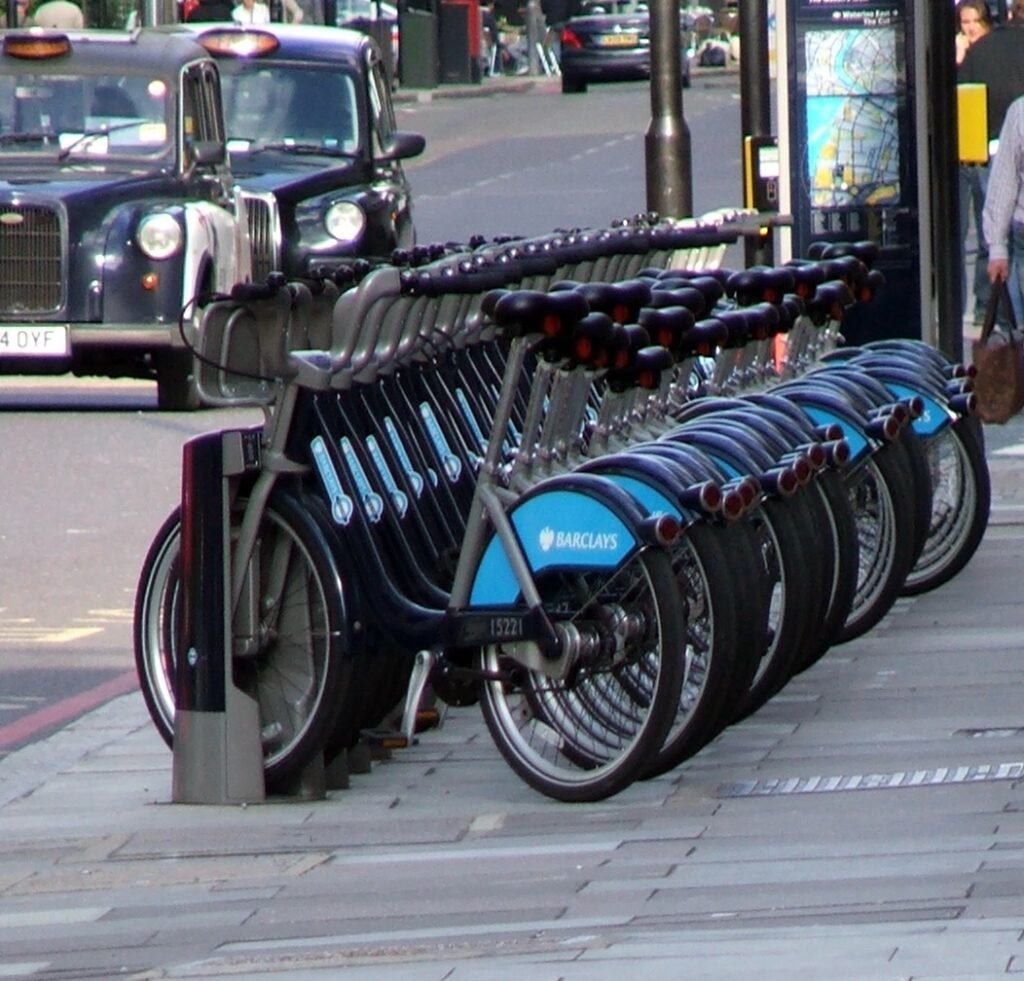
Modern large-scale bike-share emerged with programs such as Lyon’s Velo’v and Paris’s Velib in the mid-2000s, which demonstrated that automated docking stations with card-based unlocking could support thousands of bicycles across a city without requiring staffed rental counters. These early systems proved popular enough that hundreds of cities worldwide subsequently launched their own docked bike-share programs, often operated through public-private partnerships where a private vendor supplies and maintains the bikes and stations in exchange for advertising rights or a service contract with the city.
The Shift to Dockless and App-Based Models
A second wave of bike-share technology, emerging in the mid-2010s primarily in Asia before spreading globally, replaced fixed docking stations with GPS-enabled bikes that could be unlocked and left anywhere via a smartphone app, removing the capital cost of building station infrastructure but creating new challenges around bikes being left in inconvenient or hazardous locations. Many cities responded by requiring dockless operators to use designated parking zones or geofenced areas, blending some of the organizational benefits of docked systems with the flexibility of dockless ones, and several markets have converged on hybrid systems that support both docked and free-floating parking.
Rebalancing and System Economics
Because bike trips are rarely symmetric, more riders travel downhill or toward employment centers in the morning than the reverse, bike-share systems require continuous rebalancing, using trucks or vans to move bikes from stations that fill up back to stations that empty out, a logistics operation that represents one of the largest ongoing operating costs for any bike-share program. Electric-assist bikes, increasingly common in newer bike-share fleets, have been shown to reduce some rebalancing burden by making uphill and longer trips more appealing, spreading demand more evenly across a system than purely human-powered fleets typically achieve.
Safety and Helmet Policy Debates
Bike-share systems have generated ongoing debate over helmet requirements, since mandatory helmet laws in some jurisdictions have been associated with measurably lower bike-share usage, as casual riders are often unwilling or unable to carry or rent a helmet for a spontaneous short trip, while jurisdictions without such mandates have generally seen higher ridership alongside safety records that researchers describe as comparable to or better than ordinary urban cycling, partly attributed to the “safety in numbers” effect of increased cyclist visibility to drivers.
Many bike-share operators have responded by focusing safety efforts on infrastructure, advocating for protected bike lanes along popular routes, rather than relying primarily on helmet mandates, reflecting a broader shift in urban cycling safety policy toward environmental design over individual rider equipment requirements.
Equity in Station Placement
Early bike-share systems in several cities faced criticism for concentrating docking stations in wealthier, already well-served neighborhoods while under-serving lower-income areas that arguably had greater need for affordable short-trip transportation options, prompting many cities to adopt explicit equity requirements in subsequent station-placement and system-expansion planning. Programs that have proactively expanded into underserved neighborhoods, often paired with discounted or income-based membership pricing, have generally found strong latent demand once stations and affordable access are actually provided, suggesting the earlier placement gap reflected planning choices rather than a lack of interest from residents in those areas.
Seasonal demand swings also shape bike-share operations considerably, with ridership in temperate climates often falling sharply during winter months, prompting some systems to reduce fleet size or temporarily close stations rather than maintain full winter capacity for a much smaller ridership base.
Integration with Broader Transit Networks
Bike-share systems increasingly position themselves explicitly as a first-mile and last-mile complement to rail and bus transit rather than a standalone mode, with many systems placing a disproportionate share of docking stations near transit stations specifically to capture trips connecting a rider’s home or destination to the broader transit network. Some transit agencies have gone further, integrating bike-share membership directly into the same payment account used for bus and rail fares, and in a few cases offering bike-share trips at a discount or free when connected to a transit trip, treating the bike-share leg as an extension of the transit system rather than a separate service competing for the same trips.
Membership Models and Pricing Tiers
Bike-share operators typically offer several membership tiers, ranging from single-ride and day-pass options aimed at tourists and occasional users to discounted annual memberships intended for frequent commuters, with pricing structured to encourage conversion from occasional to habitual use over time. Many systems have also introduced income-qualified discounted membership tiers specifically to improve affordability for lower-income residents, recognizing that the standard annual membership price, while modest compared with car ownership, can still represent a meaningful barrier for some potential riders.
Vandalism, Theft, and Fleet Durability
Bike-share operators must design bicycles and docking infrastructure to withstand outdoor exposure, heavy daily use by riders with varying levels of care, and in some locations significant rates of vandalism or theft, leading to specialized bike designs featuring non-standard parts less attractive for resale, built-in GPS tracking on dockless fleets, and robust docking mechanisms engineered specifically to resist tampering. Replacement and maintenance costs from damage and theft represent a significant and sometimes underappreciated operating expense that factors heavily into the economics of running a bike-share system at scale.
Data collected from bike-share trip patterns has also proven valuable to urban planners studying broader active-transportation demand beyond the bike-share system itself.
Corporate sponsorship naming rights have become a common revenue source helping offset bike-share operating costs in several major systems.
Trip duration limits with overage fees encourage riders to return bikes promptly for the next rider.
More in Urban and Public Transportation
Key facts
- Began modern form in Lyon and Paris in the 2000s
- Docked and dockless models both exist
- Often integrated with transit fare payment
- Rebalancing trucks redistribute bikes between stations
Related concepts
Quick checkWhat is the main operational challenge of docked bike-share systems?Show answer
Rebalancing - redistributing bikes between stations so popular destinations do not run out while others overflow, usually requiring dedicated trucks and staff.
Sources
- Institute for Transportation and Development Policy
- National Association of City Transportation Officials
Editorially reviewed by Specialty Digest Editorial TeamLast reviewed November 4, 2026Researched and drafted with AI assistanceReport an issue