Mutualism is a type of symbiotic relationship in which two different species interact in a way that benefits both participants, distinguishing it from commensalism, where only one species benefits, and parasitism, where one species benefits at the other’s expense. Mutualistic relationships are found throughout virtually every ecosystem on Earth and have played a fundamental role in shaping the evolution of countless species, from flowering plants to corals to the human digestive system.
Ecologists often further classify mutualisms based on how dependent each partner has become on the relationship: obligate mutualism describes a relationship in which at least one partner cannot survive or reproduce without the other, while facultative mutualism describes a relationship that benefits both species but that each can also survive without, simply with reduced success or efficiency.
Pollination Mutualisms
The relationship between flowering plants and their animal pollinators represents one of the most ecologically and economically significant mutualisms on Earth, with plants providing nectar or pollen as a food reward in exchange for pollinators transferring pollen between flowers, enabling plant reproduction. This relationship underlies the production of a substantial share of the world’s food crops, and the global decline of many pollinator populations, particularly bees, has raised serious concerns about the long-term stability of agricultural systems that depend heavily on this mutualistic service.
Some pollination mutualisms have become extraordinarily specialized over evolutionary time, such as the relationship between certain yucca plants and yucca moths, in which the moth is the plant’s only effective pollinator and the plant is the only food source for the moth’s larvae, creating a tightly coevolved, mutually dependent relationship that neither species could easily replace with a different partner.
Mutualism in Marine Ecosystems
Coral reefs depend fundamentally on the mutualistic relationship between coral animals and the microscopic algae living within their tissue, which provide the coral with energy through photosynthesis in exchange for a protected environment and access to nutrients, a partnership so essential that its breakdown during coral bleaching events frequently leads to coral death. Cleaner fish and shrimp that remove parasites and dead tissue from larger fish, who in turn refrain from eating their small cleaners despite the opportunity, represent another well-documented marine mutualism.
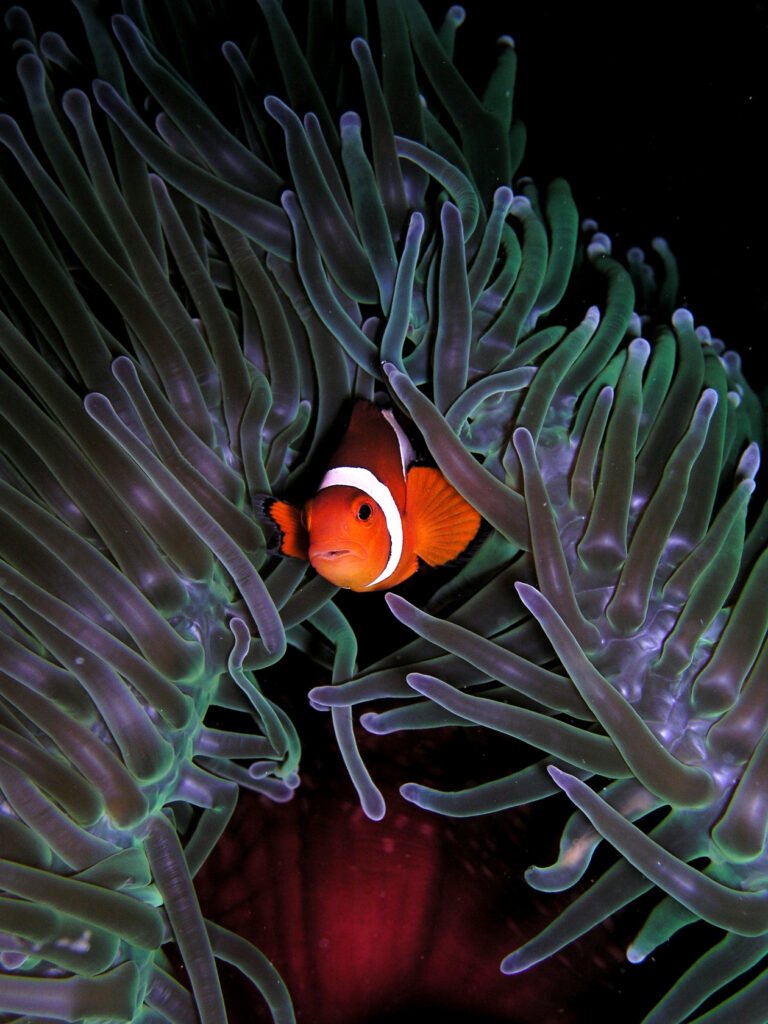
Clownfish and sea anemones form a particularly well-known marine mutualism, in which clownfish gain protection from predators by living among an anemone’s stinging tentacles, to which they have developed immunity, while the anemone benefits from the clownfish chasing away certain anemone-eating fish and from nutrients provided by clownfish waste.
Mutualism Between Plants and Fungi
Mycorrhizal fungi form mutualistic associations with the roots of the vast majority of land plant species, extending the effective reach of a plant’s root system dramatically and improving its access to water and soil nutrients such as phosphorus, in exchange for carbohydrates produced by the plant through photosynthesis. This relationship is so widespread and fundamental that many ecologists consider it essential to the functioning of most terrestrial ecosystems, including forests, grasslands, and most agricultural systems.
Certain orchid species have taken this relationship to an extreme, depending entirely on fungal partners not just for nutrient uptake but for the germination of their seeds, which lack the stored energy reserves most plant seeds use to begin growth, making these orchids obligately dependent on their fungal mutualists simply to begin their life cycle.
Evolutionary Stability of Mutualism
A long-standing puzzle in evolutionary biology concerns why mutualism remains stable over evolutionary time despite the theoretical temptation for either partner to cheat, taking the benefits of the relationship without providing anything in return. Researchers have identified several mechanisms that help stabilize mutualism, including partner choice, in which organisms preferentially associate with cooperative partners and avoid cheaters, and sanctioning, in which a partner actively punishes or withdraws resources from a cheating counterpart.
Some of the clearest examples of sanctioning come from legume plants, which can detect nitrogen-fixing bacteria in their root nodules that fail to provide adequate nitrogen and respond by cutting off oxygen and resources to those specific underperforming nodules, effectively punishing ineffective bacterial partners while continuing to support more productive ones elsewhere on the same root system.
Threats to Mutualistic Relationships
Because mutualistic relationships often involve finely tuned dependencies between species, environmental disruption can threaten both partners simultaneously even when only one species is directly affected by a given stressor. The decline of pollinator populations due to habitat loss, pesticide exposure, and disease, for example, threatens not only the pollinators themselves but also the full range of plant species, including many food crops, that depend on them for reproduction.
Climate change poses a particular risk to mutualisms that depend on precise timing between partners, such as flowering plants and their specific pollinators, since warming temperatures can shift the timing of flowering or pollinator activity at different rates, potentially creating a mismatch that leaves plants without pollinators or pollinators without food at the critical moments each species has historically relied upon.
FAQ
What is the difference between obligate and facultative mutualism?
Obligate mutualism means at least one partner cannot survive or reproduce without the other, while facultative mutualism benefits both species but allows each to survive, just less successfully, without the relationship.
Why is coral bleaching linked to mutualism?
Coral bleaching occurs when rising ocean temperatures disrupt the mutualistic relationship between coral and its symbiotic algae, causing corals to expel the algae and lose their main energy source.
How do legume plants punish ineffective bacterial partners?
Legumes can detect nitrogen-fixing bacteria in their root nodules that underperform and respond by cutting off oxygen and resources to those specific nodules, a mechanism called sanctioning that helps stabilize the mutualism.
More in Ecology
Editorially reviewed by Specialty Digest Editorial TeamLast reviewed November 4, 2026Researched and drafted with AI assistanceReport an issue