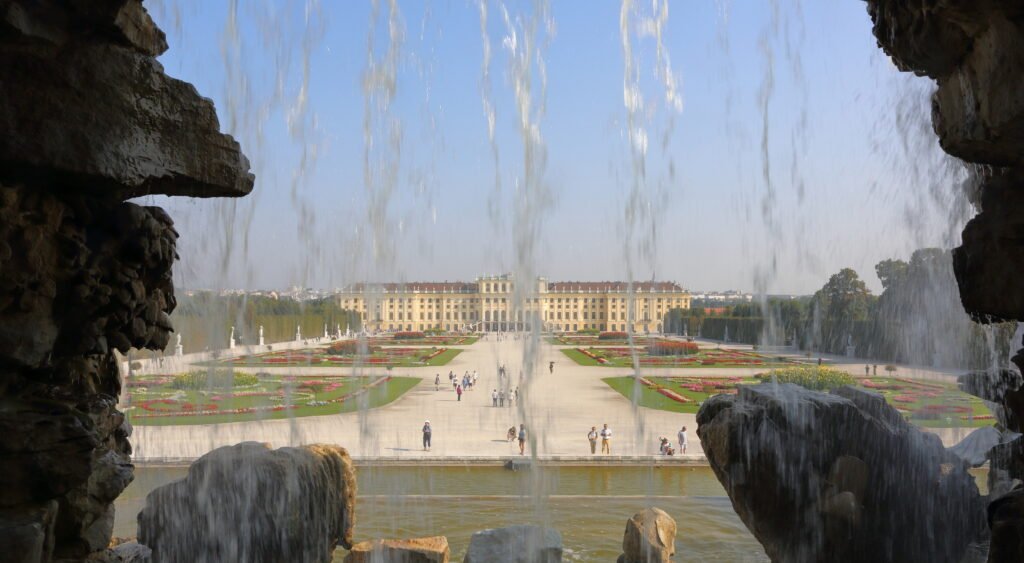
Austria is a landlocked country in Central Europe known for its Alpine landscapes, imperial history and status as one of the world’s wealthiest, most developed economies. Its capital, Vienna, was once the seat of the Habsburg Empire and remains a global center for music, diplomacy and international organizations. Bordered by eight neighboring countries, Austria sits at a historic crossroads between Western and Eastern Europe.
Where Is Austria Located?
Austria lies in Central Europe, bordered by Germany and the Czech Republic to the north, Slovakia and Hungary to the east, Slovenia and Italy to the south, and Switzerland and Liechtenstein to the west. Much of the country’s western and southern territory lies within the Alps, giving Austria a mountainous terrain dotted with lakes and valleys, while the east, including the Vienna Basin along the Danube River, is flatter and more densely populated.
A Brief History
For centuries, Austria was the center of the Habsburg monarchy, one of Europe’s most powerful royal dynasties, and Vienna served as the imperial capital of the Austro-Hungarian Empire until its collapse at the end of the First World War in 1918. After annexation by Nazi Germany in 1938 and occupation following the Second World War, Austria regained full sovereignty in 1955 and adopted a policy of permanent neutrality. Austria joined the International Bank for Reconstruction and Development, commonly known as the World Bank, in August 1948, and its postwar recovery, aided by Marshall Plan and World Bank financing, became known as the country’s economic miracle (World Bank).
Government and Economy Today
Austria is a federal parliamentary republic composed of nine states. It is a high-income, highly developed economy and a longstanding member of the European Union, joining in 1995. According to the World Bank, Austria transformed from a postwar borrower into one of the International Development Association’s most generous donors on a per capita basis within just sixteen years of the war’s end, and Vienna today hosts the World Bank Group’s largest office in Europe, supporting operations across the wider Europe and Central Asia region (World Bank).
Culture and People
German is the official language, and Austrian culture is deeply associated with classical music, having been home to composers including Mozart, Haydn, Schubert and Strauss. Vienna’s imperial architecture, coffeehouse culture and museums reflect centuries as a European capital, while the Alpine regions support a strong tradition of winter sports, skiing tourism and mountain village life.
What Is Austria Known For?
Austria is best known internationally for its classical music heritage, Alpine ski resorts, and Vienna’s imperial palaces, opera houses and coffeehouses. It is also recognized as a hub for international diplomacy, hosting numerous United Nations and other international agencies in Vienna, and for its high standard of living, consistently ranking among the world’s most livable countries.
Key Takeaways
- Austria is a landlocked Central European country bordered by eight nations, with Vienna as its capital.
- It was the center of the Habsburg Empire until the empire’s collapse in 1918, and adopted permanent neutrality after regaining sovereignty in 1955.
- Austria joined the World Bank in 1948 and the European Union in 1995, and now hosts the World Bank Group’s largest office in Europe, in Vienna.
- Its economy is high-income and highly developed, built on manufacturing, tourism and services.
- Classical music heritage, Alpine skiing and Vienna’s imperial architecture define its global reputation.
Key facts
- Capital: Vienna
- Regained full sovereignty and adopted neutrality in 1955
- Joined the World Bank in August 1948 and the EU in 19951
- Government: Federal parliamentary republic, nine states
Quick checkWhat historic role did Vienna play before the First World War?Show answer
Vienna was the imperial capital of the Austro-Hungarian Empire under the Habsburg monarchy until the empire's collapse in 1918.
Sources
- World Bank. Austria Overview. Accessed 2026 (accessed 2026)
Editorially reviewed by Specialty Digest Editorial TeamLast reviewed September 22, 2026Researched and drafted with AI assistanceReport an issue