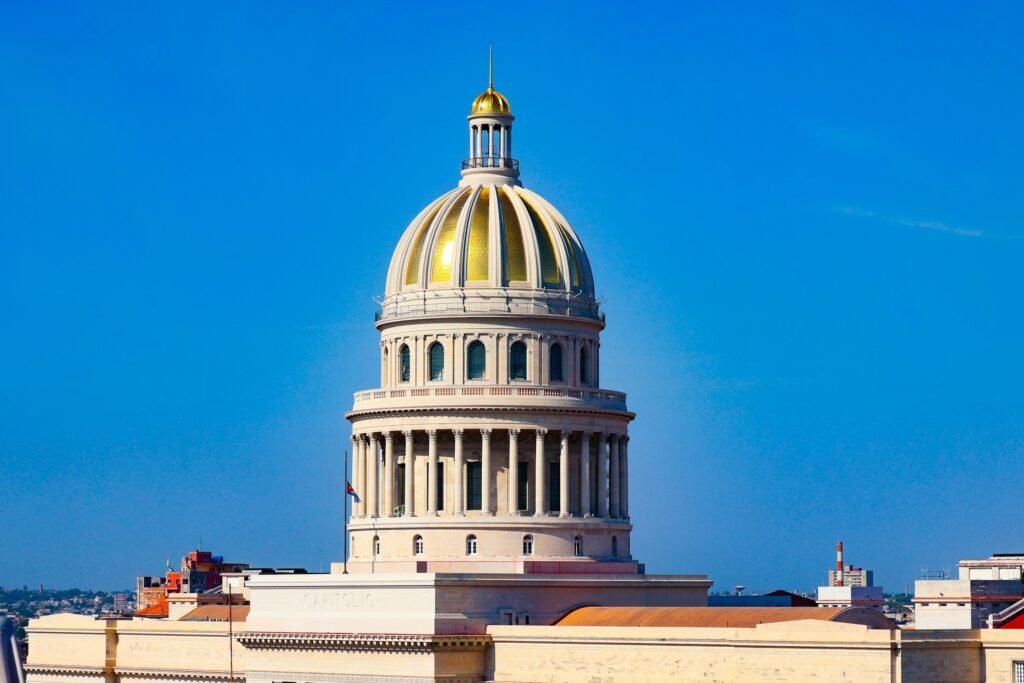
What Cuba Is and Where It Lies
Cuba is an island nation in the northern Caribbean Sea, the largest island in the Caribbean archipelago and the most populous country in the insular Caribbean. It sits about 150 kilometers (93 miles) south of Florida, with Mexico to the west and the Bahamas and Haiti to the east, according to Encyclopaedia Britannica. Its capital and largest city is Havana. Cuba has been governed as a one-party socialist state since the 1959 revolution led by Fidel Castro, and it remains one of the few countries in the world organized this way, with the Communist Party of Cuba enshrined in the constitution as the sole legal party.
The country’s population has been shrinking sharply in recent years. Cuba’s National Statistics Office (ONEI) recorded about 9.43 million people at the end of 2025, down from just over 10 million two years earlier, a decline driven by record emigration and a birth rate at its lowest level since before the revolution, as reported by SWI swissinfo.ch.
Geography
Cuba’s main island covers most of its roughly 109,900 square kilometers (42,400 square miles) of territory, making it comparable in size to Pennsylvania or a little larger than England. The country also includes the Isla de la Juventud and more than 4,000 smaller keys and islets. The terrain is mostly flat to gently rolling, dominated by fertile plains that historically supported large-scale sugar cultivation, with mountain ranges rising in the east (the Sierra Maestra, where the country’s highest peak, Pico Turquino, reaches about 1,974 meters) and smaller ranges in the center and west.
The climate is tropical, moderated by trade winds, with a wet season from May to October that overlaps with the Atlantic hurricane season. Cuba’s location at the mouth of the Gulf of Mexico has made it historically significant both as a shipping chokepoint and as a frequent target of powerful hurricanes.
A Brief History
Cuba was inhabited by Taíno and other Indigenous peoples before Spanish colonization began after Christopher Columbus’s 1492 voyage. Havana grew into Spain’s principal shipbuilding and naval hub in the Americas, a role that shaped the fortified colonial city recognized today as Old Havana and its Fortification System, a UNESCO World Heritage Site inscribed in 1982 for what UNESCO describes as “the most impressive historical city centre in the Caribbean.” Spain’s colonial economy relied heavily on enslaved African labor to run sugar plantations, and Cuba was among the last places in the Americas to abolish slavery, in 1886.
Cuba won formal independence from Spain in 1898, after decades of independence wars, but the outcome of the Spanish-American War left the island under a period of direct and then indirect United States oversight, formalized through the Platt Amendment, which gave Washington the right to intervene in Cuban affairs until it was repealed in 1934. The following decades were marked by political instability, culminating in Fulgencio Batista’s authoritarian rule in the 1950s.
The 1959 Revolution and the One-Party System
In January 1959, a guerrilla movement led by Fidel Castro overthrew Batista, beginning what is known as the Cuban Revolution. The new government nationalized major industries and foreign-owned land, moved toward a centrally planned economy, and aligned with the Soviet Union, which became Cuba’s principal trading partner and benefactor for three decades. Cuba’s 1976 constitution formally established the Communist Party of Cuba as the only legal political party, a status reaffirmed in the 1992 and 2019 constitutional revisions, according to Encyclopaedia Britannica. Fidel Castro led the country until 2006, when illness forced him to hand power to his brother Raúl Castro, who oversaw a generational leadership transition before stepping down from the presidency in 2018 and from the party leadership in 2021.
Cuba’s one-party system, the legacy of the revolution, and the long-running U.S. embargo (discussed below) remain genuinely contested subjects. The Cuban government describes its system as a form of participatory socialist democracy built on mass organizations and direct elections to local assemblies, and it credits the revolution with major gains in literacy, education, and healthcare access. Independent human rights organizations take a different view of civil liberties under that system: Human Rights Watch reported that as of October 2025, nearly 700 political prisoners were held in Cuba, most of them convicted in connection with the July 2021 anti-government protests, and it documented restrictions on independent media, arbitrary detentions, and poor prison conditions, according to its World Report 2026. Both the structural facts (a single legal party, state control of media, and no direct multiparty elections for national office) and the existence of documented human rights concerns are well established; how they should be weighed against the government’s social record is a matter of ongoing political dispute that this article does not attempt to resolve.
Government and Economy
Cuba is formally a socialist republic in which the Communist Party is defined by the constitution as the leading force of state and society. The National Assembly of People’s Power is the nominal legislature, and it elects the president and the Council of State. In practice, candidates for national office run without organized multiparty opposition, and the party’s Political Bureau and Central Committee are widely described, including by Britannica, as the bodies that actually set state policy.
The economy is dominated by the state, though it has undergone periodic reform. After the Soviet Union’s collapse in 1991 removed Cuba’s main trading partner and subsidies, the country entered what it calls the “Special Period,” a severe economic contraction that pushed the government to permit limited private enterprise and expand tourism. A dual-currency system, in place since the 1990s to manage the loss of Soviet support, was formally unified on January 1, 2021, when Cuba’s convertible peso was retired and the national peso was devalued to a single official rate of 24 pesos per U.S. dollar, a roughly 2,300 percent devaluation for state enterprises that had previously used a 1-to-1 rate, according to the London School of Economics. The reform came with steep wage and price increases and was followed by high inflation, and the economy has continued to struggle with fuel shortages, blackouts, and food insecurity in the years since.
The U.S. Embargo
The United States has maintained a trade embargo against Cuba since the early 1960s, tightened over the decades through measures such as the 1996 Helms-Burton Act, which also restricts other countries’ business dealings with Cuba. Cuba’s government characterizes the embargo, which it calls “the blockade,” as an illegal, extraterritorial policy that damages its economy and violates Cubans’ human rights; at the United Nations in October 2025, Foreign Minister Bruno Rodríguez described it as “a policy of collective punishment,” according to Al Jazeera. The United States has defended the policy as pressure on the Cuban government over its human rights record and, more recently, over its ties to Russia and reports of Cuban nationals fighting alongside Russian forces in Ukraine, allegations Cuba has denied. On October 29, 2025, the UN General Assembly voted, for the 33rd consecutive year, to call on the United States to end the embargo, by a margin of 165 in favor to 7 against with 12 abstentions, a nonbinding resolution that the United States and a small number of allies opposed.
Culture and People
Cuban culture blends Spanish colonial, African, and, to a lesser extent, Indigenous Taíno influences, a mixture most visible in its music and religious practice. Cuba is a birthplace of son, the musical form that fed into salsa, and of other internationally influential genres, and Afro-Cuban religious traditions such as Santería developed alongside Catholicism, still the largest religious affiliation on the island. Baseball, introduced in the 19th century, is the country’s most popular sport and a major source of national pride and, historically, a pipeline of talent to professional leagues abroad.
The population is aging rapidly: Cubans aged 60 and older made up roughly a quarter of residents by the mid-2020s, one of the highest shares in Latin America and the Caribbean, a pattern reinforced by the recent wave of emigration among working-age adults. Education and literacy rates are high by regional standards, a legacy of literacy campaigns launched after the revolution, and Cuba has long promoted its physicians as a form of international outreach, sending medical personnel abroad on missions that the government presents as humanitarian aid and that critics have described as a source of state revenue.
What Cuba Is Known For
- Old Havana: the UNESCO-listed colonial core of the capital, with its plazas, baroque and neoclassical buildings, and Spanish fortifications, among the best preserved historic city centers in the Americas.
- The Cuban Revolution: the 1959 uprising and the six decades of one-party socialist governance that followed, a defining case study in Cold War history.
- Music and dance: son, salsa’s roots, and a broader Afro-Cuban musical tradition with global reach.
- Cigars and rum: Cuban tobacco and sugar-derived rum are internationally recognized products tied to the island’s agricultural history.
- Vintage American cars: pre-1959 automobiles, still common on Cuban roads, a visible legacy of the embargo that has restricted new vehicle imports.
- Baseball: a national obsession and a long-standing source of talent for leagues outside Cuba.
Why Cuba Matters
Cuba’s location at the entrance to the Gulf of Mexico gave it outsized strategic importance long before 1959, and the Cold War made it more so: the 1962 Cuban Missile Crisis, triggered by the Soviet deployment of nuclear missiles on the island, brought the United States and the Soviet Union to the brink of direct conflict and remains a central case study in nuclear diplomacy. Today, Cuba matters for different reasons. It is one of the last states organized around Marxist-Leninist one-party rule, making it a live test case in debates over political and economic reform under sustained external sanctions. Its economic crisis has driven one of the largest sustained waves of emigration in the country’s history, with direct effects on migration pressure in the United States and the wider region. And the unresolved, decades-old dispute over the U.S. embargo continues to shape Cuba’s relations not only with Washington but with the rest of the international community, which has voted almost unanimously, year after year, to call for the embargo’s end.
Key Takeaways
- Cuba is the largest island in the Caribbean, located about 150 kilometers south of Florida, with a population that fell to roughly 9.43 million by the end of 2025 amid record emigration.
- Old Havana’s colonial core and fortification system have been a UNESCO World Heritage Site since 1982.
- The Communist Party of Cuba has been the country’s sole legal party since the 1976 constitution, a legacy of the 1959 revolution led by Fidel Castro.
- Cuba’s economy is state-dominated and has struggled since the 2021 currency unification, which devalued the peso and was followed by high inflation and continued shortages.
- The United States has maintained a trade embargo on Cuba since the early 1960s; the UN General Assembly has voted every year since 1992, most recently 165 to 7 in October 2025, to call for it to end.
- Human rights organizations have documented significant restrictions on political dissent in Cuba, including nearly 700 political prisoners as of late 2025, a fact the Cuban government disputes in the context of its own account of the revolution’s social achievements.
Sources
- UNESCO World Heritage Centre | Old Havana and its Fortification System | 1982 | https://whc.unesco.org/en/list/204/ | Accessed 2026-09-22
- Encyclopaedia Britannica | Cuba | Undated | https://www.britannica.com/place/Cuba | Accessed 2026-09-22
- Encyclopaedia Britannica | Communist Party of Cuba | Undated | https://www.britannica.com/topic/Communist-Party-of-Cuba | Accessed 2026-09-22
- SWI swissinfo.ch | La población de Cuba siguió disminuyendo en 2025 | 2025 | https://www.swissinfo.ch/spa/la-poblaci%C3%B3n-de-cuba-sigui%C3%B3-disminuyendo-en-2025/91784302 | Accessed 2026-09-22
- United Nations | General Assembly Overwhelmingly Adopts Resolution Calling on United States to End Cuba Embargo (GA/12723) | 2025-10-29 | https://press.un.org/en/2025/ga12723.doc.htm | Accessed 2026-09-22
- Al Jazeera | United Nations calls for end to US embargo on Cuba, again | 2025-10-29 | https://www.aljazeera.com/news/2025/10/29/united-nations-calls-for-end-to-us-embargo-on-cuba-again | Accessed 2026-09-22
- Human Rights Watch | World Report 2026: Cuba | 2026 | https://www.hrw.org/world-report/2026/country-chapters/cuba | Accessed 2026-09-22
- London School of Economics, Latin America and Caribbean Blog | Day Zero: How and Why Cuba Unified Its Dual Currency System | 2021-02-10 | https://blogs.lse.ac.uk/latamcaribbean/2021/02/10/day-zero-how-and-why-cuba-unified-its-dual-currency-system/ | Accessed 2026-09-22
Key facts
- Cuba is the largest island in the Caribbean archipelago, lying in the northern Caribbean Sea between the United States, Mexico, and the Bahamas2
- Cuba's population fell to about 9.43 million by the end of 2025, down more than 300,000 in a single year, amid record emigration and the lowest birth rate since before the 1959 revolution, according to the National Statistics Office (ONEI)3
- Old Havana and its colonial-era fortification system, inscribed as a UNESCO World Heritage Site in 1982, is described by UNESCO as the most impressive historical city centre in the Caribbean1
- On October 29, 2025, the UN General Assembly voted 165 to 7, with 12 abstentions, for the 33rd consecutive year, calling on the United States to end its embargo on Cuba4
- Human Rights Watch documented nearly 700 political prisoners held in Cuba as of October 2025, most convicted after the July 2021 anti-government protests6
Quick checkBy how many votes did the UN General Assembly call on the United States to end its embargo on Cuba in October 2025?Show answer
165 votes in favor to 7 against, with 12 abstentions, marking the 33rd consecutive year of the vote.
Sources
- UNESCO World Heritage Centre. Old Havana and its Fortification System. 1982 (accessed 2026-09-22)
- Encyclopaedia Britannica. Cuba. Undated (accessed 2026-09-22)
- SWI swissinfo.ch. La población de Cuba siguió disminuyendo en 2025. 2025 (accessed 2026-09-22)
- United Nations. General Assembly Overwhelmingly Adopts Resolution Calling on United States to End Cuba Embargo (GA/12723). 2025-10-29 (accessed 2026-09-22)
- Al Jazeera. United Nations calls for end to US embargo on Cuba, again. 2025-10-29 (accessed 2026-09-22)
- Human Rights Watch. World Report 2026: Cuba. 2026 (accessed 2026-09-22)
- London School of Economics, Latin America and Caribbean Blog. Day Zero: How and Why Cuba Unified Its Dual Currency System. 2021-02-10 (accessed 2026-09-22)
- Encyclopaedia Britannica. Communist Party of Cuba. Undated (accessed 2026-09-22)
Editorially reviewed by Specialty Digest Editorial TeamLast reviewed September 22, 2026Researched and drafted with AI assistanceReport an issue