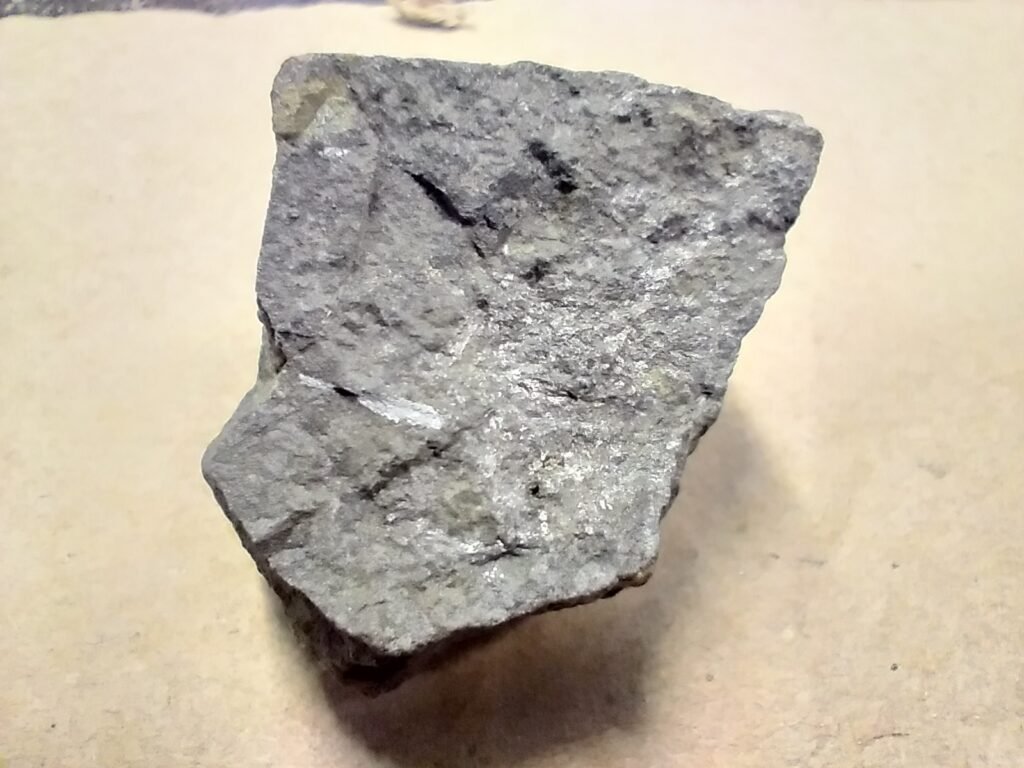
Antimony in 2025 was mined at an estimated 110,000 metric tons worldwide, down from 119,000 in 2024, according to the U.S. Geological Survey’s Mineral Commodity Summaries 2026. China, Russia and Tajikistan supplied most of it. The U.S. price more than doubled to an estimated $25 per pound. This article summarizes the USGS antimony chapter, explains the main numbers and flags what the chapter does not say.
Who mines antimony?
The USGS lists estimated 2025 mine production, in metric tons of antimony content:
- China: 40,000
- Russia: 32,000
- Tajikistan: 22,000
- Bolivia: 5,000
- Burma: 4,500
- Turkey: 3,000
- Australia: 1,300
- Kazakhstan: 800
- Kyrgyzstan: 700
- Mexico: 600
By our own arithmetic, the top three producers mine about 85% of the world total, and China alone about 36%. Russia is shown at 32,000, down from an estimated 40,000 in 2024. The United States mined none in the table, with 2025 output withheld to protect company data.
How much antimony is left?
The USGS puts world reserves above 2 million tons. China holds 830,000, Russia 350,000, Bolivia 310,000 and Kyrgyzstan 260,000. The U.S. and Australian reserve lines carried merged footnote marks in the copy we read, so we do not report them. By our arithmetic, reserves above 2 million tons equal more than 18 years of output at the 2025 rate, a rough guide only.
What is antimony used for?
The USGS gives U.S. uses: metal products, including flame retardants, 49%; antimonial lead and ammunition, 40%; and nonmetal products such as ceramics, glass and rubber, 11%. Our report on lead in 2025 covers the metal that antimony hardens in batteries and bullets.
How did the price move?
The metal price averaged an estimated $25 per pound in 2025, against $10.24 in 2024 and $5.31 in 2021, a rise of about 144% in one year by our own arithmetic. The chapter traces the path. The monthly price was $9.80 in August 2024 and $18.10 in December 2024. It reached $27.50 by June 2025, a further 52% rise, then eased to $20.30 in November 2025. A price that moves this far this fast shows how thin the market is.
How dependent is the United States on imports?
Net import reliance reached an estimated 91% in 2025, from 86% in 2024 and 81% in 2023. Imports of antimony oxide rose from 24,000 tons in 2024 to an estimated 39,000, about 63% higher by our arithmetic. Apparent consumption rose from 28,600 to 45,000 tons, about 57%. The chapter does not say how much of this was stockbuilding. For 2021 to 2024, China supplied 66% of oxide imports, Belgium 16%, Bolivia 6% and France 5%. Mexico supplied 86% of ore imports.
How much is made at home?
There is no U.S. mine output in the table. Primary smelter output was an estimated 700 tons in 2025, against 588 in 2024. Secondary smelters recovered about 3,500 tons, worth about $190 million. The USGS says recycling supplied 12% of apparent consumption. Domestic supply therefore covers only a small share of use, and imports fill the rest.
What new projects does the chapter mention?
The chapter describes a project in Idaho with $80 million in conditional funding, 14 million tons of proven and probable ore reserves and a cutoff grade of 0.42% antimony. It reports the project as planned and does not give a start date or output.
How has U.S. demand changed since 2021?
Apparent consumption was 27,800 tons in 2021, fell to 20,700 in 2023, recovered to 28,600 in 2024 and jumped to an estimated 45,000 in 2025. Oxide imports followed the same path, from 19,100 in 2021 to 14,000 in 2023, 24,000 in 2024 and 39,000 in 2025. Imports of unwrought metal and powder moved the other way, from 6,970 tons in 2021 to an estimated 4,500, and exports of that form fell from 1,570 to 240, about 85% lower by our own arithmetic. Imports of ore and concentrates rose from 6 tons in 2023 to 430 in 2024 and 600 in 2025. The mix of products is shifting toward oxide.
Where are the resources?
The USGS says U.S. antimony resources are mainly in Alaska, Idaho, Montana and Nevada, and that additional resources may exist in lead deposits of the Mississippi Valley type in the eastern United States. The principal identified world resources are in Australia, Bolivia, Burma, China, Mexico, Russia, South Africa and Tajikistan. Every antimony import category entered duty free as of December 31, 2025, and the depletion allowance is 22% for domestic and 14% for foreign production. Resources are not reserves, so these places are possible supply, not planned supply.
How to read the numbers
Mine output is antimony content in ore, while trade figures cover oxide, metal, ores and articles in different forms. Apparent consumption equals production plus imports minus exports, so a jump can reflect stock changes. Figures marked estimated are first reads that the USGS may revise.
How does antimony connect to other coverage?
Antimony travels with other critical metals. See our reports on tungsten in 2025, tin in 2025 and silver in 2025, and the USGS summary of U.S. mineral production.
What should readers watch for next?
Readers can watch the monthly price, Russian and Tajik output, the Idaho project and the next USGS edition, which replaces estimates with reported data.
Glossary
- Antimony oxide: a white powder used mainly in flame retardants
- Flame retardant: a chemical that slows burning
- Antimonial lead: lead hardened with antimony
- Net import reliance: imports minus exports, as a share of apparent consumption
- Reserves: resources that can be mined economically today
These definitions are general explanations and are not quoted from the USGS.
What is not covered here?
We omit the U.S. and Australian reserve lines, the stockpile table and any price forecast.
Key facts at a glance
- World mine production, 2025: about 110,000 tons
- China, Russia and Tajikistan: about 85%
- Price: about $25 a pound, up about 144%
- U.S. net import reliance: 91%
- Flame retardants and metal products: 49% of U.S. use
Frequently asked questions
Which country mines the most antimony?
China, at an estimated 40,000 tons in 2025.
What is antimony used for?
Flame retardants, lead alloys and ammunition lead the listed uses.
Why did the antimony price rise?
The chapter reports the rise but gives no single cause.
More in Business
- Molybdenum in 2025: USGS Shows China Mines 37 Percent as U.S. Output Rises 18 Percent
- Niobium in 2025: USGS Shows Brazil Mines 93 Percent and the U.S. Imports All It Uses
- Tantalum in 2025: USGS Shows Congo Mines 52 Percent as U.S. Use Jumps 58 Percent
- Chromium in 2025: USGS Shows South Africa Mines 45 Percent of World Chromite