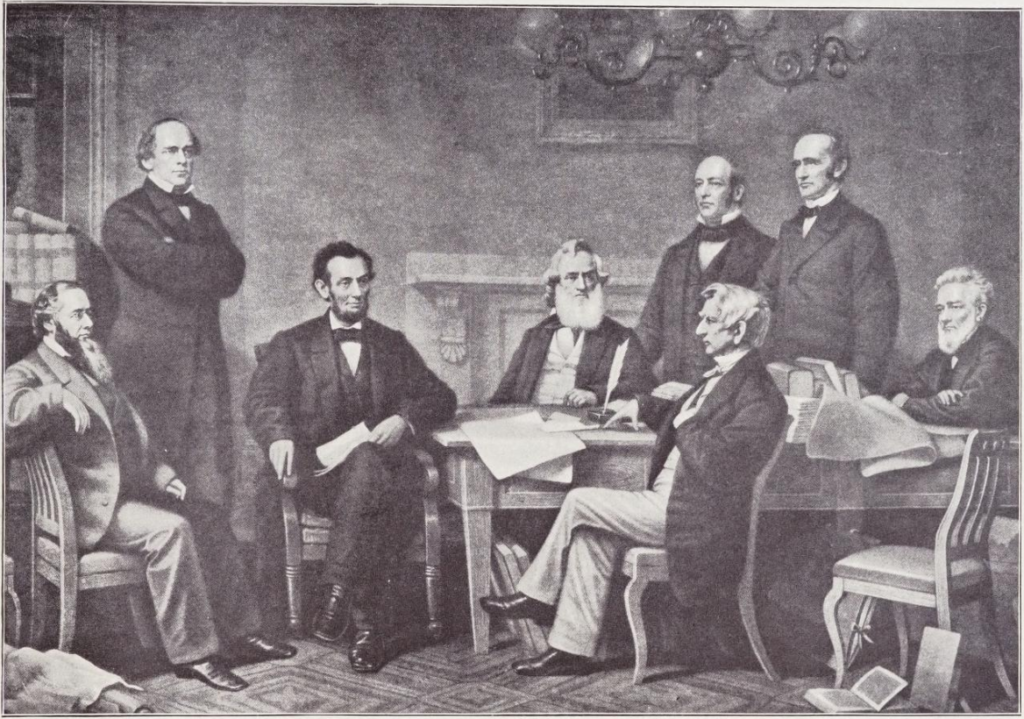
The Emancipation Proclamation was an executive order issued by President Abraham Lincoln on 1 January 1863, declaring that enslaved people in areas of the United States in rebellion against the federal government were free. It was a wartime measure with real limits, and it did not end slavery across the nation. Even so, it changed the purpose of the Civil War and opened the way for Black men to serve in the Union forces.
Background of the Emancipation Proclamation
The Civil War began as a fight to prevent the secession of the Southern states and to preserve the Union. The National Archives notes that sectional conflict over slavery had been a major cause of the war, but ending slavery was not an initial goal. When Lincoln’s presidency began in March 1861, he pledged to maintain slavery where it existed by enforcing the federal fugitive slave law, according to the Oxford Companion to American Military History.
The policy shifted as the war went on. By May 1861, Union commanders were allowed to protect and employ Black fugitives who came into their lines from disloyal regions, under a policy that treated them as contraband of war. In the summer of 1862, Congress suspended federal enforcement of the fugitive slave law and provided for the confiscation and emancipation of such people. General George McClellan opposed these measures, but Lincoln soon acted as commander in chief to make emancipation a war aim.
The enslaved had not waited for the government. The National Archives observes that from the first days of the war, they acted to secure their own liberty, and the Proclamation confirmed their insistence that the war for the Union must become a war for freedom.
Issuing the Proclamation
On 22 September 1862, a few days after the Union victory at the Battle of Antietam, Lincoln issued a preliminary proclamation. It stated that enslaved people in any state or part of a state still in rebellion on 1 January 1863 would be declared free from that date.
One hundred days later, with the rebellion unbroken, he signed the final proclamation. The text describes it as a fit and necessary war measure, issued under his authority as commander in chief of the army and navy. It quotes the preliminary proclamation at length, including the promise that the executive government, with its military and naval authority, would recognize and maintain the freedom of those declared free and would do nothing to repress their efforts to achieve actual freedom.
The National Archives gives two main motives. Lincoln hoped to encourage enslaved people in the Confederacy, and Black people generally, to support the Union cause. He also hoped to keep Britain and France from giving political recognition and military aid to the Confederacy. The Oxford Companion adds that after the preliminary proclamation, the prospect of pro-Southern intervention by Britain faded.
Limits and effects of the Proclamation
The Proclamation applied only to states that had seceded, leaving slavery untouched in the loyal border states. It also expressly exempted parts of the Confederacy that were already under Union control. Most important, the freedom it promised depended on a Union military victory.
Even so, it changed the character of the war. After 1 January 1863, every advance of federal troops expanded the area of freedom. Lincoln had at first opposed enrolling any Black soldiers, so the change marked a basic shift in Union military policy. The Proclamation also announced that Black men would be accepted into the Union Army and Navy. According to the National Archives, almost 200,000 Black soldiers and sailors had served the Union by the end of the war. The Oxford Companion reports that Lincoln authorized an aggressive recruitment campaign right after issuing the final proclamation.
The Proclamation therefore worked unevenly. Where the Union army arrived, it became a practical promise, and elsewhere it remained a declaration until federal forces reached the area. This is why the National Archives calls the freedom it offered dependent on military victory.
Historians give different weight to the Proclamation within the larger story of wartime emancipation. Louis Gerteis stresses that military necessity pushed Congress and then Lincoln toward emancipation. Ira Berlin and his colleagues emphasize the part played by African Americans in winning their own liberation. James McPherson argues that emancipation, and the Union victory needed to secure it, rested on Lincoln’s leadership.
Aftermath and the Thirteenth Amendment
Because the Proclamation was a war measure, it could not settle the status of slavery for good. Congress passed the 13th Amendment on 31 January 1865, and it was ratified on 6 December 1865. The National Archives states that the amendment abolished slavery in the United States, closing the gaps the Proclamation had left.
The original Proclamation is held at the National Archives in Washington. It covers five pages and was once tied with narrow red and blue ribbons attached to the signature page by a wafered impression of the seal of the United States. The State Department transferred the volume containing it to the National Archives in 1936.
Significance and legacy
The National Archives describes the Proclamation as a milestone along the road to slavery’s final destruction and as one of the great documents of human freedom. It strengthened the Union both militarily and politically, and it gave the cause added moral force.
The document also remained a reference point in later struggles for equality. By 1963, the centennial year of the Proclamation, civil rights leaders were still campaigning for goals that had not been realized. The call issued on 7 May 1963 by A. Philip Randolph, Martin Luther King Jr. and other leaders described the planned event as an Emancipation March on Washington for Jobs.
More in History
Key facts
- Lincoln issued the Emancipation Proclamation on 1 January 1863, after a preliminary proclamation on 22 September 1862.1
- It applied only to states in rebellion and left slavery untouched in the loyal border states.1
- The Proclamation announced the acceptance of Black men into the Union Army and Navy, and almost 200,000 served by the end of the war.1
- The 13th Amendment, ratified on 6 December 1865, abolished slavery in the United States.3
- The original five-page document is held by the National Archives in Washington.1
Related concepts
Quick checkDid the Emancipation Proclamation end slavery in the United States?Show answer
No. It freed enslaved people only in areas in rebellion that were not under Union control, and slavery was abolished nationwide by the 13th Amendment, ratified on 6 December 1865.
Sources
- National Archives, Emancipation Proclamation (1863), https://www.archives.gov/milestone-documents/emancipation-proclamation
- Oxford Companion to American Military History via Encyclopedia.com, Emancipation Proclamation, https://www.encyclopedia.com/history/encyclopedias-almanacs-transcripts-and-maps/emancipation-proclamation
- National Archives, 13th Amendment to the U.S. Constitution: Abolition of Slavery (1865), https://www.archives.gov/milestone-documents/13th-amendment
- Martin Luther King, Jr. Research and Education Institute, Stanford University, March on Washington for Jobs and Freedom, https://kinginstitute.stanford.edu/march-washington-jobs-and-freedom
Editorially reviewed by Specialty Digest Editorial TeamLast reviewed November 4, 2026Researched and drafted with AI assistanceReport an issue