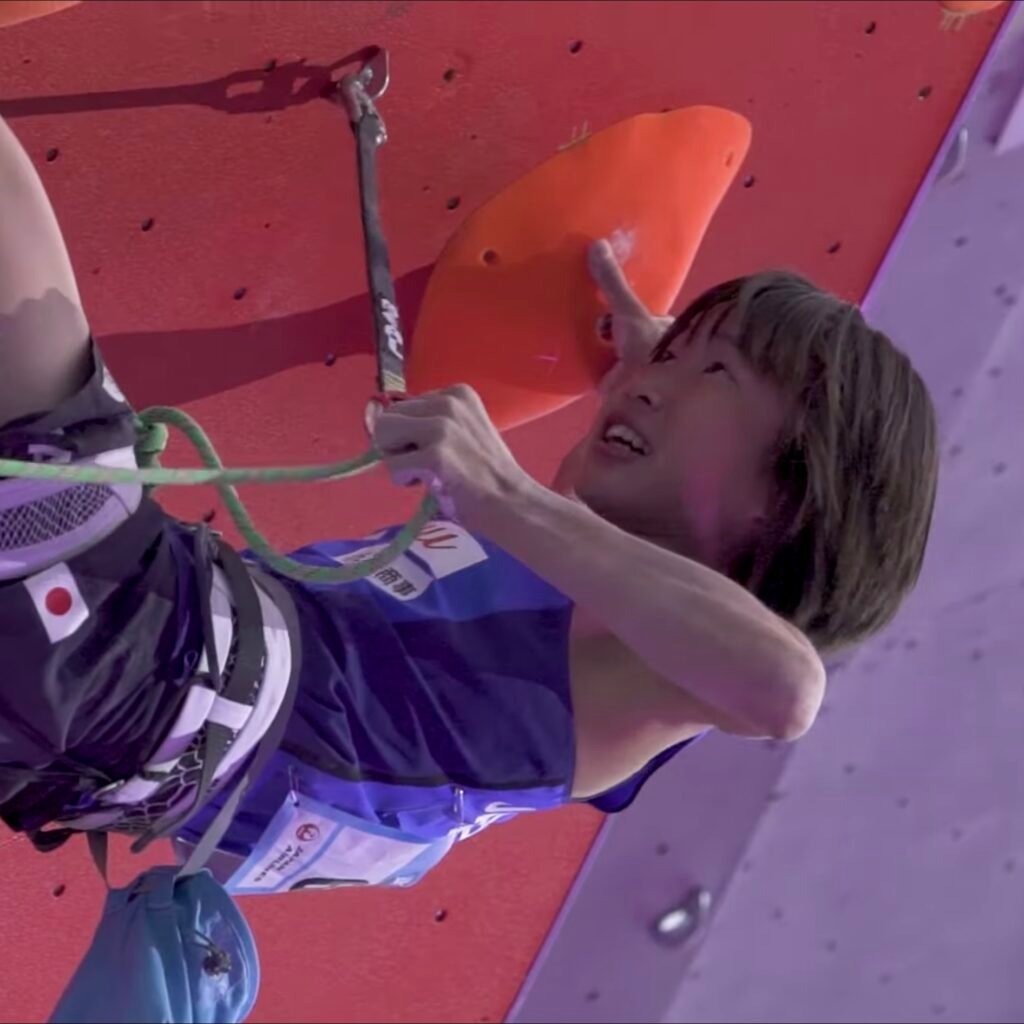
Sport climbing is a competitive form of climbing on artificial walls in which athletes are judged in three disciplines: boulder, lead and speed. It made its Olympic debut at Tokyo 2020 and has appeared at the Games since. The sport is governed internationally by the International Federation of Sport Climbing, known as the IFSC.
History of sport climbing
Sport climbing grew out of traditional rock climbing, which became a recreational activity toward the end of the nineteenth century. Competitive climbing began in 1985 at SportRoccia in Bardonecchia, Italy. In 1986 the first competitions on artificial walls took place near Lyon, France, and a World Series was introduced in 1988. The Climbing World Cup followed in 1989.
In the early 1990s international events were restricted to purpose-built structures so that natural landscapes would not be damaged, which made artificial walls the standard setting for international competition. The first World Championships were held in 1991 in Frankfurt, Germany. In 1997 the International Council for Competition Climbing became the sport’s rules body, and about a decade later it was replaced by the IFSC. The International Olympic Committee provisionally recognized the federation in 2007 and gave full recognition in 2010.
Boulder was approved as a third discipline in 1998, with its first World Cup in 1999 and its addition to the World Championships in 2001.
Rules and how sport climbing is played
The three disciplines test different skills.
- Boulder: climbers attempt short, difficult problems on walls about 4.5 meters high without ropes, trying to solve as many as possible in as few attempts as possible within a time limit.
- Lead: climbers wear a harness and rope and try to reach the greatest height on a wall more than 15 meters tall in a single six-minute attempt, without previewing the route.
- Speed: two climbers race side by side up a standardized 15-meter wall set at a 5-degree incline, secured by an automatic belay system.
Scoring follows the discipline. In the Paris 2024 boulder rounds, each of four problems was worth 25 points for reaching the top, 10 points for the second zone hold, or 5 points for the first zone hold. Each failed attempt before reaching the highest hold cost 0.1 points, and the maximum was 100 points.
In lead, only the highest 40 holds scored, in bands of ten. Holds in the top band were worth 4 points each, the next band 3, then 2, then 1. A fall while moving toward the next hold earned a further 0.1 points. Reaching the top and clipping the final quickdraw gave 100 points, and failing to clip it gave 99.9. A boulder score and a lead score were simply added for a maximum of 200, a change from Tokyo 2020, where rankings in the three disciplines were multiplied.
Equipment and venues
Lead climbers wear a harness and rope, speed climbers are secured by an automatic belay system, and boulder climbers use no rope at all. A speed wall uses the same standardized 15-meter route at every competition, so times can be compared across events.
The 2028 Olympic climbing competition will be held at the Long Beach Climbing Theater, an open-air stadium on the grounds of the Long Beach Convention Center in California.
Governing bodies and major competitions
The IFSC sets the competition rules, runs the World Cup series and organizes the World Championships. After Tokyo 2020 was added to the Olympic program, the World Championships moved to odd-numbered years, and the championships held the year before each Olympics serve as Olympic qualifiers. At the 2023 World Championships in Bern, the combined event was renamed and reformatted as Boulder and Lead. For how such bodies fit together, see sports governance.
Records and notable moments
Tokyo 2020 was the sport’s Olympic debut, with two medal events: men’s combined and women’s combined, each covering lead, boulder and speed. The IOC confirmed sport climbing as an additional sport for Paris 2024 in December 2020. At Paris, speed was split from the combined event, so speed specialists no longer had to compete in boulder and lead, so there were two competitions: one combining boulder and lead, and one for speed alone.
Paris 2024 included 68 athletes in total. The speed competition had 28 climbers, 14 of each sex, and the boulder and lead competition had 40, with 20 of each sex. The quotas were set evenly for men and women, a feature that is often discussed under gender in sport.
The speed final has a bracket structure. The seven winners of the knockout stage plus the fastest loser reach a final of eight, which runs as quarterfinals, semifinals, a small final and a big final. The best times in elite speed climbing are under six seconds for men and under seven seconds for women.
Sport climbing was included in the Initial Sports Programme for Los Angeles 2028 in February 2022. The three disciplines will be contested separately, each with men’s and women’s medal events, which means boulder, lead and speed will each have their own medals instead of two combined competitions.
Speed qualification at Paris began with a seeding heat of 14 athletes, followed by a knockout stage of seven races. In boulder and lead, semifinal and final rounds were held, and the top eight advanced to the final.
Global reach of sport climbing
The sport began in Europe, in Italy and France, and its first World Championships were held in Germany. The 2023 World Championships were held in Bern, Switzerland. The Olympic qualifying system, which uses the championships held the year before each Games, gives athletes from the world stage a route to the Olympics, and the Paris 2024 quota of 68 athletes was divided evenly between men and women.
More in Sports Coaching and Performance
Key facts
- Competitive climbing began in 1985 at SportRoccia in Bardonecchia, Italy, and the first World Championships were held in 1991 in Frankfurt.1
- The IOC provisionally recognized the IFSC in 2007 and gave full recognition in 2010.1
- Sport climbing made its Olympic debut at Tokyo 2020 with a combined event of lead, boulder and speed.1
- Speed climbing uses a 15-meter wall set at a 5-degree incline, and top times are under six seconds for men.2
- Los Angeles 2028 will hold boulder, lead and speed as separate disciplines at the Long Beach Climbing Theater.4
Related concepts
Quick checkWhat are the three disciplines of sport climbing?Show answer
Sport climbing has three disciplines: boulder, which uses short problems without ropes, lead, which is a single climb to the greatest height, and speed, a head-to-head race up a standard 15-meter wall.
Sources
- Olympics.com, Olympic Qualifier Series 2024: the evolution of sport climbing (history, IFSC and Olympic formats), https://olympics.com/en/news/olympic-qualifier-series-2024-evolution-sport-climbing-history
- Olympics.com, Sport Climbing at Paris 2024 (events, formats and wall details), https://olympics.com/en/paris-2024/sports/sport-climbing
- UKClimbing, Paris 2024 Olympic Games: sport climbing qualification and scoring explainer (athlete quotas and scoring), https://www.ukclimbing.com/articles/features/paris_2024_olympic_games_sport_climbing_qualification_and_scoring_explainer-15300
- LA28, Climbing (disciplines and venue for Los Angeles 2028), https://la28.org/en/games-plan/olympics/climbing.html
Editorially reviewed by Specialty Digest Editorial TeamLast reviewed November 4, 2026Researched and drafted with AI assistanceReport an issue