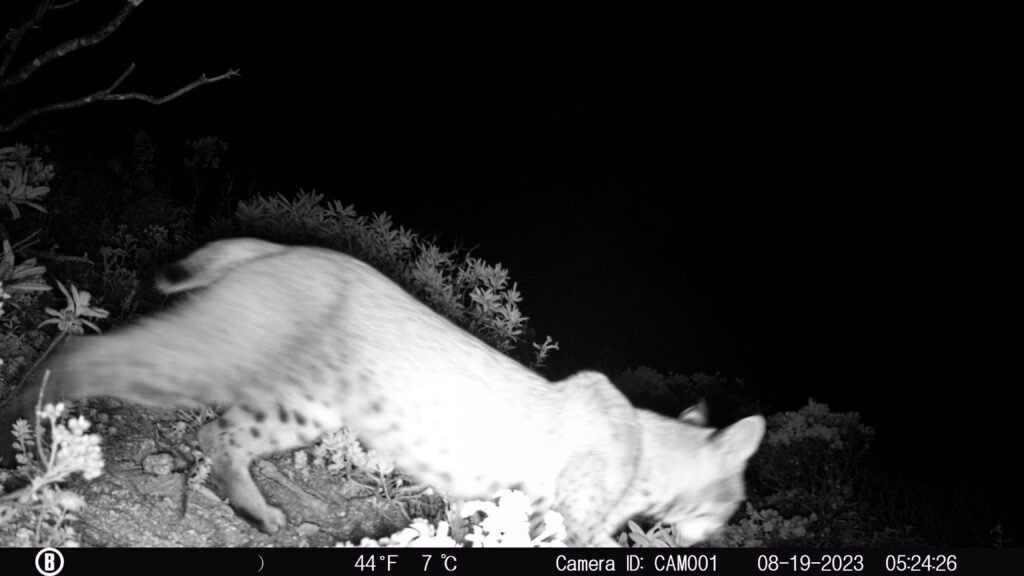
Fundamentals of Population Dynamics
Wildlife population ecology examines how population size and structure change over time as a function of birth rates, death rates, immigration, and emigration, collectively determining whether a population grows, declines, or remains stable. Understanding these dynamics requires tracking not just total population size but also age and sex structure, since a population with few breeding-age females, for instance, may face decline even if total numbers currently appear stable or are only gradually decreasing.
Carrying Capacity and Density-Dependent Regulation
Carrying capacity describes the population size an environment can sustainably support given available food, water, shelter, and other resources, beyond which further growth becomes constrained by resource limitation. Density-dependent factors, including food competition, disease transmission, and predation pressure, tend to intensify as population density increases, creating a natural regulatory mechanism. Density-independent factors, such as severe weather events or habitat destruction, affect population size regardless of current density and can cause dramatic fluctuations independent of resource availability.
Population Estimation Methods
Since direct, complete counts of wildlife populations are rarely feasible given mobility, concealment behavior, or simply the scale of many habitats, ecologists rely on statistical sampling techniques. Mark-recapture methods estimate population size based on the proportion of marked individuals recaptured in a subsequent sample. Distance sampling and aerial survey methods serve similar estimation purposes for species or habitats where direct marking is impractical, each carrying distinct assumptions and potential sources of bias that researchers must account for in their analysis.
Metapopulation Dynamics
Many wildlife populations exist not as single continuous groups but as metapopulations, networks of smaller, partially isolated subpopulations connected by occasional migration between habitat patches. This structure has important conservation implications, since a subpopulation that goes locally extinct may be recolonized from neighboring patches if connectivity is maintained, while habitat fragmentation that severs these connections can accelerate overall decline even if each individual patch appears locally stable in isolation.
Applications to Conservation Management
Population ecology provides the quantitative foundation for setting conservation targets, evaluating harvest or hunting quotas, and assessing extinction risk. Population viability analysis, built on demographic data collected through ongoing ecological monitoring, allows managers to model how different threats or interventions might alter future population trajectories, informing decisions about habitat protection, captive breeding investment, or other conservation resource allocation across competing priorities and species.
Harvest Management and Sustainable Yield
Population ecology principles directly inform wildlife harvest management, including hunting and fishing quota setting, where the goal is typically to remove individuals at a rate the population can sustain without long-term decline, sometimes called maximum sustainable yield. Overestimating population size or underestimating reproductive rates can lead to unsustainable harvest levels, making accurate population monitoring essential infrastructure for responsible wildlife and fisheries management programs operating under harvest-based economic or recreational use models.
Climate Change Impacts on Population Dynamics
Climate change is increasingly recognized as a significant driver of wildlife population change, altering reproductive timing, food availability, and habitat suitability in ways that can decouple previously synchronized ecological relationships, such as migratory arrival timing no longer matching peak food availability. Researchers increasingly incorporate climate variables into population models to better anticipate how shifting environmental conditions may affect future population trajectories beyond what historical data alone would predict.
Predator-Prey Population Cycles
Certain predator-prey relationships exhibit characteristic cyclical population dynamics, where predator population increases following prey abundance, subsequently depleting the prey population and triggering a predator decline, which then allows prey recovery and the cycle to repeat. These dynamics, studied extensively in classic examples such as lynx and snowshoe hare populations, illustrate how population ecology principles extend beyond single-species analysis to encompass the interactive dynamics between ecologically linked species sharing the same habitat and food web relationships.
Genetic Monitoring in Population Studies
Modern population ecology increasingly incorporates genetic sampling alongside traditional demographic monitoring, since genetic data can reveal population structure, effective population size, and connectivity patterns not readily apparent from count data alone. Non-invasive genetic sampling methods, including analysis of shed hair, feathers, or scat, have expanded researchers’ ability to gather this genetic information without requiring direct capture or handling of study animals.
Spatial Ecology and Home Range Analysis
Understanding how individual animals use space within their habitat, including home range size and movement patterns, provides essential context for population-level analysis, since resource availability and habitat quality within an animal’s utilized range directly affect its survival and reproductive success. GPS and satellite tracking technology has dramatically expanded researchers’ ability to study these spatial patterns in detail, revealing movement behaviors and habitat preferences that earlier observational methods could not capture.
Ultimately, robust population ecology data remains foundational to nearly every conservation and wildlife management decision, since interventions designed without accurate understanding of underlying population dynamics risk being ineffective or, in some cases, counterproductive to the species they aim to protect.
Continued investment in long-term monitoring infrastructure remains essential for detecting gradual population changes before they become irreversible conservation crises.
As new monitoring technologies mature, researchers expect population ecology to deliver increasingly precise, timely data supporting faster and better-informed management decisions across a wide range of species and habitats.
That precision will prove especially valuable for species facing the compounding pressures of climate change, habitat loss, and other emerging threats simultaneously.
As new monitoring technologies mature, researchers expect still more precise, timely population data to support faster, better-informed wildlife management decisions across diverse species and habitats worldwide.
That precision benefits conservation planners and wildlife managers facing an increasingly complex set of simultaneous environmental pressures.
Precision matters most of all.
Nothing more matters without it.
More in Wildlife and Conservation Biology
Key facts
- Carrying capacity describes the maximum population size an environment can sustainably support given available resources.
- Population surveys often use statistical sampling methods such as mark-recapture rather than complete counts.
- Density-dependent factors, such as food competition, regulate population growth differently than density-independent factors like weather events.
- Age-structure data helps predict future population trajectories beyond simple total headcounts.
Related concepts
Quick checkWhy do wildlife ecologists often use mark-recapture methods rather than attempting a complete population count?Show answer
Complete counts are frequently impossible for mobile, cryptic, or widely dispersed wildlife populations, so mark-recapture methods use the ratio of previously marked to newly captured individuals in a second sample to statistically estimate total population size without needing to locate and count every individual directly.
Sources
- Wildlife Society, population estimation standards
- Journal of Wildlife Management, demographic methodology
Editorially reviewed by Specialty Digest Editorial TeamLast reviewed November 4, 2026Researched and drafted with AI assistanceReport an issue