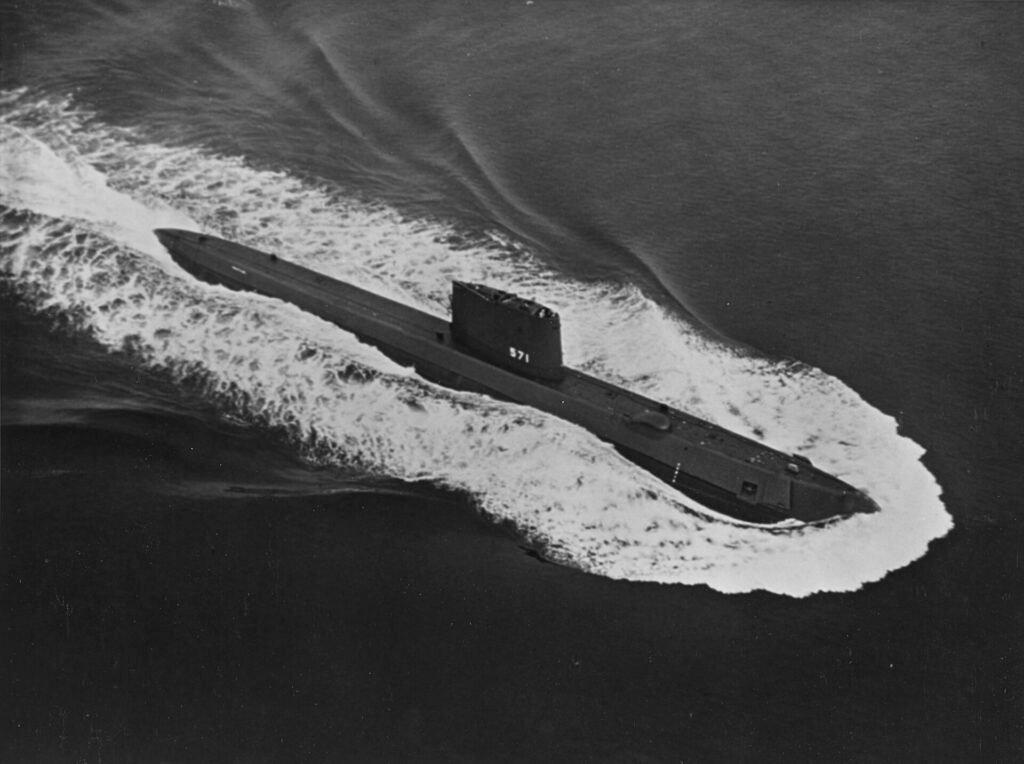
A submarine is a vessel that can travel beneath the surface of the water as well as on top of it, and the term is used most often for naval warships. The idea is old, but practical boats date from the 1600s to the 1900s, when electric motors, diesel engines and finally nuclear reactors gave
Submarine Read More »
A submarine is a vessel that can travel underwater as well as on the surface, developed from Drebbel's 1620s boat to modern nuclear designs.
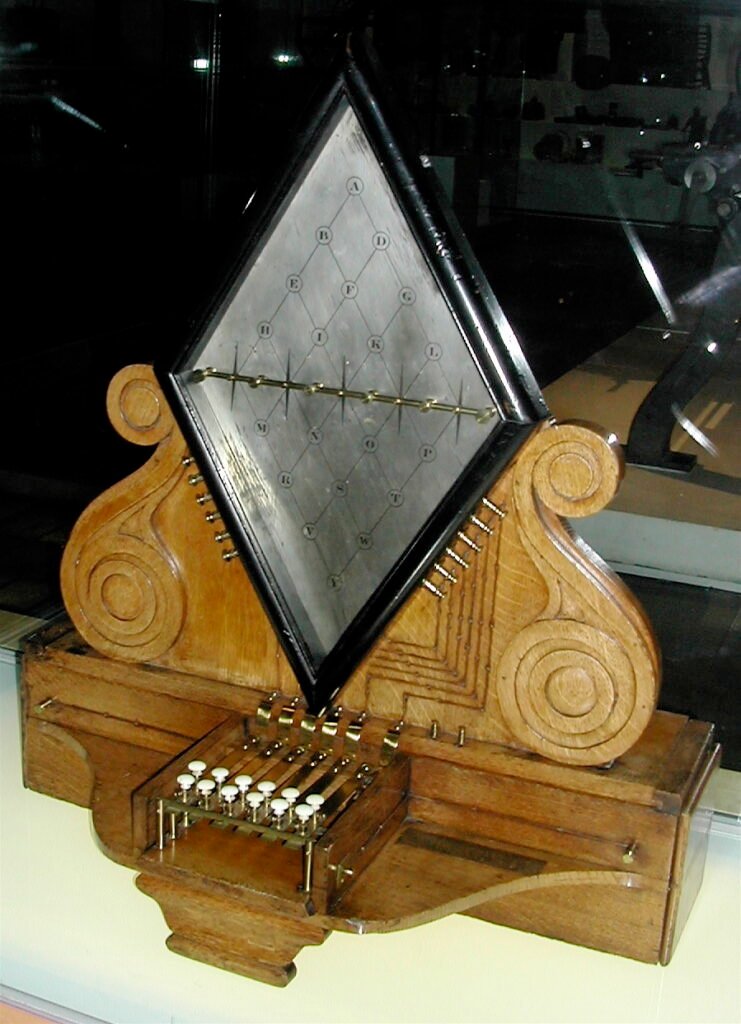
The telegraph is a system for sending coded messages over long distances. The electric telegraph, which sends signals along wires, opened its first public lines in Great Britain in 1837 and the United States in 1844. It was the first technology to separate communication from transportation, and it was the only form of electrical communication
Telegraph Read More »
A system that sends coded messages over wires as electrical signals, developed in the 1830s and 1840s by several inventors.
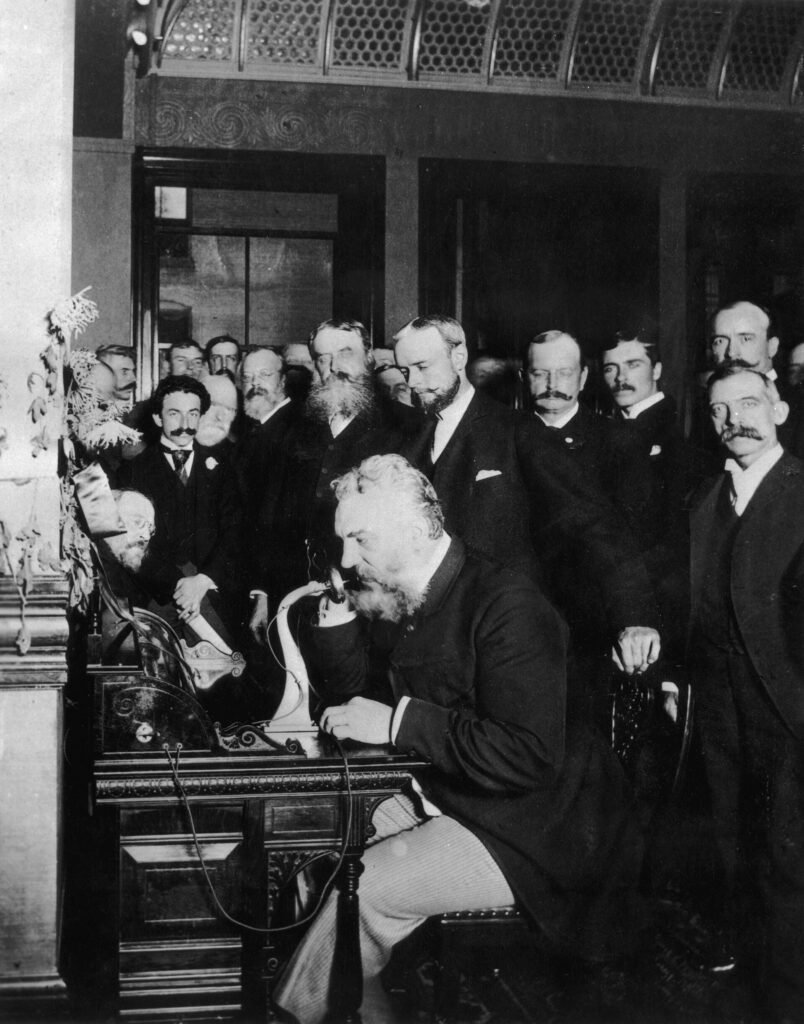
The telephone is a device that turns speech into a varying electrical signal, sends it along wires, and turns it back into sound at the other end, so two people can talk in real time across a distance. Alexander Graham Bell received the first U.S. patent covering this method in 1876. Several other inventors worked
Telephone Read More »
The telephone is a device that turns speech into electrical signals and back into sound, letting two people talk in real time at a distance.
A telescope is an instrument that gathers light or other radiation from distant objects and forms a magnified or brighter image of them. The first recorded telescope was a lens-based device announced by a Dutch spectacle maker in 1608, and Galileo’s improved versions in 1609 and 1610 opened the era of telescopic astronomy. History of
Telescope Read More »
An instrument that gathers light to magnify distant objects; the first recorded telescope was announced by Hans Lipperhey in 1608.
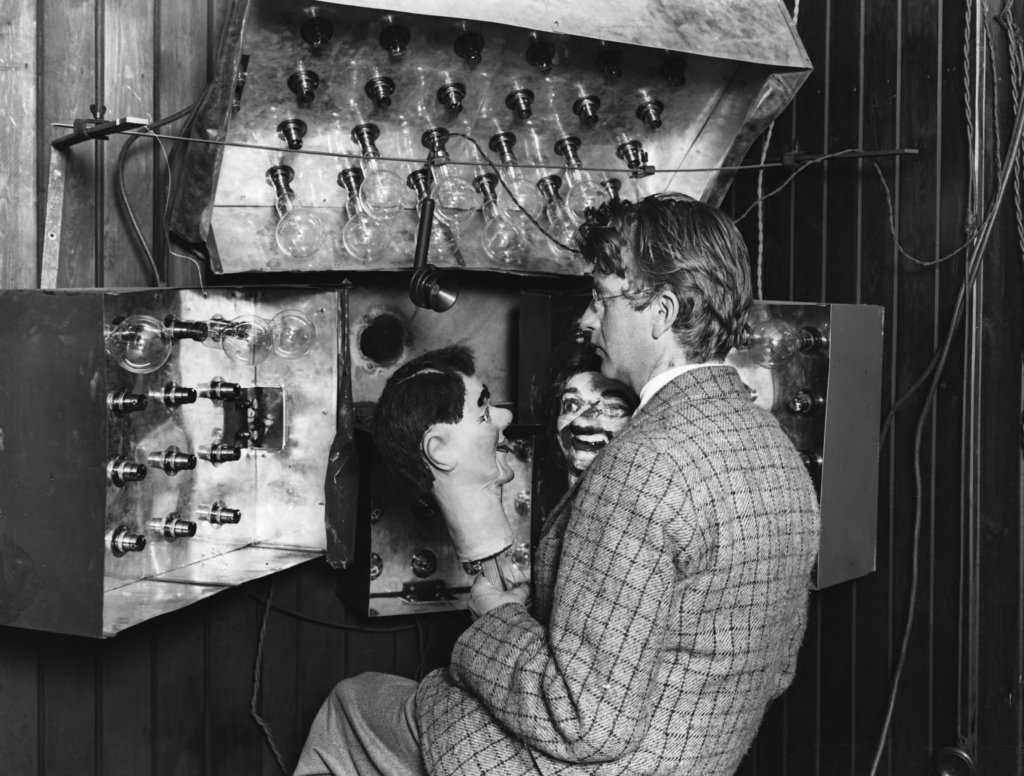
Television is a system that transmits moving images and sound to distant screens by electrical or radio signals. Its development took about sixty years, moved from spinning-disc mechanical systems to all-electronic ones, and involved many inventors in several countries. Credit for the invention is shared and has even been contested in court. History of television
Television Read More »
A system that transmits moving images and sound to distant screens, developed by many inventors from mechanical scanning discs to electronic tubes.
A thermometer is an instrument that measures temperature, usually by watching how a substance such as air, alcohol, mercury or a metal changes as it warms or cools. No single person invented it, because the device grew out of earlier thermoscopes that showed heat changes without a numbered scale. Today thermometers range from the sealed
Thermometer Read More »
A thermometer measures temperature, a device that grew from 1600s thermoscopes and now uses liquids, platinum sensors or infrared radiation.
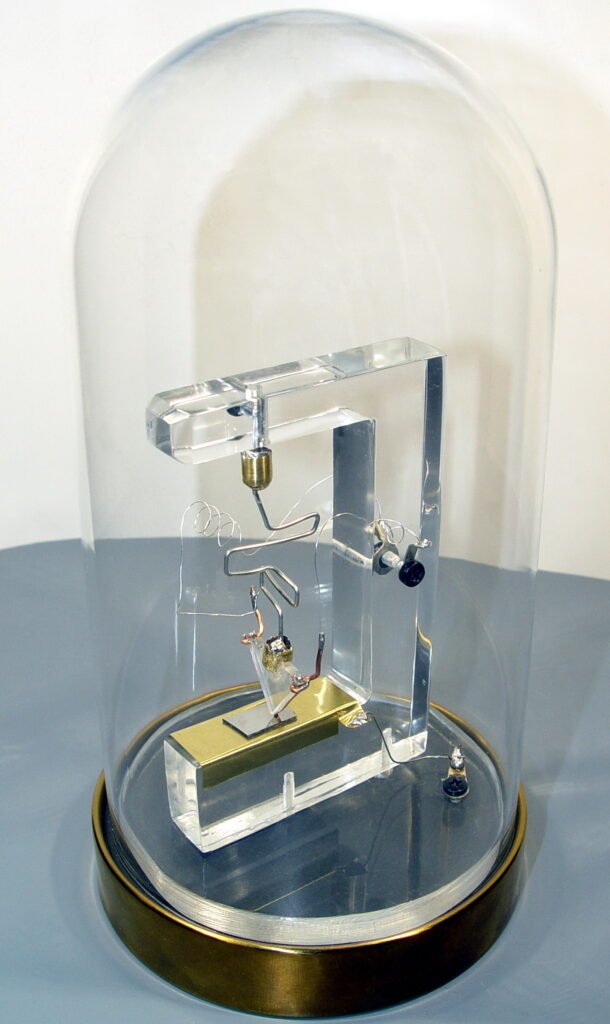
A transistor is a small semiconductor device that can amplify an electrical signal or switch it on and off. It was demonstrated at Bell Telephone Laboratories in New Jersey in late 1947, and its inventors received the 1956 Nobel Prize in Physics. Transistors replaced vacuum tubes in most electronics and are the basic building blocks
Transistor Read More »
A small semiconductor device that amplifies or switches electrical signals, first demonstrated at Bell Laboratories in 1947.
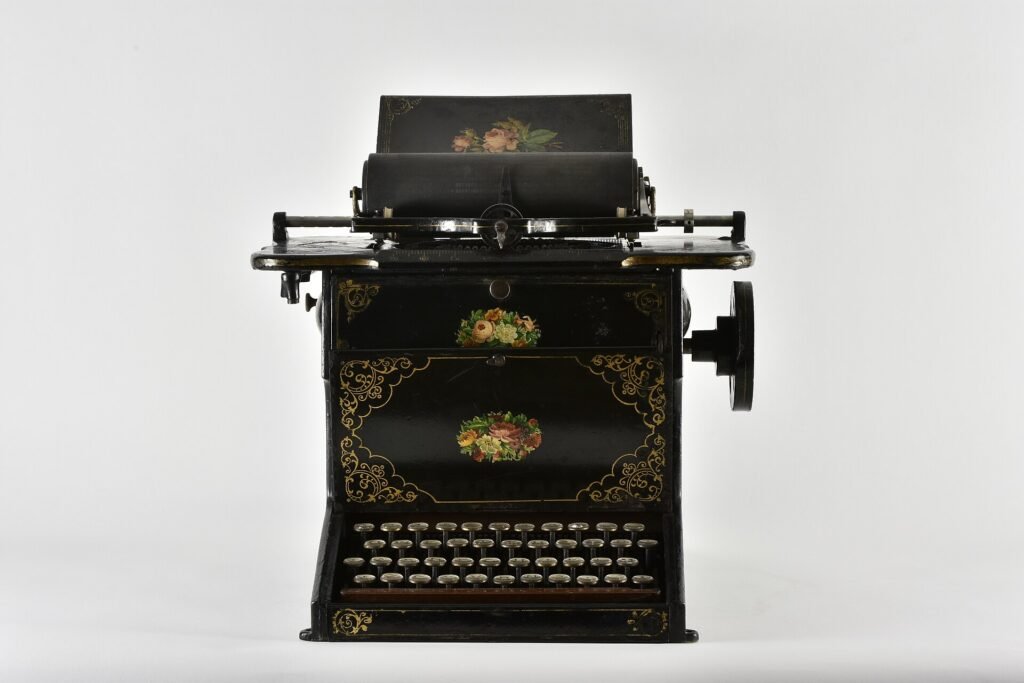
A typewriter is a keyboard machine that presses inked type onto paper one character at a time. The Sholes and Glidden machine, sold from 1874 by E. Remington and Sons of Ilion, New York, was the first commercially successful model and introduced the QWERTY key layout. It was the work of a group rather than
Typewriter Read More »
A typewriter is a keyboard machine that prints characters on paper; the Sholes and Glidden model went on sale in 1874.
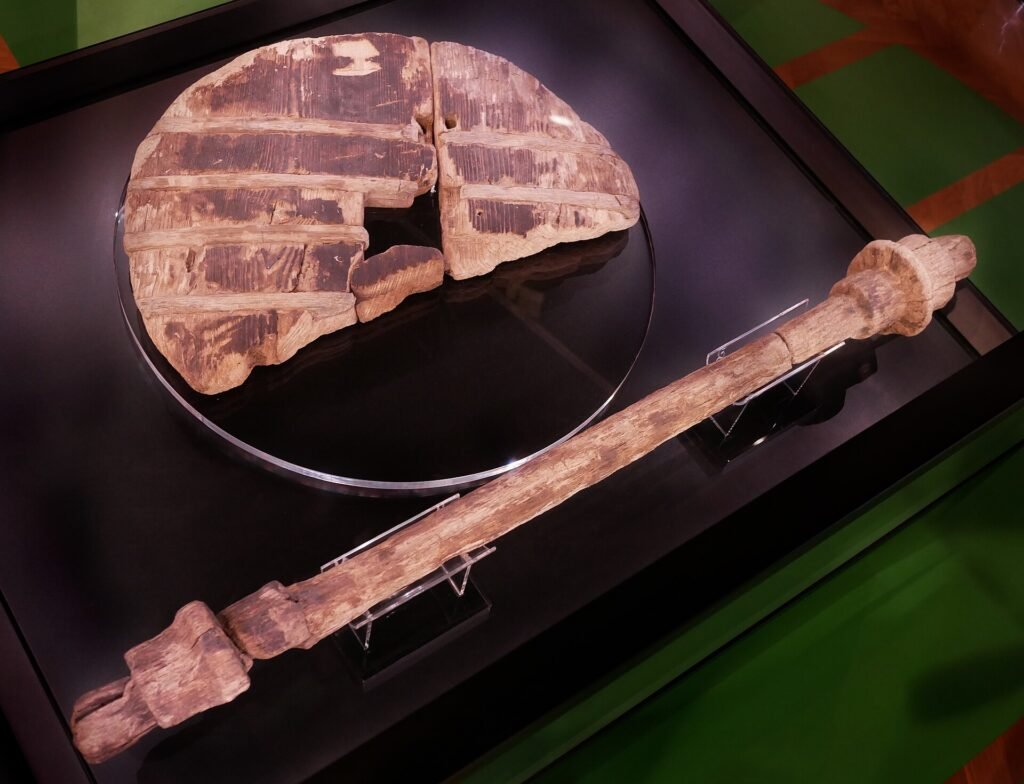
The wheel is a circular object that turns around a central axle, which lets people move heavy loads with much less effort than dragging them. The oldest wooden wheel found so far is about 5,100 to 5,350 years old, and no individual inventor of the wheel is known. History of the wheel Many historians think
Wheel Read More »
A circular device that turns on an axle, letting loads roll; the oldest known wooden wheel is about 5,100 to 5,350 years old.
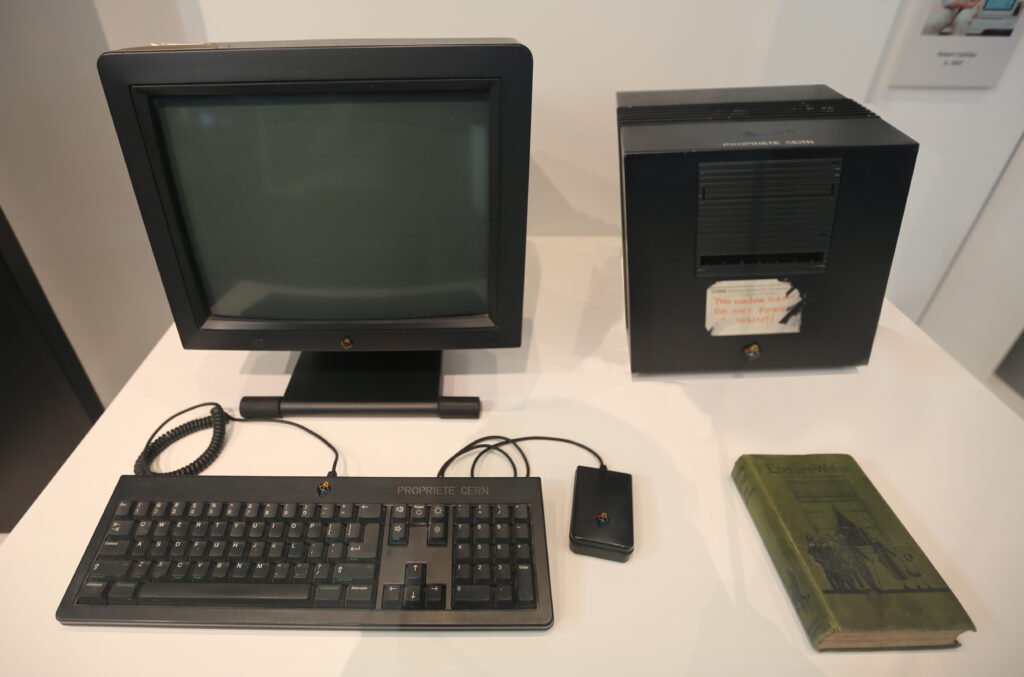
The World Wide Web is a system of linked documents and other resources that people reach through the internet using a browser. It was created by Sir Tim Berners-Lee at CERN, the European particle physics laboratory, between 1989 and 1991. The web is not the same as the internet: the internet is the global network
World Wide Web Read More »
A system of linked pages and resources reached through the internet with a browser, created by Tim Berners-Lee at CERN from 1989.