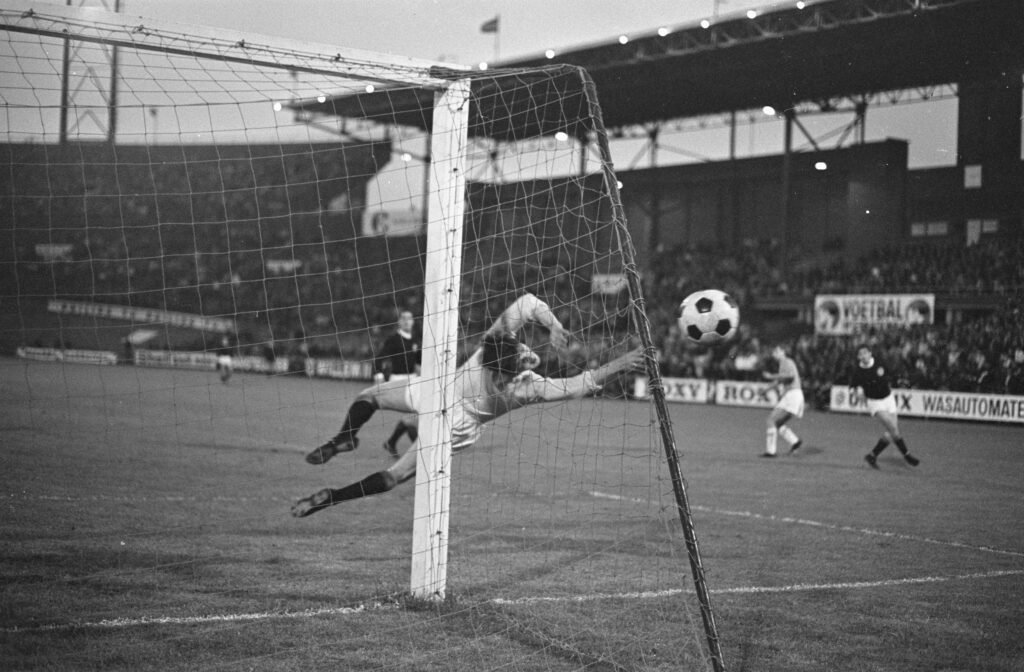
Association football, known in the United States and Canada as soccer, is a team sport in which two sides of up to eleven players try to score by getting a ball into the opposing goal, using any part of the body except the hands and arms for outfield players. It is played under the Laws of the Game, a single rulebook maintained by the International Football Association Board. FIFA, the sport’s world governing body, counts 211 member associations, which makes it one of the most widely organized sports on Earth.
History of association football
Ball games resembling football existed in many places for centuries, but the modern sport was codified in England, where clubs played under differing local rules. In autumn 1863 representatives of clubs met six times at the Freemasons’ Tavern in London, from 26 October to 8 December, and founded The Football Association (FA) to agree one set of rules. The first Laws ran to thirteen rules, and the National Football Museum holds the FA minute book in which its first secretary, Ebenezer Morley, wrote them out.
The 1863 Laws banned carrying the ball in the hands and hacking an opponent’s shins. Some clubs wanted to keep both practices, and one of them, Blackheath, withdrew after the vote went against them. That split helped set association football and rugby on separate paths. The game then spread through the United Kingdom, and in 1886 the four British associations formed the International Football Association Board (IFAB) to look after the Laws.
International organization followed. FIFA was founded in Paris on 21 May 1904 by the associations of Belgium, Denmark, France, the Netherlands, Sweden and Switzerland, with Real Madrid representing Spain. It joined the IFAB in 1913. The first FIFA World Cup, with 13 teams, was held in Uruguay in 1930, and the hosts won it.
How association football is played
The Laws of the Game are published each year by the IFAB, which describes itself as the only body authorized to agree changes to them. Changes are normally approved at its annual meeting in early March and take effect on 1 July.
Law 3 states that a match is played by two teams, each with a maximum of eleven players, one of whom must be the goalkeeper. A match may not start or continue if either team has fewer than seven players. Substitutes are allowed, with up to five in official competitions, though the exact number is set by the organizer of each competition.
Law 7 sets the duration at two equal halves of 45 minutes, with a half-time break of no more than 15 minutes. The referee adds time at the end of each half to make up for stoppages such as injuries, substitutions and video reviews. A displayed figure for added time is a minimum, so the referee can lengthen it but not shorten it.
Law 11 covers offside, the rule that stops attackers from waiting near the opposing goal. A player is in an offside position if any part of the head, body or feet is in the opponents’ half and is nearer to the opponents’ goal line than both the ball and the second-last opponent. The Laws state that being in an offside position is not an offence in itself, and a player cannot be penalized for offside when receiving the ball directly from a goal kick, a throw-in or a corner kick.
The referee controls the match and has the power to show yellow cards as cautions and red cards to send a player off. Video review checks also affect added time in some competitions, as Law 7 notes.
Positions and tactics
Teams are usually described by role: a goalkeeper, defenders, midfielders and forwards. The goalkeeper is the only player who may handle the ball, and only inside the penalty area. Coaches arrange the other ten players into formations, written as numbers of defenders, midfielders and forwards, such as 4-4-2.
Modern teams rely on data as well as instinct. Methods covered under performance analysis track passing, pressing and player movement, and coaches use the results to plan training and tactics. Because eleven players must act as a unit, researchers also study team cohesion in sport, the degree to which a squad is bonded around shared goals.
Competitions and governing bodies
FIFA’s member associations govern football in their own territories, organize competitions and run grassroots programs. Above the national level sit six continental confederations: the Asian Football Confederation (AFC), the Confederation of African Football (CAF), the Confederation of North, Central American and Caribbean Association Football (CONCACAF), the South American Football Confederation (CONMEBOL), the Oceania Football Confederation (OFC) and the Union of European Football Associations (UEFA). Each organizes its own continental competitions.
FIFA organizes the World Cup for national teams, first played in 1930, and in a 2021 joint statement with the six confederations it described its Club World Cup as the only global club competition. UEFA and the other confederations also take part in the IFAB’s advisory panels, which bring in players, coaches, referees and administrators to shape proposed changes to the Laws. The wider questions of how bodies like these are run fall under sports governance.
Association football worldwide
FIFA describes its member associations as covering 211 countries and territories across six continents, a figure FIFA gave in 2024, which can change as associations join. Several of those members are territories rather than independent states, which is why FIFA uses both words.
Alongside elite professionals, the sport is played in schools, parks and amateur leagues in nearly every region, partly because it needs little equipment. It also supports a large audience of supporters, a phenomenon studied under sport fandom. Claims about total players or viewers worldwide rest on surveys and broadcast measures that differ in method, so they are best treated as approximations.
Association football vs. other football codes
The word football covers several related games. Association football is the code governed by FIFA and the IFAB, and it is the main meaning of football in most countries. Rugby grew from the same early rule debates in England. American football, widely played in the United States, is a different code, which is why Americans commonly say soccer for association football.
The central difference is the use of the hands. In association football, outfield players cannot deliberately handle the ball, and the goalkeeper may do so only in the penalty area. Rugby and American football allow carrying and throwing, which leads to different rules for tackling, scoring and substitution.
Key facts
- The Football Association was founded in London in October 1863 and its first Laws had thirteen rules.
- A match is played by two teams of at most eleven players each, one of whom is the goalkeeper, in two equal halves of 45 minutes.
- FIFA was founded in Paris on 21 May 1904 and the first World Cup was played in Uruguay in 1930.
- The International Football Association Board, founded in 1886, is the only body that can agree changes to the Laws of the Game.
Related concepts
Quick checkWhich body is authorized to agree changes to the Laws of the Game?Show answer
The International Football Association Board (IFAB), which was founded in 1886 by the four British associations and joined by FIFA in 1913.
Sources
- The IFAB, Laws of the Game: The Duration of the Match, theifab.com, https://theifab.com/laws/latest/the-duration-of-the-match
- The IFAB, Background and history, backup.theifab.com, https://backup.theifab.com/background/
- The Football Association, Laws of the Game: Law 3 The Players, thefa.com, https://www.thefa.com/football-rules-governance/lawsandrules/laws/football-11-11/law-3---the-players
- The Football Association, Laws of the Game: Law 11 Offside, thefa.com, https://www.thefa.com/football-rules-governance/lawsandrules/laws/football-11-11/law-11---offside
- FIFA, FIFA celebrates 120th anniversary of foundation in Paris, inside.fifa.com, https://inside.fifa.com/en/news/fifa-celebrates-120th-anniversary-of-foundation-in-paris
- FIFA, Member Associations, ipt.fifa.com, https://ipt.fifa.com/associations
- FIFA and the six confederations, joint statement of 21 January 2021, inside.fifa.com, https://inside.fifa.com/es/about-fifa/associations/news/comunicado-de-la-fifa-y-las-seis-confederaciones
- National Football Museum, Magna Carta of football to go on display, nationalfootballmuseum.com, https://nationalfootballmuseum.com/news/may-june-objects-exhibitions
- UEFA, Laws of the Game, football rules and the IFAB, uefa.com, https://www.uefa.com/news-media/news/0284-18db8bcd37d4-384fa0ae8501-1000--laws-of-the-game-football-rules-and-the-ifab/
Editorially reviewed by Specialty Digest Editorial TeamLast reviewed November 4, 2026Researched and drafted with AI assistanceReport an issue