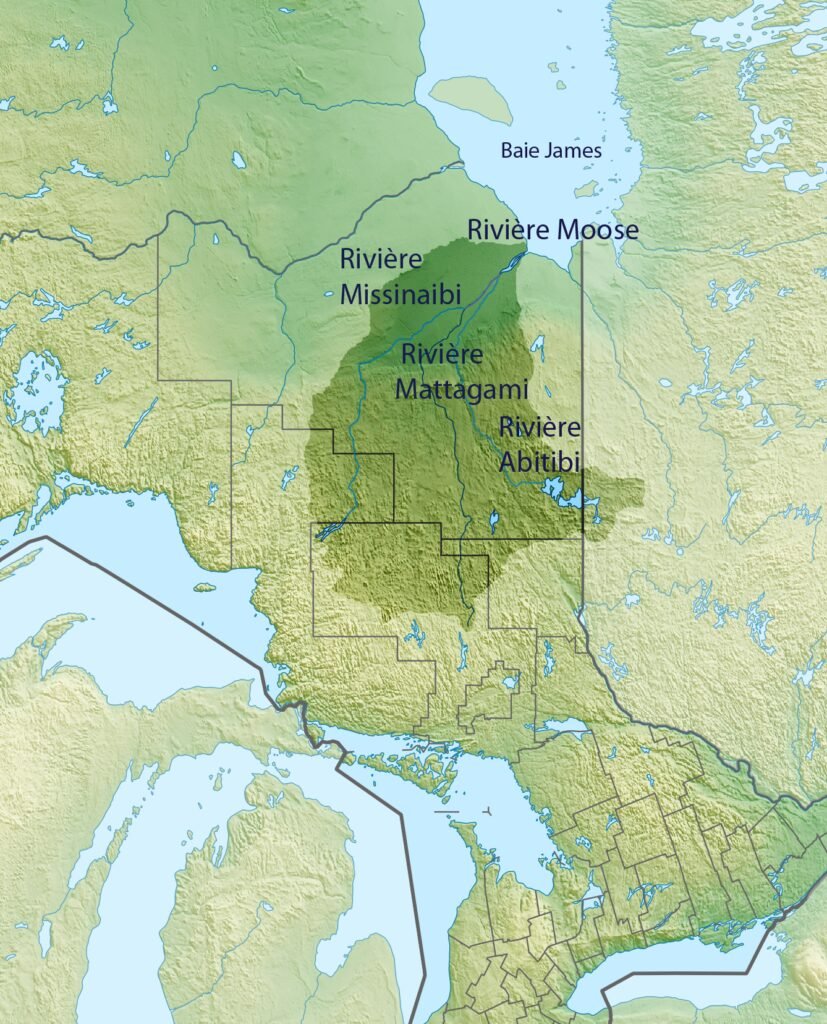
Rupert Bay water turns the color of tea when rivers carry dissolved organic matter into southern James Bay in Canada. NASA’s Earth Observatory published a Landsat 9 image of the bay on October 6, 2026, taken on September 27. This article summarizes that image story, explains why the water looks brown and notes what the story does not measure.
What does the Landsat 9 image show?
The image was taken by the Operational Land Imager on Landsat 9 on September 27, 2026. It shows tea-colored water from the Moose, Nottaway and Harricanaw rivers spreading over the mudflats of Hannah Bay and Rupert Bay, at the southern end of James Bay. James Bay is the southern arm of Hudson Bay. The story gives no measured water quality values, so the color is described and not quantified.
Why is the water brown?
The Earth Observatory explains that colored dissolved organic matter, including tannins and lignins, absorbs blue and ultraviolet light. When blue light is absorbed, the water looks yellow to brown. In general terms, these compounds come from plants and soils, and they leach into rivers as water drains through forests and wetlands. That general explanation is not quoted from NASA, but the absorption of blue and ultraviolet light is stated in the story.
Why does mud spread so far?
The story says the seafloor in the bay is shallow and gently sloping. It also points to postglacial rebound, the slow rise of land after the weight of ice sheets was removed. Fine mud carried by the rivers combines with tides to create sediment plumes that reach far across the flats. The story does not give the area the plumes cover or the amount of sediment, so we report none.
What does the Cree name mean?
The Cree word pahtaaunaakun is translated in the story as the color of singed beaver. The name reflects the brown shade of the water. The story does not say which Cree community uses the word or how long it has been in use, so we leave those details out.
What is the beaver connection?
The Hudson’s Bay Company managed Charlton Island as a beaver preserve in the 1830s and again about a century later. The story presents this as history of the area. It does not connect the preserve to the water color, and readers should not assume the two are related.
Why use satellites to watch river water?
A satellite image shows a whole bay at once, which a boat cannot do. Color differences in the water reveal where rivers meet the sea and how far their water travels. In general terms, scientists compare images from many dates to see how plumes change with seasons and river flow. This general explanation is not quoted from NASA, and the story is a single date and not a time series.
What is not shown in one image?
One image shows one day. River flow, tides and weather change the pattern from day to day, so September 27 may not be typical. The story does not say how this image compares with other dates or years. Measurements of dissolved organic carbon or sediment would require water samples or other satellite products that the story does not provide.
What role do tides play?
The story names tides as one of the forces that move river mud across the shallow flats. In general terms, a gently sloping seafloor means a small change in water level can cover or expose a wide strip of bottom, so tidal water can carry sediment a long way. This general explanation is not quoted from NASA, and the story gives no tide heights or timing for the image.
How can readers tell color from clarity?
Dark, tea-colored water is not necessarily muddy, and muddy water is not necessarily dark. Dissolved organic matter stains water without making it cloudy, while suspended mud makes water cloudy and lighter in shade. The story describes both effects in this bay, and it does not say which one dominates in any part of the image. Readers should avoid reading the color as a sign of water quality.
Why does the story mention history?
The references to the Cree name and the beaver preserve place the image in a human setting. They show that people have lived with and named this water for a long time. The story uses them as context and not as scientific evidence, and this article does the same.
How to read the numbers
This story contains almost no numbers. The date, September 27, 2026, is the only measurement-type fact. The article therefore describes what the image shows and why, and it does not present data such as concentrations or plume sizes.
How does this connect to other coverage?
Satellite views of land and ice appear in our reports on the Pennsylvania Grand Canyon in Landsat imagery, emperor penguins seen by Landsat, Vega Island and the global forests assessment.
What should readers watch for next?
Readers can watch for new Earth Observatory images of the bay in other seasons that show how the plumes change.
Glossary
- Landsat 9: a NASA and U.S. Geological Survey Earth-observing satellite
- Tannin: a plant compound that can stain water brown
- Lignin: a compound that gives wood its stiffness
- Postglacial rebound: the slow rise of land after ice melts away
- Sediment plume: a cloud of suspended particles in water
These definitions are general explanations and are not quoted from NASA.
What is not covered here?
The story has no measurements of water chemistry, so we report none.
Key facts at a glance
- Image date: September 27, 2026
- Satellite: Landsat 9
- Rivers: Moose, Nottaway and Harricanaw
- Cause of color: dissolved organic matter and fine mud
- Published: October 6, 2026
Frequently asked questions
Why is Rupert Bay brown?
Dissolved organic matter from rivers absorbs blue light, and fine mud adds to the color.
What does pahtaaunaakun mean?
The story translates it as the color of singed beaver.
Is the brown water polluted?
The story does not say so. It explains the color by natural organic matter and mud.
More in Nature