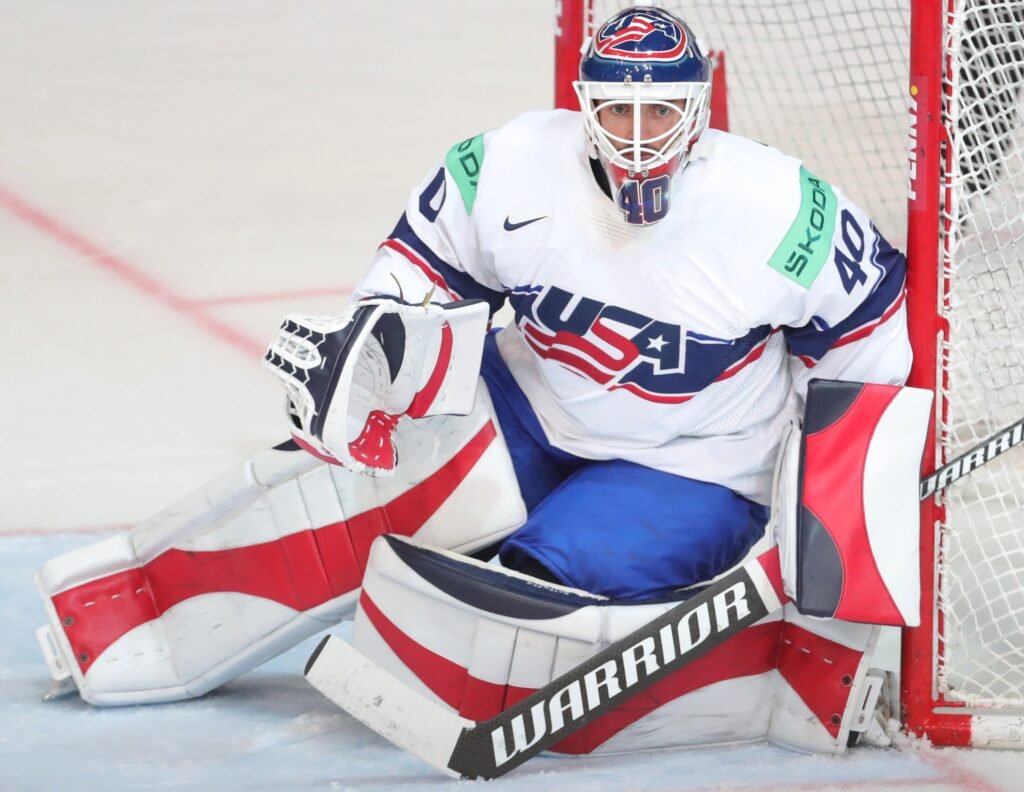
Ice hockey is a team sport played on ice in which two teams of six, including a goaltender, use sticks to shoot a puck into the opponent’s goal. A game has three 20-minute periods. The sport developed in Canada, is now played worldwide, and is governed internationally by the International Ice Hockey Federation (IIHF), which was founded in Paris in 1908.
History of ice hockey
Britannica says the history of ice hockey begins in the 19th century, and the sport first became popular in the colder regions of Canada and the northern United States. Several places claim the first game. Some people credit Windsor, Nova Scotia, based largely on a short passage in Thomas Chandler Haliburton’s novel The Attaché, but the Canadian Encyclopedia says that evidence is debated.
The IIHF recognizes March 3, 1875 as the first organized game. It was played at the Victoria Skating Rink in Montreal, and James George Aylwin Creighton, who organized it, played in the side that won 2 to 1. Creighton later became a person of national historic significance in Canada. The game used a flat circular piece of wood rather than a ball, and the word puck was first used in Canada in 1876.
Early teams had nine players a side, and the number was reduced to seven in 1880. The Montreal Gazette published a set of rules in 1877 that were based on England’s Hockey Association rules. English books from 1849 and 1868 are considered to contain even earlier hockey rules. McGill University won the first Montreal Winter Carnival tournament in 1883.
The National Hockey League (NHL) was founded in 1917 and includes teams from Canada and the United States. Its champion wins the Stanley Cup, which Britannica calls the oldest trophy in North American professional sports.
Rules and how ice hockey is played
Each team puts six players on the ice: a goalie, two defensive players and three forwards. Britannica says a game has three 20-minute periods. The NHL’s rulebook gives a five-minute overtime, and it allows each team to dress 20 players, made up of 18 skaters and 2 goalkeepers, with one goalkeeper on the ice at a time.
Rules of play stop the game for violations. A player who crosses the blue line before the puck, for instance, stops play and leads to a face-off, and checking a player from behind is banned. In the NHL rulebook a minor penalty removes a player for two minutes, and a double minor removes a player for four minutes. A bench minor also lasts two minutes, but a teammate chosen by the coach serves it.
Equipment and venues
International rinks are 200 feet (61 meters) long and 98.4 feet (30 meters) wide, while North American professional rinks are narrower. The NHL rulebook sets its rink at 200 feet by 85 feet.
The puck is a hard rubber disk about 3 inches (7.6 centimeters) across and 1 inch (2.5 centimeters) thick. The NHL rulebook specifies a weight of 5.5 to 6 ounces. The goal posts are six feet apart, measured from the inside of the posts, and extend four feet above the ice.
Today’s puck is a hard rubber disk, a long way from the flat circular piece of wood used in the first organized game in 1875 at the Victoria Skating Rink in Montreal. Britannica Kids gives 1860 for the first recorded use of a puck, while the Canadian Encyclopedia says the word puck first appeared in Canada in 1876.
Ice hockey rinks: international and North American
Britannica Kids gives international rinks as 200 feet (61 meters) long and 98.4 feet (30 meters) wide. The NHL rulebook sets its rink at 200 feet by 85 feet. The difference in width is therefore about 13 feet, or 4 meters, and both versions are 200 feet long.
Under the NHL rulebook the goal opening is six feet wide and four feet high, and the puck is 1 inch thick and 3 inches across. Britannica Kids gives the same approximate puck size, about 3 inches across and 1 inch thick, for the sport in general.
Governing bodies and major competitions
The IIHF was founded on May 15, 1908 in Paris as the Ligue Internationale de Hockey sur Glace, at 34 rue de Provence. Belgium, France, Great Britain and Switzerland signed the founding document, and Bohemia, later part of Czechoslovakia, joined as the fifth member that year. Its first president was Louis Magnus of France, and its second congress was held in Chamonix in 1909.
The General Congress is the IIHF’s highest legislative body, and the council is its highest executive body. The General Secretary is the federation’s highest-ranking employee. The IIHF describes a Triple Gold Club of players who have won the IIHF World Championship, the Olympic ice hockey tournament and the Stanley Cup.
Notable moments in ice hockey history
Ice hockey became an Olympic event in 1920, and women’s ice hockey was added in 1998. In June 2024 the Florida Panthers won their first NHL championship, and the Professional Women’s Hockey League awarded its Walter Cup in May 2024, with Kendall Coyne Schofield of Minnesota lifting it after the finals.
Sources disagree about where the first indoor game took place. Britannica Kids gives McGill University in 1875, while the Canadian Encyclopedia and the IIHF point to the Victoria Skating Rink in Montreal that year.
Ice hockey around the world
The IIHF began in Europe, with Belgium, France, Great Britain, Switzerland and Bohemia as its first members, even though the game itself was born in Canada. Britannica says the sport is now played worldwide, while the IIHF continues to govern the international game from those European roots.
The NHL remains the top level of play in North America, and the Professional Women’s Hockey League is a newer professional circuit for women.
More in Sports Coaching and Performance
Key facts
- The IIHF recognizes March 3, 1875 in Montreal as the first organized ice hockey game.1
- The IIHF was founded in Paris on May 15, 1908 as the Ligue Internationale de Hockey sur Glace.2
- Each team has six players on the ice and a game has three 20-minute periods.3
- The NHL rink is 200 feet by 85 feet, and the puck is 3 inches across and 1 inch thick.4
- Ice hockey became an Olympic event in 1920, and women's ice hockey was added in 1998.3
Related concepts
Quick checkWhen was the first organized ice hockey game played?Show answer
The IIHF recognizes a game on March 3, 1875 at the Victoria Skating Rink in Montreal, organized by James Creighton, as the first organized game.
Sources
- The Canadian Encyclopedia, Origins of Ice Hockey, https://www.thecanadianencyclopedia.ca/en/article/origins-of-ice-hockey
- International Ice Hockey Federation, It all started in Paris, 1908, https://webarchive.iihf.com/iihf-home/history/the-iihf.html
- Britannica Kids, Ice Hockey, https://kids.britannica.com/kids/article/Ice-Hockey/353257
- National Hockey League, Official Rules 2022-23, https://media.nhl.com/site/asset/public/ext/2022-23/2022-23Rulebook.pdf
- Britannica, History of ice hockey, https://www.britannica.com/topic/history-of-ice-hockey
Editorially reviewed by Specialty Digest Editorial TeamLast reviewed November 4, 2026Researched and drafted with AI assistanceReport an issue