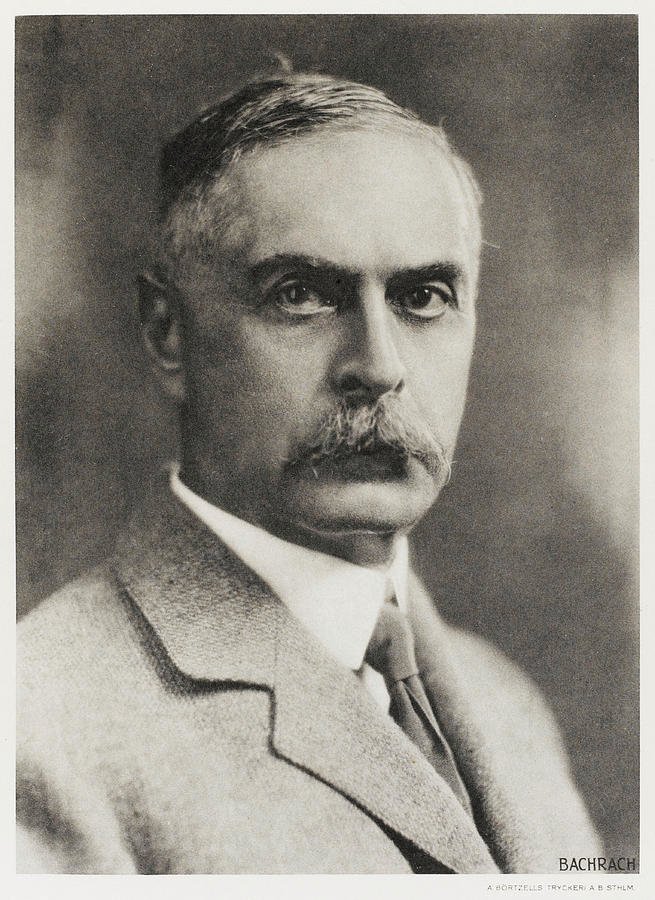
The discovery of blood types was Karl Landsteiner’s finding in 1901 that human blood falls into distinct groups, now called the ABO system, because the red blood cells of some people clump when mixed with the blood serum of others. It explained why many early transfusions failed, made safe transfusion possible and earned him the 1930 Nobel Prize in Physiology or Medicine.
Background
When a person loses a large amount of blood through accident or illness, it must be replaced. Early transfusions from one person to another, however, very often ended in disaster. In 1875 Landois had reported that when humans were given the blood of other animals, the foreign cells clumped and broke up inside the blood vessels, releasing hemoglobin.
At the turn of the 20th century the prevailing belief was that all human blood was essentially the same. When a transfusion failed, doctors blamed technical errors or the frailty of the patient and not any biological incompatibility.
Landsteiner was born in Vienna in 1868 and graduated in medicine from the University of Vienna in 1891. By 1896 he was working in the Hygiene Institute there, and from 1898 to 1908 he was an assistant in the university’s department of pathological anatomy. He was already interested in immunity and in the nature of antibodies.
The discovery
Landsteiner mixed blood samples from different people and watched what happened. Sometimes the red blood cells stuck together, a reaction called agglutination, and the pattern was predictable. He found that the clumping depended on an interaction between the red cells of one person and the serum of another, the liquid part of blood that contains antibodies.
From these observations he proposed in 1901 that human blood could be divided into groups. He identified three: A, B and O. People in group A carry the A antigen on their red cells and anti-B antibodies in their plasma. Group B is the reverse. Group O has neither antigen but has both antibodies.
This explained why some transfusions succeeded and others failed. Giving blood to someone whose plasma contains antibodies against the donor’s red cells triggers clumping and a dangerous reaction. In 1901 to 1903 Landsteiner pointed out that such reactions between humans might cause the shock, jaundice and hemoglobin in the urine that had followed some earlier transfusions. His suggestions, however, received little attention at first.
How it was confirmed
In 1902 Alfred von Decastello, a colleague, and his student Adriano Sturli found a fourth group, AB. People with AB have both A and B antigens and neither antibody, which completed the ABO system as it is known today.
The first successful transfusion based on the system was carried out by the American physician Reuben Ottenberg at Mount Sinai Hospital in New York in 1907. A blood typing test was established in 1910, and organized blood banking followed in the 1930s.
Landsteiner kept working. In 1927 he identified the MN and P systems. In 1940, working with Alexander Wiener, he identified the Rh factor. The researchers injected red blood cells from rhesus monkeys into rabbits, and the rabbits made antibodies. When they tested the rabbit serum on human blood, about 85 percent of samples clumped, which pointed to an unknown antigen. They named it Rh, after the monkey.
The Rh discovery explained hemolytic disease of the fetus and newborn. The disease can occur when an Rh-negative mother carries an Rh-positive baby, because the mother’s immune system can make antibodies against the baby’s red cells.
The Nobel Foundation awarded Landsteiner the 1930 prize “for his discovery of human blood groups.” The prize was not shared, although the AB group had been found by his colleagues.
Impact and legacy
Blood typing is now routine before a transfusion. Safe transfusion relies on matching ABO and Rh groups between donor and recipient. The service run by National Health Service Blood and Transplant in the United Kingdom lists eight main blood types, made up of the four ABO groups, each either Rh positive or Rh negative.
Landsteiner’s later findings gave rise to two familiar labels. Because group O red cells carry neither A nor B antigens, group O is described as a universal donor type, and because AB plasma holds neither antibody, AB is described as a universal recipient type. These labels refer only to the ABO system and do not cover Rh or other factors.
The types are not equally common. Among UK blood donors in February 2026, about 36 percent were O positive, 28 percent A positive, 14 percent O negative, 8 percent A negative, 8 percent B positive, 3 percent B negative, 2 percent AB positive and 1 percent AB negative. Frequencies differ greatly between populations, so these figures describe donors in one country and should not be read as global.
Transfusion also depends on knowing how blood moves around the body, a subject explained in the discovery of blood circulation. Landsteiner’s other work extended beyond blood. In 1908, with Erwin Popper, he showed that poliomyelitis is an infectious disease caused by an agent we now know as a virus, as described in the discovery of viruses. The Cureus review says that this work laid the groundwork for later vaccine development.
FAQs
Who discovered blood types? Karl Landsteiner identified groups A, B and O in 1901. Alfred von Decastello and Adriano Sturli added group AB in 1902.
When was the Rh factor discovered? Landsteiner and Alexander Wiener identified it in 1940 using the red blood cells of rhesus monkeys.
Why do blood types matter for transfusions? A mismatch between a donor’s red cells and a recipient’s antibodies can cause the cells to clump and trigger a serious reaction.
Did Landsteiner win a Nobel Prize? Yes. He won the 1930 Nobel Prize in Physiology or Medicine for his discovery of human blood groups.
Key facts
- Landsteiner proposed in 1901 that human blood has distinct groups, identifying A, B and O.123
- In 1902 Alfred von Decastello and Adriano Sturli found the AB group.3
- Reuben Ottenberg carried out the first successful transfusion using the ABO system at Mount Sinai Hospital in 1907.3
- Landsteiner and Alexander Wiener identified the Rh factor in 1940.3
- Landsteiner won the 1930 Nobel Prize in Physiology or Medicine "for his discovery of human blood groups."1
- NHS Blood and Transplant lists eight main blood types.4
This entry explains a medical term. It is not medical advice. If you are concerned about your health, speak with a qualified health professional.
Related concepts
Quick checkWho discovered blood types?Show answer
Karl Landsteiner identified the A, B and O blood groups in 1901, and Alfred von Decastello and Adriano Sturli added group AB in 1902.
Sources
- Nobel Prize, Karl Landsteiner, Facts, https://www.nobelprize.org/prizes/medicine/1930/landsteiner/facts/
- Nobel Prize, Karl Landsteiner, Biographical, https://www.nobelprize.org/prizes/medicine/1930/landsteiner/biographical/
- Cureus (2024), Karl Landsteiner (1868-1943): A Versatile Blood Scientist, https://pmc.ncbi.nlm.nih.gov/articles/PMC11458791/
- NHS Blood and Transplant, Blood types, https://www.blood.co.uk/why-give-blood/blood-types/
Editorially reviewed by Specialty Digest Editorial TeamLast reviewed November 5, 2026Researched and drafted with AI assistanceReport an issue