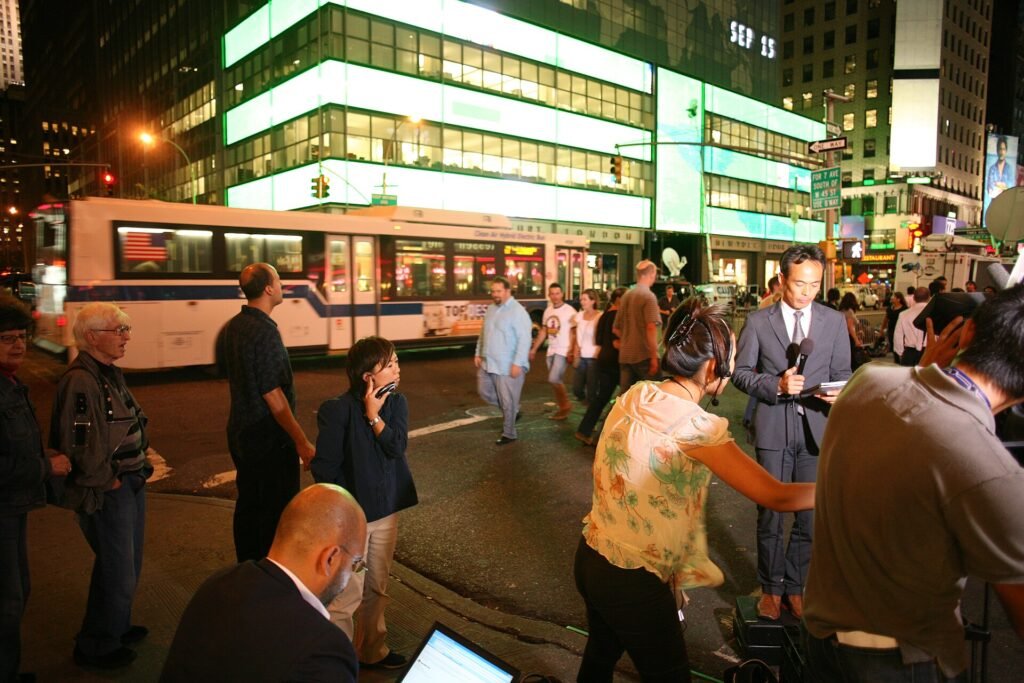
The global financial crisis of 2008 was a severe breakdown in financial markets that began with losses on United States mortgage-related assets and spread to banks and economies around the world. It reached its sharpest point in September 2008, when the investment bank Lehman Brothers failed. The crisis produced the deepest recession in the United States since the Second World War and a worldwide economic slowdown.
Background to the global financial crisis
The crisis followed a long expansion in American housing. According to the Federal Reserve History project, average home prices more than doubled between 1998 and 2006, the sharpest increase in US records. Homeownership rose from 64 percent in 1994 to 69 percent in 2005, and household mortgage debt grew from 61 percent of gross domestic product in 1998 to 97 percent in 2006.
One driver was the growth of high-risk, or subprime, mortgages. Historically, borrowers with weak credit histories or small down payments found it hard to get a mortgage. In the early and mid-2000s, lenders began repackaging such loans into securities that were sold to investors, which widened access to credit and bid up house prices. Investors profited at first because rising prices protected them from losses, and many of the securities were viewed as low risk, partly because they were insured with new financial instruments.
Analysts continue to debate other contributing factors. Some argued that the Federal Reserve held interest rates too low for too long after the 2001 recession, while others, including Federal Reserve Chairman Ben Bernanke, said that this explained only a small part of the housing boom. Large savings accumulated in emerging economies may also have helped hold global interest rates down.
Course of the crisis
House prices peaked in early 2007, and mortgage defaults began to rise. In April 2007 the subprime lender New Century Financial filed for bankruptcy, and many mortgage securities were downgraded to high risk. By August 2007, strains appeared in markets for short-term borrowing as investors became wary of subprime exposure. The National Bureau of Economic Research dates the beginning of the US recession to December 2007.
In the spring of 2008 the investment bank Bear Stearns was acquired by JPMorgan Chase with the assistance of the Federal Reserve. During the summer the government took control of Fannie Mae and Freddie Mac, the two enterprises that had bought and guaranteed large quantities of mortgages. Then, on 15 September 2008, Lehman Brothers filed for bankruptcy, according to the US Department of the Treasury. The next day the Federal Reserve provided support to AIG, a large insurance company, and the stock market fell by 500 points.
Treasury later described the situation as one in which every major financial institution was vulnerable and the credit markets that finance cards, student loans and mortgages had stopped functioning. At that point the United States was losing almost 800,000 jobs a month, and household wealth had fallen by 17 percent. Congress passed the Emergency Economic Stabilization Act, which was signed on 3 October 2008 and authorized the Troubled Asset Relief Program, known as TARP.
The Federal Reserve cut its target for the federal funds rate from 4.5 percent at the end of 2007 to 2 percent in early September 2008, and then to a range of 0 to 0.25 percent by the end of the year. In November 2008 it began large-scale purchases of mortgage-backed securities and Treasury bonds, a policy often called quantitative easing. It also created lending programs to support money market funds, the commercial paper market and other parts of the financial system.
Aftermath and global effects
The crisis was global. The International Monetary Fund reported in January 2009 that asset values had fallen sharply across advanced and emerging economies in late 2008 and that global output and trade had plummeted in the final months of the year. It projected world growth of only 0.5 percent for 2009, the lowest since the Second World War. In April 2009 the IMF projected that the global economy would shrink by 1.3 percent in 2009, which it called the most severe recession since the war. These were projections made during the crisis, and later estimates of actual output differ.
In the United States, gross domestic product fell by 4.3 percent from peak to trough. The recession lasted 18 months and ended in June 2009. The unemployment rate more than doubled, from below 5 percent to 10 percent. House prices fell by more than a fifth between early 2007 and mid-2011. Recovery was slow, with growth averaging about 2 percent in the first four years, and long-term unemployment stayed high.
Significance and legacy of the crisis
The crisis led to major changes in financial regulation. President Barack Obama signed the Dodd-Frank Wall Street Reform and Consumer Protection Act on 21 July 2010. It created the Financial Stability Oversight Council, which can designate nonbank firms for stricter oversight, and the Orderly Liquidation Authority, which allows the Federal Deposit Insurance Corporation to wind down certain failing firms. Banks also had to hold more capital, face limits on short-term funding, and undergo regular stress tests.
The causes remain debated. The Federal Reserve History project notes that scholars and practitioners will disagree for years over the precise causes, and that the Dodd-Frank Act reflects how Congress saw the flaws in 2009 and 2010: weak supervision, bailouts that left taxpayers exposed, and risky consumer lending. Not everyone shares that diagnosis.
The crisis is often compared with the Great Depression and the Wall Street Crash of 1929. Treasury said that the 17 percent fall in household wealth in 2008 was more than five times the decline in 1929, although the Federal Reserve History project calls the Great Depression the longest and deepest downturn of the modern era. Policymakers in 2008 drew on the lessons of the 1930s, and the actions of the central bank and of monetary policy more broadly were far more aggressive than in that earlier period.
Key facts
- Lehman Brothers filed for bankruptcy on 15 September 2008.3
- Average US home prices more than doubled between 1998 and 2006, then fell by over a fifth from early 2007 to mid-2011.1
- The US recession lasted 18 months from December 2007, with GDP falling 4.3 percent and unemployment rising from below 5 percent to 10 percent.1
- Congress enacted the Emergency Economic Stabilization Act, creating TARP, on 3 October 2008.3
- The IMF projected in April 2009 that the global economy would shrink by 1.3 percent that year, the most severe recession since the Second World War.5
- The Dodd-Frank Act was signed on 21 July 2010.4
Related concepts
In the news
Quick checkWhat caused the 2008 financial crisis?Show answer
Rapid growth in US mortgage lending, including subprime loans repackaged into securities, met a fall in house prices that caused heavy losses and strained banks and markets worldwide. Scholars still debate how much each factor contributed.
Sources
- Federal Reserve History, The Great Recession and Its Aftermath, https://www.federalreservehistory.org/essays/great-recession-and-its-aftermath
- Federal Reserve History, Subprime Mortgage Crisis, https://www.federalreservehistory.org/essays/subprime-mortgage-crisis
- US Department of the Treasury, About TARP, https://home.treasury.gov/data/troubled-assets-relief-program/about-tarp
- Federal Reserve History, Dodd-Frank Wall Street Reform and Consumer Protection Act of 2010, https://www.federalreservehistory.org/essays/dodd-frank-act
- International Monetary Fund, IMF Survey: Global Economy Contracts, With Slow Recovery Next Year (22 April 2009), https://www.imf.org/external/pubs/ft/survey/so/2009/res042209a.htm
- International Monetary Fund, World Economic Outlook Update, January 2009, https://www.imf.org/external/pubs/ft/weo/2009/update/01/index.htm
Editorially reviewed by Specialty Digest Editorial TeamLast reviewed November 4, 2026Researched and drafted with AI assistanceReport an issue