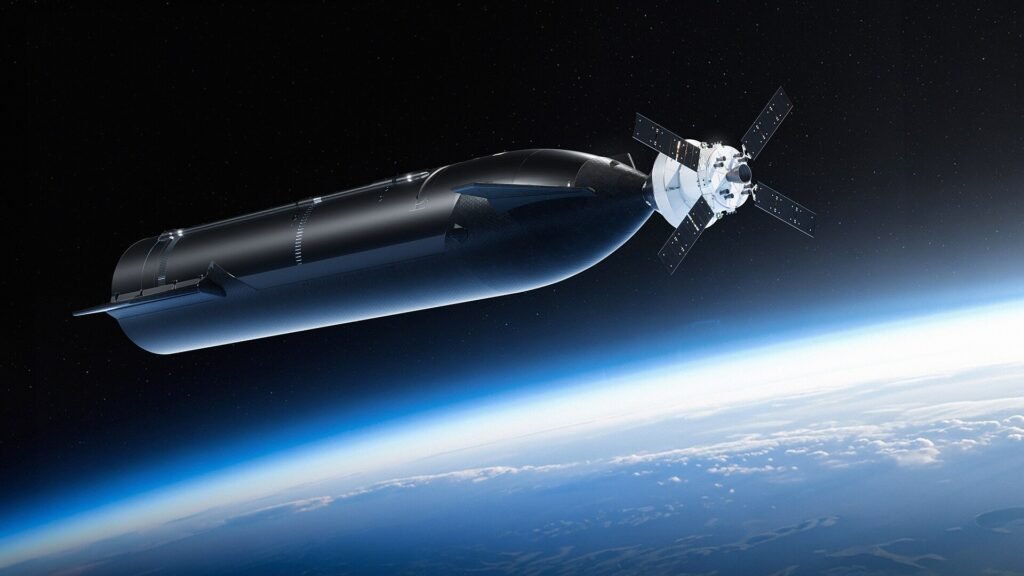
NASA has laid out how Artemis III will work: a 14-day crewed mission in low Earth orbit in 2027 that tests lunar lander systems before a planned crewed landing in 2028. This article summarizes NASA’s description of the mission, its four-person crew and the two commercial lander test articles, and it separates what is planned from what has happened.
What is Artemis III now?
According to NASA, Artemis III will launch in 2027 from Kennedy Space Center in Florida on the Space Launch System rocket with the Orion spacecraft. The mission is planned to last 14 days and stay in low Earth orbit. NASA says its purpose is to test lunar lander systems ahead of a crewed landing near the Moon’s South Pole in 2028. Jeremy Parsons, NASA’s Artemis program manager, said: “Every lesson we learn here gets us closer to landing on the Moon in 2028.” NASA also says this is the first time it has attempted a mission with three spacecraft on three rockets.
Who is on the crew?
NASA names four crew members: Randy Bresnik, Frank Rubio and Andre Douglas of NASA, and Luca Parmitano of the European Space Agency. The agency’s plan does not send them to the Moon on this flight. They stay in Earth orbit while they evaluate the hardware.
How will the Blue Origin test article be used?
The first spacecraft in the sequence is a Blue Moon Mark 2 test article from Blue Origin. NASA says it launches into a circular low Earth orbit about 273 miles (237 nautical miles) up and can remain there for up to 30 days. Orion launches days later, once the lander test article is confirmed healthy.
NASA describes the Orion phases this way:
- Orion first enters an elliptical orbit of 18 by 1,122 miles (16 by 975 nautical miles)
- It then circularizes at about 345 miles (300 nautical miles) for thermal stabilization
- The crew spends about two days in this first phase
- Orion then docks with the lander test article
- The crew spends about two days evaluating the lander’s cabin, controls and life support
What about the SpaceX test article?
A Starship Version 3 test article launches from Florida later in the mission. NASA says it enters a lower orbit, at 206 nautical miles, and carries an added docking system at its forward end. The docking test lasts up to two hours. The crew does not enter Starship. The agency’s description makes the two lander tests different: the crew evaluates the Blue Moon cabin from inside, while the Starship test is limited to the docking itself.
How does the mission end?
After docking tests, NASA says Orion can stay in orbit up to five additional days for further tests and science. Splashdown is planned in the Pacific Ocean off California, with recovery by NASA and the U.S. Navy.
How to read the numbers
By our own arithmetic, the two stated crew phases with the Blue Moon article add up to about four days, which leaves roughly ten days of the 14-day plan that NASA’s description does not break down in the pages we used. The plan also allows up to five extra days in orbit, which suggests some schedule flexibility, though NASA does not describe it that way. The nautical mile and statute mile figures are NASA’s own pairs, and 237 nautical miles equals about 273 miles. Everything here is a plan for 2027 and could change.
What can change?
Every item in the mission description is a plan. Schedules for new spacecraft often shift as hardware is tested, and the order of launches depends on each vehicle being confirmed healthy. NASA itself says Orion launches only after the Blue Moon test article is confirmed healthy, which shows how one launch depends on another. Readers should treat 2027 and 2028 as targets and check NASA for updates.
Why test in Earth orbit?
NASA’s description frames the flight as a rehearsal. A general point about spaceflight helps explain why: testing docking, life support and controls close to Earth lets teams fix problems before a crew travels far from home. That is a general explanation and is not a quotation from NASA. It also means Artemis III is a test of lander systems, not a lunar landing, so readers should not confuse it with the landing planned for 2028.
How does it connect to earlier coverage?
Our article on Artemis II covers the first crewed Moon flyby of the program, and the same program includes the lander tests described here. For the human history behind lunar exploration, our entry on the Apollo 11 moon landing gives the background. Other long-range spacecraft are covered in our articles on the Lucy mission and ESA’s Hera mission, which show how mission schedules depend on carefully timed maneuvers.
Related reading: Starliner Update: NASA and Boeing Plan an Uncrewed Flight and Crew Return by 2028.
Glossary
- Low Earth orbit: an orbit a few hundred miles above Earth
- Test article: a vehicle built to test systems, not to complete the final mission
- Docking: joining two spacecraft in space
- Circularize: change an elliptical orbit into a circular one
- Splashdown: a landing in the ocean
These definitions are general explanations and are not quoted from NASA.
What is not covered here?
The NASA page we used does not give the exact launch date, the cost or the details of the 2028 landing plan beyond the South Pole target. We have not supplied those from memory. Readers should check NASA’s Artemis pages for updates.
Key facts at a glance
- Launch: 2027, Kennedy Space Center, on SLS with Orion
- Duration: 14 days in low Earth orbit
- Crew: Bresnik, Rubio, Douglas and Parmitano
- Lander tests: Blue Moon Mark 2 and Starship Version 3 test articles
- Landing target: near the Moon’s South Pole in 2028
Frequently asked questions
Will Artemis III land on the Moon?
No. NASA says it stays in low Earth orbit and tests lander systems.
Will the crew enter Starship?
No. NASA says the crew does not enter Starship.
Where does it land?
Orion splashes down in the Pacific Ocean off California.
More in Science