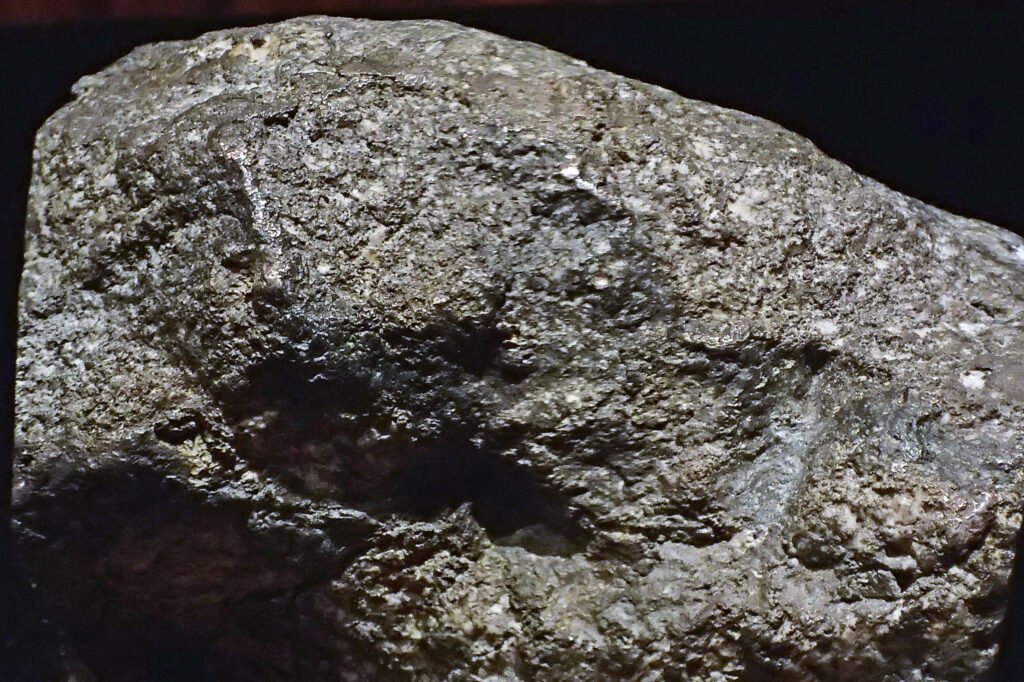
Silver is the chemical element with atomic number 47 and the symbol Ag. It is a soft, shiny transition metal in group 11 of the periodic table that people have mined since ancient times. Silver is the best reflector of visible light known, and it is used in jewelry, mirrors, electrical contacts, solder and photography.
History of silver
Silver has no single discoverer. It was known in antiquity, and PubChem lists its discovery date simply as ancient. The Royal Society of Chemistry reports that slag heaps near ancient mine workings in Turkey and Greece prove that silver mining started around 3000 BC.
The early metalworkers also found a way to purify the metal. The process is called cupellation, and it was invented by the Chaldeans, who lived in what is now southern Iraq. It consisted of heating the molten metal in a shallow cup over which a strong draft of air blew. The air oxidized the other metals, such as lead and copper, and left only the silver unaffected.
Silver also shaped the economies of early states. The rise of Athens was made possible partly by the exploitation of local silver mines at Laurium, which operated from 600 BC through the Roman era. In medieval times, German mines became the main source of silver in Europe. The ancient civilizations of Central and South America mined it as well, with rich deposits in Peru, Bolivia and Mexico.
Properties of silver
NIST gives the standard atomic weight of silver as 107.8682. The electron configuration is [Kr] 4d10 5s1, with a single outer electron, and the common oxidation state listed by PubChem is plus 1. Silver is a solid at 20 degrees Celsius. It melts at 961.78 degrees Celsius, boils at 2162 degrees Celsius and has a density of 10.5 grams per cubic centimeter, which makes it a dense metal.
Silver is relatively soft and shiny. It tarnishes slowly in air, as sulfur compounds react with the surface and form a black layer of silver sulfide. Tarnish is the thin discolored film that builds up on a metal surface, and in silver it dulls the reflective finish that makes the metal so valuable for mirrors and tableware.
PubChem lists an electronegativity of 1.93, a first ionization energy of 7.576 electronvolts and an electron affinity of 1.302 electronvolts. PubChem gives an atomic radius of 172 picometers, which is 1.72 angstroms. The metal is also known for its antibacterial properties, and the Royal Society of Chemistry notes that it can kill lower organisms quite effectively.
Occurrence and production of silver
Silver occurs uncombined in nature, and it is also found in ores such as argentite and chlorargyrite, which is also called horn silver. Most of the world’s silver is extracted as a by-product of mining for other metals, namely lead and zinc, copper, gold, and copper and nickel. The metal is recovered either from the ore itself or during the electrolytic refining of copper. Because silver is mostly a by-product, its supply depends partly on how much of those other metals is mined, and not on demand for silver alone.
The Royal Society of Chemistry puts world production at about 20,000 tonnes per year. Annual totals change from year to year with mining and recycling, so that figure is best read as an order of magnitude and not as a current statistic.
Uses of silver
Sterling silver contains 92.5 percent silver, and the rest is copper or some other metal. This alloy, which is a mixture of metals, is harder than pure silver and is used for jewelry and silver tableware, where appearance is important. Silver is used to make mirrors because it is the best reflector of visible light known, although it does tarnish with time.
The metal is also used in dental alloys, solder and brazing alloys, electrical contacts and batteries, and silver paints are used to make printed circuits. Its antibacterial properties have led to silver nanoparticles, which are particles only a few billionths of a meter across, being used in clothing to stop bacteria from digesting sweat and producing unpleasant odors. Silver threads are woven into the fingertips of some gloves so that they work with touchscreen phones.
Silver compounds were central to the early history of photography. Silver bromide and silver iodide are sensitive to light, which made them the basis of photographic film. Even with the rise of digital photography, silver salts remain important for producing high-quality images and for protecting against illegal copying. Light-sensitive glass such as photochromic lenses works on similar principles, darkening in bright sunlight and becoming transparent in low light.
Isotopes of silver
Isotopes are atoms of the same element with different numbers of neutrons. NIST lists two naturally occurring isotopes of silver. Silver-107 accounts for 51.839 percent of natural silver and silver-109 for 48.161 percent, so the two are nearly equal in abundance. NIST reports both values with an uncertainty of 8 in the last digit, so the proportions are known very precisely. The Royal Society of Chemistry lists silver-107 as the key isotope.
Health and environmental effects of silver
The Royal Society of Chemistry states that silver has no known biological role. Chronic ingestion or inhalation of silver compounds can lead to a condition known as argyria, which results in a grayish pigmentation of the skin and mucous membranes. Argyria is a change in color and not an infection, and it is a recognized result of long exposure to silver compounds.
Because silver can kill lower organisms, its antibacterial behavior is also the reason it is used in clothing. This overview is general background and not advice.
Key facts
- Array
Related concepts
In the news
- BusinessPotash in 2025: USGS Shows Canada Makes 31 Percent as U.S. Imports 92 Percent
- BusinessLead in 2025: USGS Shows China Mines 42 Percent as U.S. Import Reliance Rises
- BusinessZinc in 2025: USGS Shows China Mines 32 Percent as U.S. Output Falls 12 Percent
- BusinessManganese in 2025: USGS Shows South Africa Mines 38 Percent and the U.S. Imports All It Uses
- BusinessGold in 2025: USGS Reports a Record $3,300 Average Price and 3,300 Tons Mined
Quick checkWhat is sterling silver?Show answer
Sterling silver is an alloy that contains 92.5 percent silver, with the rest made up of copper or another metal. It is used for jewelry and tableware.
Sources
- Array
Editorially reviewed by Specialty Digest Editorial TeamLast reviewed November 4, 2026Researched and drafted with AI assistanceReport an issue