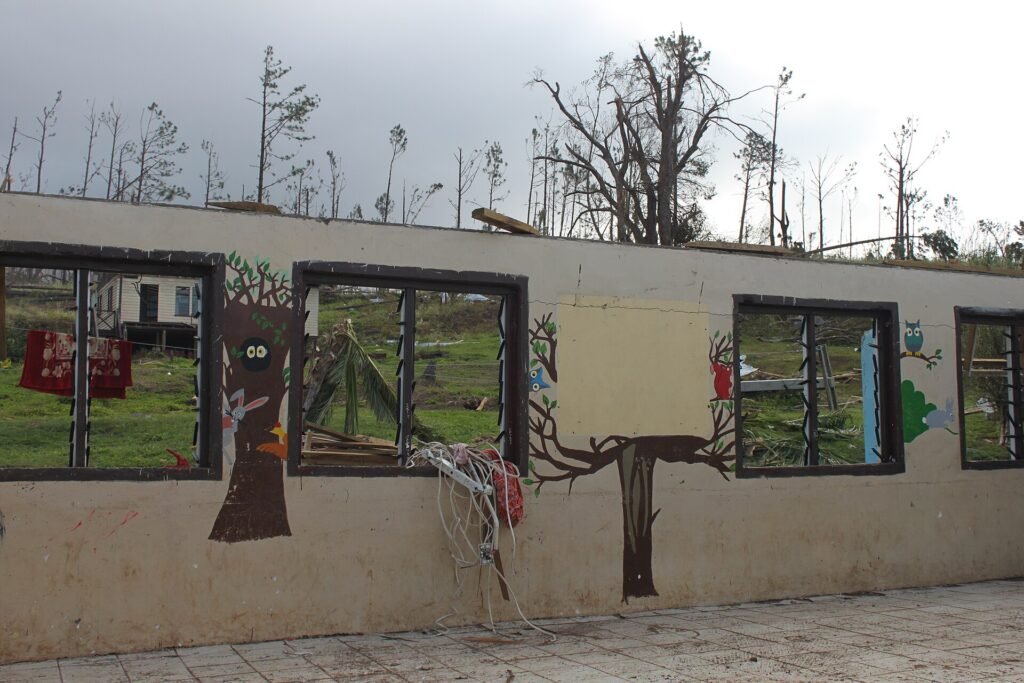
UNICEF, the United Nations Children’s Fund, is the United Nations agency that works to protect the rights of every child, especially the most disadvantaged and those hardest to reach. It was established in 1946 in the aftermath of the Second World War and now operates in more than 190 countries and territories.
History of UNICEF
The United Nations International Children’s Emergency Fund was created by the new United Nations in 1946. Its first mandate was to help children and young people whose lives and futures were at risk, no matter what role their country had played in the war. UNICEF says that mandate has never wavered.
At the start, the fund concentrated on supplying food, clothes and medicine to children and mothers in war-torn Europe, China and Palestine. From the early 1950s it set longer-term goals aimed at developing countries. It launched measures for mothers and infants, gave advice on nutrition, distributed vitamin-rich food and fought disease. It built thousands of health stations and started projects to keep children and adolescents in school.
The work gained a stronger footing when the UN adopted a Declaration of the Rights of the Child in 1959. In 1965 UNICEF received the Nobel Peace Prize; the Norwegian Nobel Committee cited its efforts to enhance solidarity between nations and reduce the difference between rich and poor states. The agency’s Executive Director, Henry R. Labouisse, accepted the medal in Norway on 10 December 1965.
In 1989 UNICEF helped bring about the Convention on the Rights of the Child, which it describes as the most widely ratified human rights treaty in history. By its own account it became in later decades the leading voice on child survival and development. It marked 80 years of work in 2026.
Mission and mandate
UNICEF describes itself as impartial, non-political and neutral, focused on reaching every child in need, regardless of who they are or where they live. Its work rests on children’s rights as set out in the Convention on the Rights of the Child and is linked to the Sustainable Development Goals.
The agency says it protects children’s rights and safeguards their futures. The idea that connects its programs is a child’s right to survive, thrive and reach their potential.
What UNICEF does
UNICEF lists several areas of work. It provides and advocates for education, health and nutrition services. It protects children from violence and abuse, brings clean water and sanitation to people who lack them, and works to keep children safe from climate change and disease.
Two features set its operations apart. It is the world’s largest provider of vaccines, and it runs the world’s largest humanitarian warehouse, supported by a logistics network that moves supplies before, during and after emergencies. Because supplies are central to its work, it keeps a dedicated Supply Division.
UNICEF also produces research that shapes public debate. Its flagship report, The State of the World’s Children, is described as the most comprehensive analysis of global trends affecting children. Its annual report gives a yearly account of results.
UNICEF through the decades
UNICEF organizes its own history into four periods. From 1946 to 1979 it emerged from the ashes of war as the agency for children. From 1980 to 1988 it gave new weight to data and research in efforts for child survival and development.
Between 1989 and 2005 it brought nations together under the banner of children’s rights, the period of the Convention on the Rights of the Child. From 2006 to 2020 it became, in its own words, the primary voice for child survival and development.
The same history also records how its public image changed: its logo evolved over the years from a child drinking milk to a parent lifting up a child.
Structure and workforce
UNICEF has a headquarters in New York, where its archives are kept, and works in more than 190 countries and territories. A staff of over 17,000 people works worldwide, alongside partners. It has an Executive Board, and its history pages list former executive directors and board chairs, including Henry R. Labouisse, who led the agency when it won the Nobel Prize.
It is also known for goodwill ambassadors, public figures who lend visibility to its causes. The actor Audrey Hepburn, photographed vaccinating a child against polio in Bangladesh in 1989, is among the best known.
The UNICEF Archives, kept at the New York headquarters, hold material documenting its global field operations from the founding in 1946 to the present, from landmark policy documents and reports to posters and greeting cards. Its historical publications, including annual reports and editions of The State of the World’s Children, also remain available as a record of how thinking about child welfare has changed.
Funding and accountability
UNICEF says its work is funded entirely through voluntary contributions and that it shares openly where its resources come from and where they go. This model keeps it independent of any single government mandate, although it also means that the scale of its programs depends on donors each year.
The agency states that all personnel have a duty to safeguard the communities its work reaches, so that no one is harmed by a program it supports or by a person affiliated with it. It says it conducts independent investigations to hold anyone who violates its ethics, rules or regulations to account, and it publishes information on safeguarding, audit and investigation, and transparency.
Legacy and impact
UNICEF began as a temporary emergency fund and became a permanent part of the UN system, with a mandate that spans emergencies and long-term development. The Nobel Committee in 1965 saw its work as a breakthrough for the idea of solidarity between nations, one that also reduced the danger of war.
Through the Convention on the Rights of the Child, the agency helped shape how governments treat children in law. Its supply and vaccine operations remain among the largest of any humanitarian organization.
More in Child and Family Welfare
Key facts
- UNICEF was established in 1946 in the aftermath of World War II.1
- It won the Nobel Peace Prize in 1965.3
- UNICEF works in more than 190 countries and territories with a staff of over 17,000.2
- It is the world's largest provider of vaccines and runs the world's largest humanitarian warehouse.2
- Its work is funded entirely through voluntary contributions.2
Related concepts
In the news
Quick checkWhen was UNICEF founded and why?Show answer
The United Nations created UNICEF in 1946 after World War II to help children whose lives and futures were at risk, regardless of the role their country had played in the war.
Sources
- UNICEF, UNICEF history, https://www.unicef.org/history
- UNICEF, Who we are, https://www.unicef.org/about-us
- NobelPrize.org, UNICEF: Facts, Nobel Peace Prize 1965, https://www.nobelprize.org/prizes/peace/1965/unicef/facts/
Editorially reviewed by Specialty Digest Editorial TeamLast reviewed November 4, 2026Researched and drafted with AI assistanceReport an issue