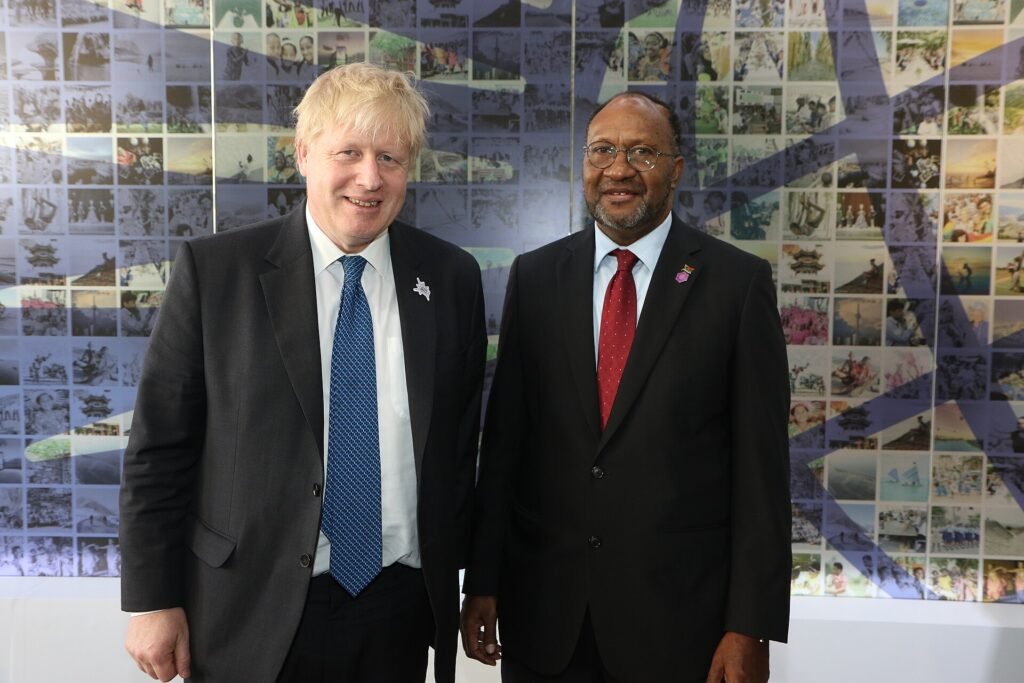
In simple terms BRICS is a grouping of major emerging economies that meet to coordinate on trade, finance, security and development. The name began as an investment label. Goldman Sachs coined BRIC in 2001 for Brazil, Russia, India and China. The countries themselves later turned the label into a working forum. How it works South
BRICS Read More »
BRICS is a grouping of major emerging economies, founded by Brazil, Russia, India, China and South Africa and expanded to eleven members.
Bureaucracy is a system of organization in which trained, non-elected officials carry out the laws and policies set by elected leaders or an institution’s governing body, following fixed rules, a clear chain of command, and a defined division of labor. The term originally described government administration, but it now applies just as readily to large
Bureaucracy Read More »
A system of organization run by trained, non-elected officials following fixed rules and a defined hierarchy.
Civil law, within common law legal systems such as those of the United States and the United Kingdom, is the branch of law that governs disputes between private parties, individuals, businesses, or organizations, over their rights and obligations toward one another. It stands apart from criminal law, which addresses offenses against the state and society
Civil Law Read More »
The branch of law governing disputes between private parties over their rights and obligations, distinct from criminal law.
In simple terms A coalition government is a government formed jointly by more than one political party. No single party runs it alone. Coalitions usually appear when an election gives no party a clear working majority, so parties that agree on enough to govern together join forces. How it works The trigger is arithmetic. The
Coalition government Read More »
A coalition government is a government formed jointly by two or more political parties, usually when no party won a working majority.
Common law is a legal system built primarily from the accumulated decisions judges make in deciding individual court cases, rather than from a comprehensive legal code written in advance by a legislature. It forms the foundation of the legal systems in the United States, England and Wales, India, Canada outside Quebec, and many other countries
Common Law Read More »
A legal system built primarily from judicial precedent rather than comprehensive legislative codes, originating in medieval England.
The Commonwealth of Nations, usually called the Commonwealth, is a voluntary association of 56 independent countries across Africa, Asia, the Americas, Europe and the Pacific. It has its roots in the British Empire, and its modern form dates from the London Declaration of April 1949. About 2.7 billion people live in Commonwealth countries, and its
Commonwealth of Nations Read More »
The Commonwealth of Nations is a voluntary association of 56 independent countries, rooted in the British Empire and modernized by the 1949 London Declaration.
The Constitution of Alabama is the fundamental law of the state of Alabama. Alabama has had seven constitutions, those of 1819, 1861, 1865, 1868, 1875 and 1901 followed by the current document, adopted on November 28, 2022, which recompiled the 1901 constitution into a reorganized text. At an estimated 369,380 words, it is described as
Constitution of Alabama Read More »
The Constitution of Alabama is the state’s governing document; the current version was adopted on November 28, 2022, as a recompilation of the 1901 constitution.
Constitutional law is the body of law concerned with interpreting and applying a country’s constitution, the foundational document that establishes how a government is structured, how power is divided among its branches, and what rights it guarantees to individuals. It sits above ordinary legislation in most legal systems, meaning that an ordinary law conflicting with
Constitutional Law Read More »
The body of law concerned with interpreting a country's constitution, including government structure, separation of powers, and individual rights.
Contract law is the body of law that governs agreements between parties, defining what makes a promise legally enforceable and what remedies are available when one side fails to keep its end of the bargain. A contract, in its simplest definition, is an agreement that creates obligations the law can enforce, transforming an ordinary promise
Contract Law Read More »
The body of law governing enforceable agreements between parties, including their formation, performance, and remedies for breach.
Criminal law is the body of law that defines offenses against the public and the state, establishes criminal procedure, and prescribes the punishments that may follow a conviction. Unlike civil law, which resolves private disputes between individuals, criminal law treats certain harmful conduct as an offense against society as a whole, prosecuted by the state
Criminal Law Read More »
The body of law that defines offenses against the state, establishes criminal procedure, and prescribes punishment for violations.