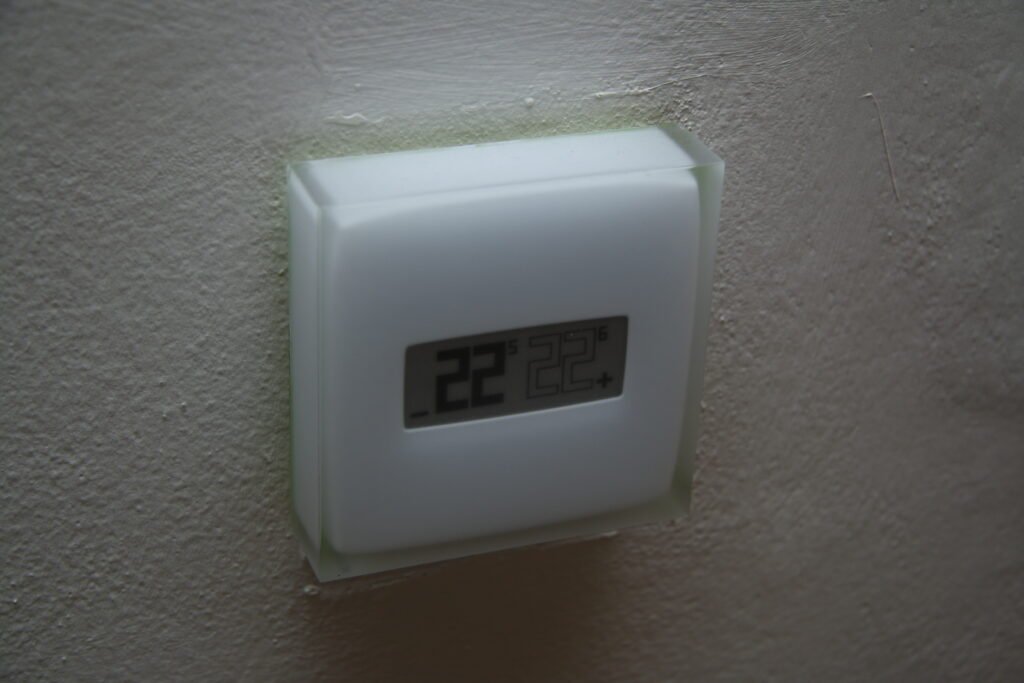
The Internet of Things (IoT) is the network of physical objects that carry sensors, software and network connections so they can collect data and exchange it with other devices and systems. The U.S. National Institute of Standards and Technology (NIST) says an IoT device has at least one transducer, which is a sensor or an actuator, for interacting directly with the physical world, and at least one network interface for connecting to the digital world. Examples include smart thermostats, fitness trackers, connected appliances, factory machines and medical monitors.
History of the Internet of Things
Kevin Ashton, later the cofounder and executive director of the Auto-ID Center, wrote in 2009 that the phrase Internet of Things probably began as the title of a presentation he gave at Procter & Gamble in 1999. The talk linked the new idea of RFID in the company’s supply chain to the then-hot topic of the internet. His argument was that computers depend almost entirely on people to enter data, so they know more about ideas than about things, and that RFID and sensors would let computers observe the world directly.
The idea spread slowly at first. The International Telecommunication Union approved Recommendation Y.2060, “Overview of the Internet of things,” on 15 June 2012, and renumbered it Y.4000 in 2016 without changing the text. An EBSCO overview says the IoT became a real factor in the early 2010s, as broadband became widely available, hardware and software grew cheaper and smartphones and wearables spread.
A 2017 U.S. Department of Commerce task force green paper described the IoT as an umbrella term for the development in which a greatly increasing number of devices are connected to each other and to the internet. The U.S. Congress adopted NIST’s definition of an IoT device in the IoT Cybersecurity Improvement Act of 2020, Public Law 116-207. NIST adds that this definition has found wide general acceptance.
How the Internet of Things works
An IoT system starts with devices that sense or act on the physical world. A sensor measures something, such as temperature, motion or location, and an actuator does something, such as turning a valve or locking a door. Each device then needs a way to communicate. NIST lists Ethernet, Wi-Fi, Bluetooth, Long-Term Evolution (LTE), Zigbee and ultra-wideband as examples of network interfaces.
Some devices work on their own, but many depend on other devices or services, such as a local hub or a cloud service, for some functions. The data they send is stored and analyzed, and the results can trigger actions, from sending a phone alert to reordering supplies. In NIST’s research definition, an IoT system must be composed of networked IoT components and must interact with a physical entity of interest through one or more sensors or actuators. NIST stresses that this ability to interact directly with the physical world is what separates an IoT system from conventional information technology.
Types of IoT applications
The IoT is often divided into consumer, industrial and sector-specific uses. Consumer devices include home security systems, appliances, vehicles and wearable fitness trackers. Industrial uses cover machines, supply chains and infrastructure. NIST notes that definitions of the IoT and of cyber-physical systems, which combine digital, analog, physical and human parts, are converging over time.
Applications of the Internet of Things
EBSCO identifies manufacturing, health and transportation as the fields most affected. A factory can reorder supplies automatically when stock runs low, and machines can signal when they need repair, a practice called predictive maintenance that can increase production time and lower costs. In health care, wearables track exercise and some devices monitor patients, including hospital beds that sense signs of distress and sensors that communicate with pacemakers. In transportation, examples include automated toll collection and the continuous data exchange that autonomous vehicles rely on.
In the home, an owner can change a thermostat by smartphone, and older adults can use connected fall sensors and hearing aids. EBSCO notes that connected devices have been tailored to older adults and people with disabilities, including hearing aids, fall sensors, and monitors for seizures or strokes. A smart heart monitor, for example, might identify an emergency, call an ambulance and notify the nearest hospital and the patient’s doctor.
Advantages and disadvantages of the Internet of Things
The benefits are efficiency and visibility. Connected devices reduce the time people spend collecting and analyzing data, and they can improve safety, lower energy use and cut waste. Many observers expect considerable economic value from these gains. In manufacturing, EBSCO adds, connected equipment may also improve workers’ safety and productivity.
The risks come from scale and security. EBSCO cites an estimated 16 billion connected devices in 2023, each a possible entry point for a data breach or unauthorized access. NIST’s cybersecurity program concentrates on products rather than components, because customers buy a whole product and expect it to be secure, particularly in the consumer market. Privacy is another concern, because sensors in homes, cars and bodies can collect sensitive personal data.
The Internet of Things vs. the traditional internet
The traditional internet carries information that people created, typed, photographed or scanned. Ashton estimated in 2009 that nearly all of the roughly 50 petabytes of data then online had been captured by humans, who have limited time, attention and accuracy. The IoT instead lets objects capture their own data, so the digital record reflects the physical world more directly. In practice the two are connected: IoT devices use the internet to send their data, and the systems that analyze it run on the same networks as the rest of the web.
More in Networks & Telecommunications
Key facts
- NIST defines an IoT device as having at least one sensor or actuator and at least one network interface.1
- Kevin Ashton says the phrase Internet of Things probably began as the title of a 1999 Procter & Gamble presentation.3
- ITU-T Recommendation Y.2060, Overview of the Internet of things, was approved on 15 June 2012.2
- The IoT Cybersecurity Improvement Act of 2020 adopted NIST's definition of an IoT device.1
- EBSCO cites an estimated 16 billion connected devices in 2023.4
Related concepts
In the news
Quick checkWho coined the term Internet of Things?Show answer
Kevin Ashton says the phrase probably started as the title of a presentation he gave at Procter & Gamble in 1999, linking RFID in the supply chain to the internet.
Sources
- 1. NIST, Cybersecurity for IoT Program, Frequently Asked Questions, https://nist.gov/itl/applied-cybersecurity/nist-cybersecurity-iot-program/faqs
- 2. ITU-T, Recommendation Y.2060, Overview of the Internet of things, https://www.itu.int/rec/T-REC-Y.2060-201206-I
- 3. Kevin Ashton, That Internet of Things Thing, RFID Journal, June 22, 2009, https://www.rfidjournal.com/expert-views/that-internet-of-things-thing/73881/
- 4. EBSCO Research Starters, Internet of Things, https://www.ebsco.com/research-starters/computer-science/internet-things
Editorially reviewed by Specialty Digest Editorial TeamLast reviewed November 4, 2026Researched and drafted with AI assistanceReport an issue