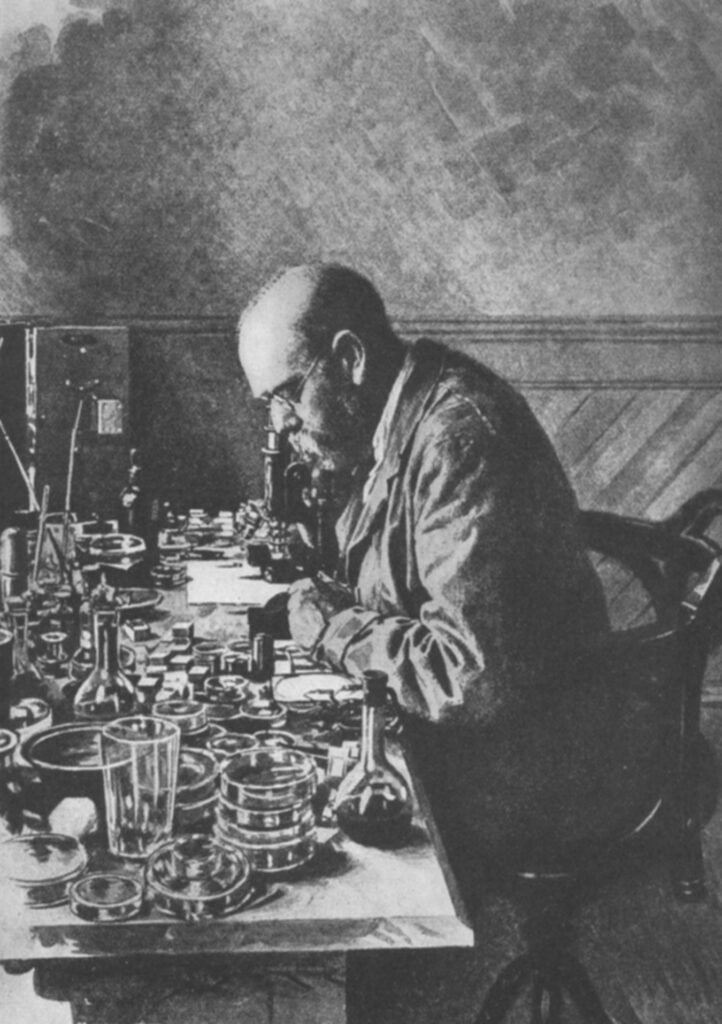
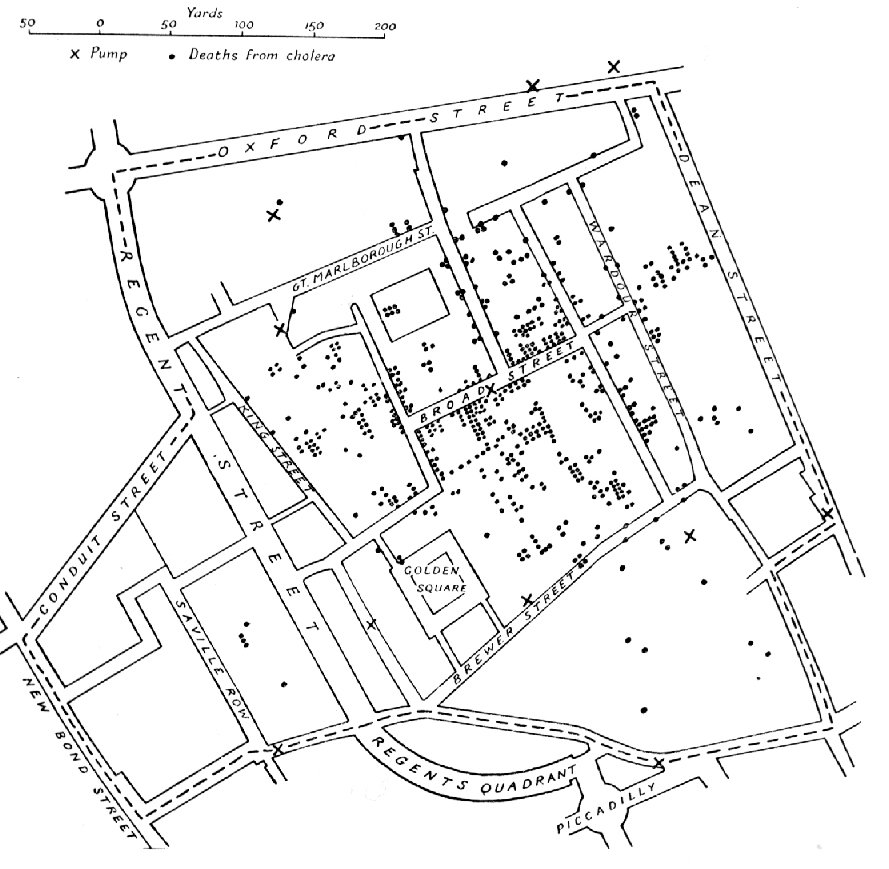
The discovery of germ theory was the 19th-century recognition that specific microorganisms cause specific infectious diseases. It grew from the work of Ignaz Semmelweis, John Snow, Louis Pasteur and Robert Koch, and it replaced the older belief that disease arose from bad air. Background For most of history the dominant explanation was miasma theory, the
Discovery of germ theory Read More »
The 19th-century finding that specific microbes cause infectious disease, built on the work of Semmelweis, Snow, Pasteur and Koch.
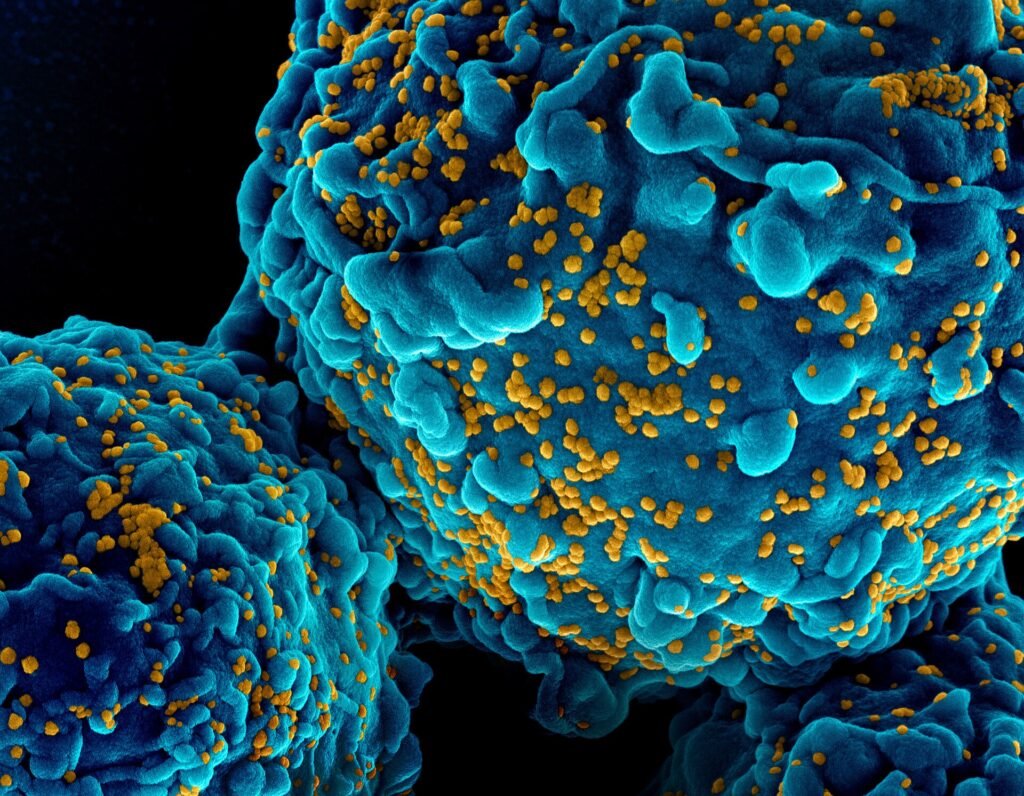
The discovery of HIV was the 1983 identification of the human immunodeficiency virus, the retrovirus that causes AIDS, by Françoise Barré-Sinoussi, Luc Montagnier and colleagues at the Pasteur Institute in Paris. It followed the first reports of the new immune deficiency syndrome in 1981 and was recognized with the 2008 Nobel Prize in Physiology or
Discovery of HIV Read More »
The 1983 identification of the human immunodeficiency virus, the cause of AIDS, by Barré-Sinoussi, Montagnier and colleagues at the Pasteur Institute.
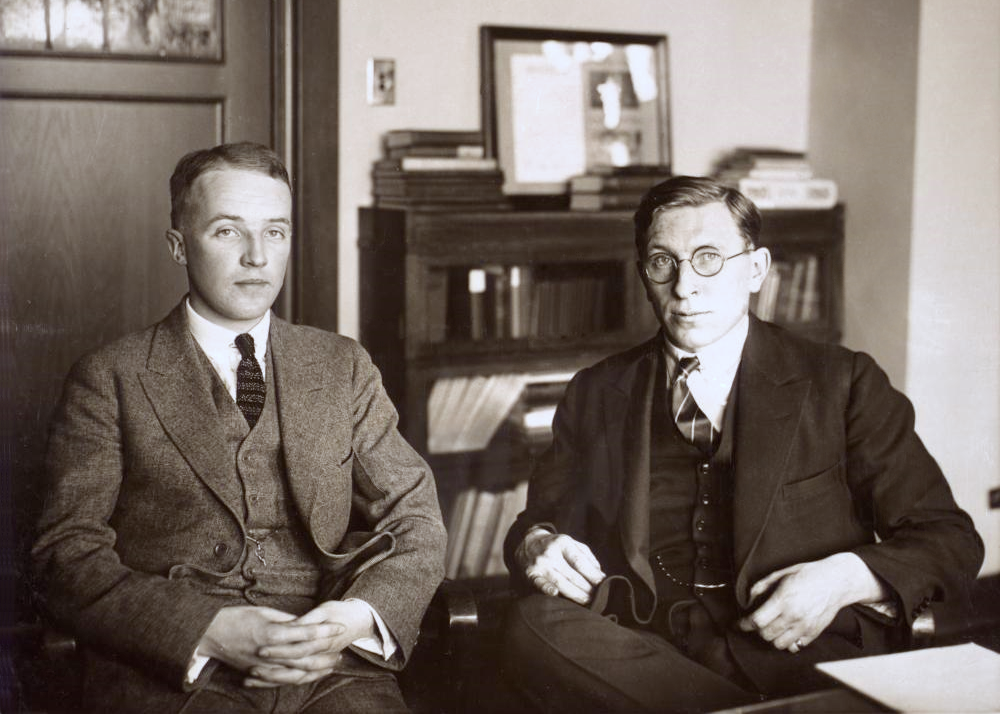
The discovery of insulin was the work done at the University of Toronto in 1921 and 1922 by Frederick Banting, Charles Best, John Macleod and James Collip. It produced a pancreatic extract that lowered blood sugar first in diabetic dogs and then in a human patient. The result turned type 1 diabetes from a fatal
Discovery of insulin Read More »
The 1921 to 1922 Toronto research by Banting, Best, Macleod and Collip that isolated insulin and first treated a diabetic patient.
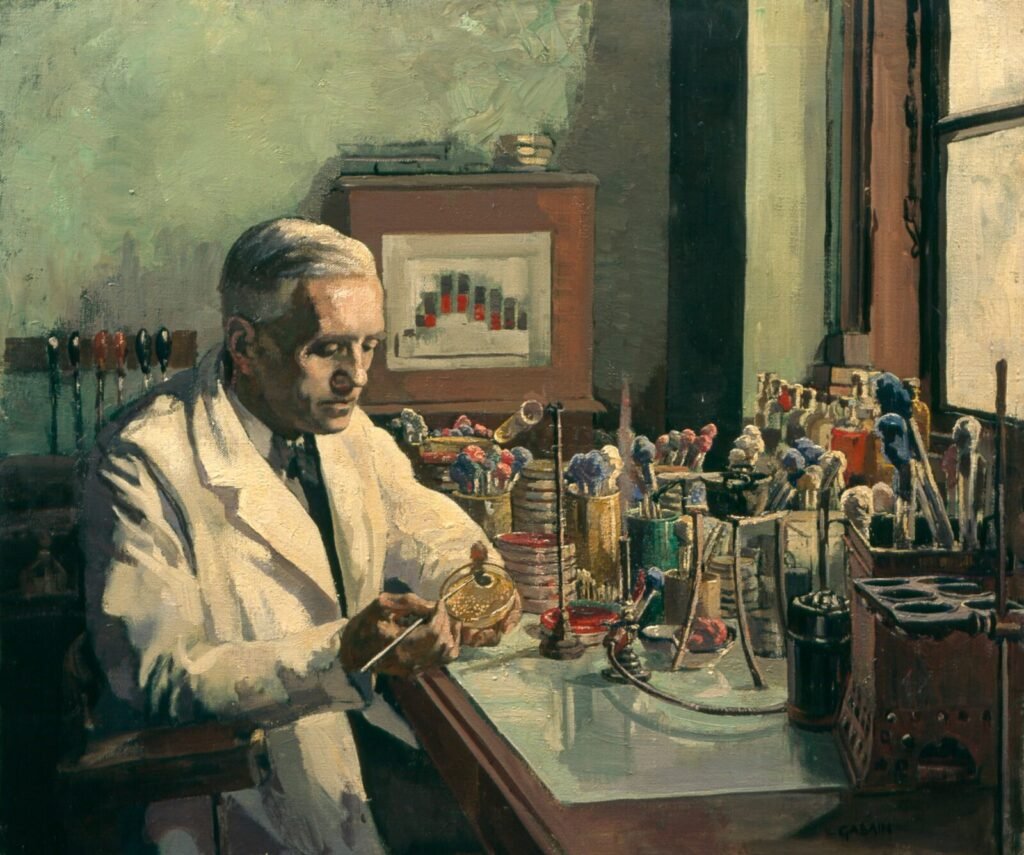
The discovery of penicillin began in 1928, when the Scottish bacteriologist Alexander Fleming noticed that a mold contaminating one of his staphylococcus cultures at St. Mary’s Hospital in London had killed the bacteria around it. The mold was Penicillium notatum, and the substance it released was named penicillin. It became a usable medicine only after
Discovery of penicillin Read More »
The discovery of penicillin was Alexander Fleming's 1928 finding that a mold kills bacteria, developed into the first widely used antibiotic by Florey and Chain.
The discovery of prions was the 1982 finding by Stanley Prusiner and his colleagues that a protein, with no detectable genetic material of its own, can act as an infectious agent that causes fatal brain diseases in animals and humans. He named the protein a prion, short for proteinaceous infectious particle, and received the 1997
Discovery of prions Read More »
The 1982 finding by Stanley Prusiner that a misfolded protein with no nucleic acid can be an infectious agent causing fatal brain disease.
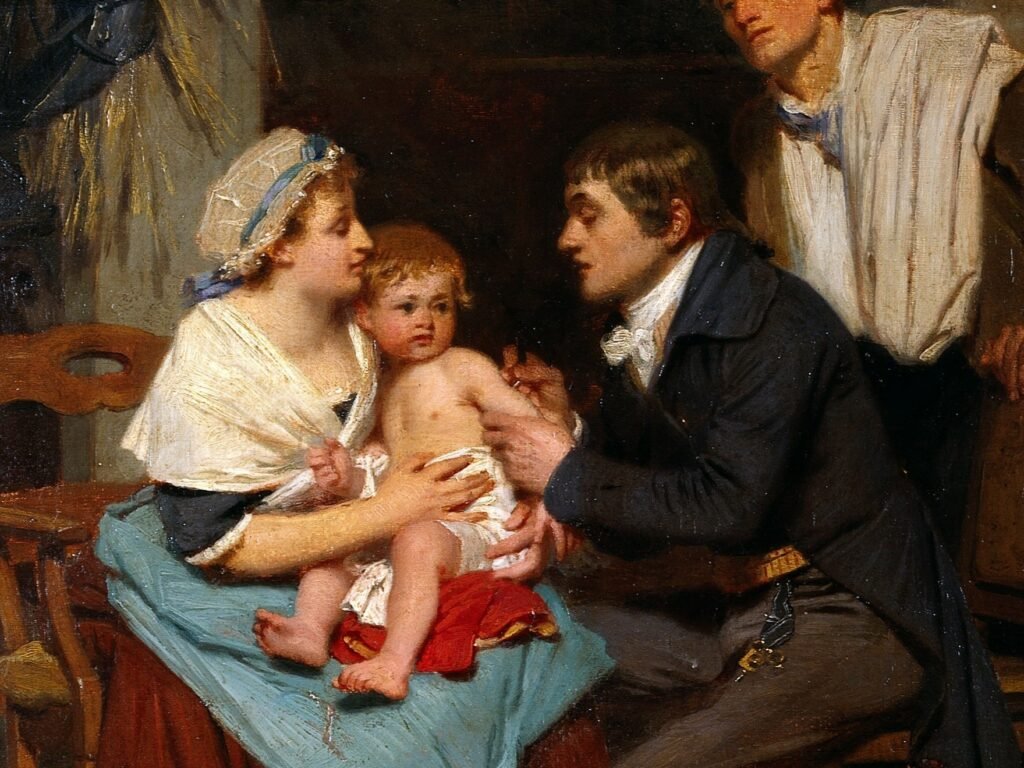
The discovery of vaccination was the finding, made in England between 1774 and 1796, that deliberate exposure to cowpox protects people from smallpox. Benjamin Jesty carried out the first recorded vaccination in 1774, and Edward Jenner tested the idea systematically in 1796 and published it in 1801. Background Smallpox is one of the oldest known
Discovery of vaccination Read More »
The 1774 to 1796 finding by Benjamin Jesty and Edward Jenner that exposure to cowpox protects against smallpox, which founded vaccination.
Doctors Without Borders, known internationally as Médecins Sans Frontières (MSF), is an independent medical humanitarian organization that provides emergency health care to people affected by conflict, epidemics, disasters and exclusion from care. It was founded in Paris in 1971 by a group of doctors and journalists and received the Nobel Peace Prize in 1999. History
Doctors Without Borders Read More »
Doctors Without Borders, or Médecins Sans Frontières, is an independent medical humanitarian organization founded in Paris in 1971.
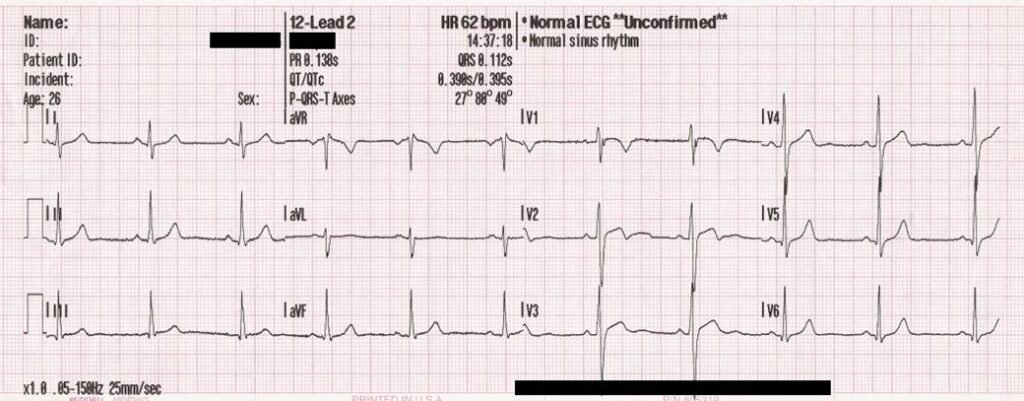
An electrocardiogram (ECG, also written EKG) is a test that records the electrical signals the heart makes each time it beats. MedlinePlus, the health information service of the U.S. National Library of Medicine, describes it as a simple, painless and quick test. The recording appears as wavy lines with sharp spikes, and a trained clinician
Electrocardiogram Read More »
A painless test that records the heart's electrical signals with sensors on the skin, shown as wavy lines called waves.
Epidemiology is the study of how diseases and other health events are distributed across populations, along with the factors that determine that distribution, with the ultimate goal of controlling health problems and improving public health. Rather than focusing on diagnosing or treating a single patient, epidemiologists examine patterns across groups of people, looking at who
Epidemiology Read More »
The study of how diseases and health events are distributed across populations and what drives that distribution.
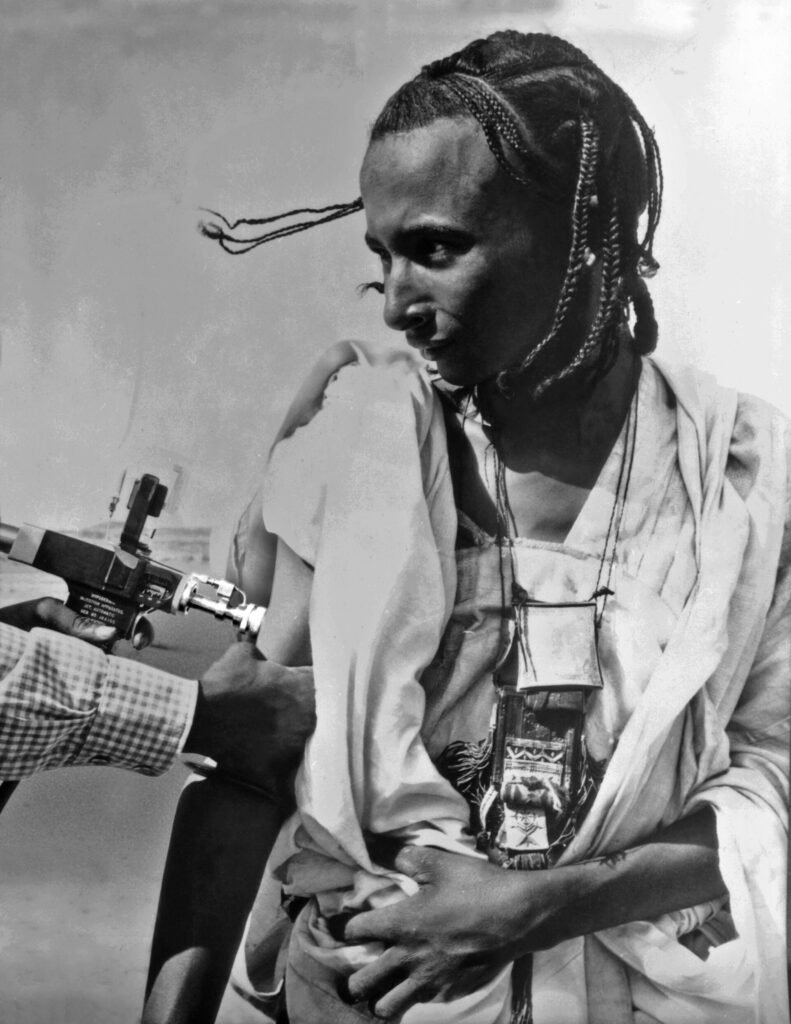
The eradication of smallpox was the worldwide public health campaign that ended natural transmission of the variola virus, which caused smallpox. The last known natural case occurred in Somalia in 1977, and the World Health Assembly declared the world free of the disease on May 8, 1980. According to the World Health Organization (WHO), it
Eradication of smallpox Read More »
The global campaign, led by the World Health Organization, that ended natural smallpox transmission, declared complete in 1980.